

Apple founder Steve Jobs famously questioned the value of market research: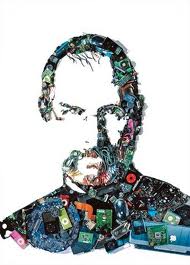
A lot of times, people don’t know what they want until you show it to them.
Business Week Online, 1988.
We built [the Mac] for ourselves. We were the group of people who were going to judge whether it was great or not. We weren’t going to go out and do market research.
Playboy, 1985.
While this philosophy served Apple well in creating product categories such as the Mac and iPhone, the same cannot be said for Apple’s attempts to enforce its intellectual property rights.
Apple sued Motorola for infringing Apple’s patents on specific features used in cell phones and tablets, seeking tens of millions of dollars as a reasonable royalty for the unauthorized use of the patented features based on the opinion of Apple’s damage  expert. However, the trial judge, Richard Posner (pictured to the left – who blogs by the way), recently excluded these opinions as unreliable based largely upon the failure of the expert to properly investigate consumer preferences. (Judge Posner’s Opinion dated May 22, 2012.)
While success in the markets in which Apple competes may not require asking consumers what they want, success in the courtroom, in particular the recovery of money damages for lost royalties on infringing sales, very much hinges on evidence that these questions were asked.
So how did Judge Posner and other jurists like him get so far off the Jobs path?
In order to recover a royalty on infringing sales, the patent holder must give evidence that apportions the infringer’s profits and the patent holder’s damages between the patented feature and the unpatented features.
The accused cell phones and other handheld devices that were the subject of Apple’s lawsuit against Motorola contain thousands of specific IP features, making it difficult to conduct the required apportionment. In particular, Apple was asserting patent protection over such specific features as:
Software program that prevents the toolbar notification window from being partially obscured when the user opens an application;
Tapping the right hand side of the screen to switch to the next page of a Kindle book; and
Presentation of real time play of video or sound smoothly and without interruption.
In response to the observation that these features are merely a small few out of thousands for which Apple does not hold the patent, the Jobs-like response (we made this up but it sounds right) is “so what, each of these features is hugely important because each of them is a critical and absolutely necessary part of our effort to provide the coolest heretofore never believed possible consumer experience!” “It’s a waste time to try and separate out and ask about the value of any one of these features as compared to another – we offer the overall fantastic customer experience resulting from a seamless web of features and their synergies!”
Unfortunately, Judge Posner was of a much different mindset, finding for example that Apple could not recover lost royalties on cell phones using the non-obstruction feature unless Apple had evidence showing how much it was worth to consumers to have a phone with an unobstructed notification window as opposed to a window that provides notifications but sometimes is obstructed by other applications.
What you need to do is find out how many consumers think it worthwhile to pay a higher price for a Motorola phone to avoid occasional partial obstruction of that window.
While Apple may not view market research as critical to its business success, the protection of its IP rights is another matter entirely. “We didn’t think to ask before, but now that you’ve decided you love our product, would you mind telling us why that is? Judge Posner wants to know . . . “
Quick postscript: To its credit, Apple appears to have rapidly pivoted – in its patent infringement lawsuit against Samsung, the court found that the consumer survey evidence developed by two of Apple’s damage experts is sufficiently reliable to be shown to the jury at trial. See Apple v. Samsung, 2012 WL 2571332 at *8-12 (N.D. Cal. June 30, 2012) (denying motions to exclude the expert opinions of Apple experts Hauser and Sood and their respective consumer surveys).