

In its recent decision in Graziano v. Riley (pdf), the Appeals Court overturned a Superior Court ruling that required the defendant landowners to remove a berm they had built to stop water from flowing onto their property. Problem was, the defendants’ berm caused flooding on their neighbors’ (the plaintiffs) adjoining property. The defendants built the berm in 1966, when Massachusetts still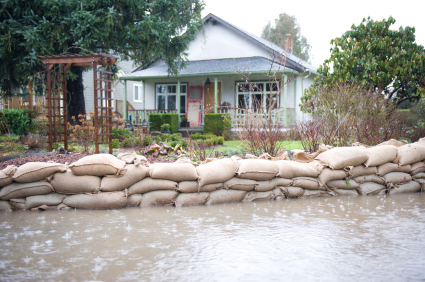 followed the so-called “common enemy rule.” Under that rule, landowners were free to prevent naturally-flowing surface water from entering their property, or to grade their land in a manner that diverted the water off their land and onto a neighbor’s land, even if doing so caused flooding on the neighbor’s land. (Note that even under the common enemy rule, landowners were not permitted to accumulate water on their land and then discharge it onto their neighbor’s land).
In its 1978 decision in Tucker v. Badoian (pdf), the Supreme Judicial Court (SJC) ditched the common enemy rule and replaced it with a “reasonable use” standard, under which a landowner cannot unreasonably cause surface water to flood his neighbor’s property. However, the SJC expressly held that the reasonable use standard would apply only to situations arising after its decision, so that existing structures and grading – even if flood-producing – could remain in place.
In Graziano, because the defendants’ berm was built in 1966, they were not required to remove it. This illustrates the inequitable situation that arises when a landowner’s pre-1978 diversion of surface water causes flooding on his neighbor’s property: the flooder can maintain the status quo and continue flooding with impunity, while the floodee’s ability to protect his property is limited by the reasonable use standard. We’ll have to await a future case to learn whether the reasonable use standard is flexible enough to mitigate harsh results such as the one reached in Graziano.