

Thanksgiving, quite possibly more than any other holiday, is a day devoted to time spent with loved ones. Families—both the immediate and extended—gather to share a meal and appreciation for what they have. But still, for some of those loved ones, Thanksgiving is still a workday.

Though it’s common for offices to be closed on holidays (Thanksgiving or otherwise), there’s no federal law requiring it. In fact there’s no law–state or federal–that requires employers to even pay overtime for non-exempt (hourly) employees who work on holidays. And so, as noted at Wage and Hour Insights, answering the “do I have to give employees time off?” question from a client, the results can be pretty variable:
Employers are not just being tight fisted by asking these questions. This particular employer operates a utility that has no “holidays” because its clients expect service (and support) 24 hours a day, 365 days a year…[But it depends because] you have to check state and local laws! Let me give you one example. In New Hampshire, a state statute prevents any employee from working “in any mill or factory on any legal holiday” except to the extent it “is both absolutely necessary and can lawfully be performed on the Lord’s Day” (RSA 275:28). Even outside of mills and factories, state law might intrude on your holiday policies. New Hampshire enacted a statute in 2009 (RSA 115-A:29) that requires private employers to permit honorably discharged veterans of the United States armed forces to take the day off on Veterans Day, November 11, regardless of whether the employer recognizes the holiday. Unless otherwise required by law (such as with exempt employees), the day off can be without pay.
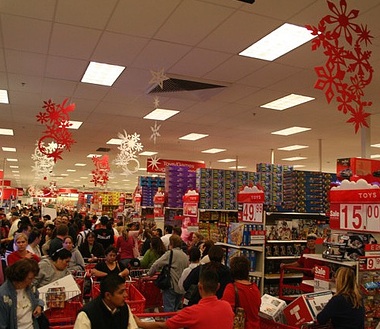
Hass also notes hospitality and retail workers often come up with “floating” holidays, since their busiest times of the year are when many have time off. Retail workers, in particular, find themselves in being called into work on days they would otherwise have off due to the ramp up to Black Friday. Stores like Kmart and Walmart require employees to work, enacting “blackout” days where workers are not allowed to request time off. Bryce Covert writes for Think Progress that Walmart’s holiday policy will require close to a million associates working during the holidays:
“We are a 24/7 hour operation,” a spokeswoman said. “We are open Thanksgiving Day and have been open Thanksgiving Day for 25 years.” The company will also have special shopping hours for its Black Friday deals at some point that day, which last year began at 6 p.m., an hour earlier than the year before. It hasn’t yet announced when those hours will begin this year. Black Friday shoppers can get intense about sales, even acting violently, as with shootings and knife assaults last year.
…A worker who doesn’t want to come in on Thanksgiving Day may have little choice. The U.S. is the only developed country that doesn’t guarantee paid holidays, and nearly a quarter in the private sector don’t get them. Service sector workers like those in retail are even less likely, as 45 percent don’t get paid holidays. But even those who readily volunteer may be doing so because erratic scheduling means that many don’t get enough hours to live on. In a recent survey, nearly 40 percent of retail workers said they don’t get a set minimum of hours, and many said they wanted to be working full time but were only given part-time schedules.
Staying open for Black Friday may be a sort-of holiday tradition, but there are probably ways to do it more effectively. The Think Progress article makes note of Macy’s, which–although opening earlier than years prior for the Black Friday sales–has claimed that volunteers have signed up for their upcoming holiday shifts.
That may be the case, but OSHA has warned everyone that they’d better be careful in their treatment and protection of employees. Teleicia Dambreville, writing for HR Legalist, recently highlighted the issue and the impetus for more scrupulous regulation:
Under the Occupational Safety and Health Act of 1970, employers have a general duty to provide a safe workplace for employees. This duty includes maintaining a work environment that is free of recognized hazards that are likely to cause serious bodily injury or death. In recent years, the Occupational Safety and Health Administration (OSHA) has made it clear to employers and retail store owners that crowd control preparation and precaution is necessary to avoid the obvious safety risk presented by the large crowds that are drawn by the holiday’s major sales event.
Black Friday crowd management issues garnered national attention in 2008, when a tragic story unfolded at the store opening of a major US retailer: a temporary worker was trampled to death by a stampede of more than 2,000 Black Friday shoppers. OSHA investigated the employee’s death and levied a fine against the store for inadequate crowd management. (The company also faced the potential claims that could be asserted by the deceased employee’s estate.) Since the incident, OSHA has routinely issued updated guidance to employers to assist in minimizing or preventing injuries on Black Friday.
As Dambreville notes, OSHA continues to offer guidance on the subject, and that continued this year as the administration sent major retailers, retail trade associations, and fire marshals a letter last week that dictated safety concerns and guidance to ensure a safe working environment. Valerie Butera says in her blog post on OSHA Law Update that employers should at least provide the following:
Barricades or rope lines that do not start immediately in front of store entrances to manage pedestrian traffic;
Police officers or other trained security or crowd management personnel on site;
Communication to shoppers of updated information about the event and the store, such as the location of entrances and exits, store opening and closing times, and the location of hot items within the store;
Additional staff sufficient to meet the needs of large crowds of customers;
Crowd management training for all employees to ensure that they understand how to manage the event;
Prevention of additional shoppers from entering the store when it is at or near its maximum occupancy level;
Clear and unobstructed pathways to all exit doors, which should be unlocked;
Emergency procedures in place in case a dangerous situation does arise; and
Instructions to employees that in the event of an emergency they should follow instructions from first responders regardless of company rules.
If they have not already done so, retailers should begin crowd management planning for Black Friday now. Reach out to local police and other first responders to inform them if large crowds are expected at your stores on Black Friday and coordinate a response plan in case an emergency takes place. Taking time to employ these simple measures will go a long way towards ensuring that employees enjoy a safe and healthy holiday season.
OSHA will be watching, and expects better than business as usual for employees who are working the chaotic Black Friday sales. Wherever you’re spending your holiday, hopefully there’ll plenty of safety and things to give thanks for.