

President Obama’s executive orders on immigration reform will bring changes for employers in the coming year. But that won’t be the only executive action Obama took that will be making waves and changing protection statuses in 2015.
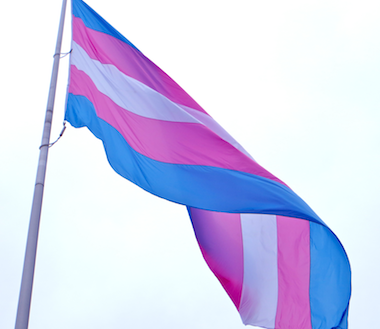
Earlier this year Obama made a move to protect federal transgender employees, and if that move is successful, it could spell a cultural shift for transgender employees across the nation.
 In July, Obama signed an executive order to protect LGBT workers from being discriminated against by federal contractors. The Department of Labor announced last week that it is finalizing protections that would prohibit federal contractors from firing, disciplining, or not hiring an employee due to their sexual orientation or gender identity.
While they aren’t many reliable statistics on just how many transgender people are working in the U.S. for employers to draw on, there are a lot of studies that reveal that until now transgender employees often face hardships in employment. The National Transgender Discrimination Survey conducted by the National Gay and Lesbian Task Force and the National Center for Transgender Equality in 2011 revealed that harassment and mistreatment at work was near universal; with 90 percent saying they had directly experienced harassment or felt forced to take protective actions that negatively impacted their career or well-being to avoid workplace repercussions. So the executive order is the first step towards protecting such individuals.
It’s one in many recent victories for LGBT citizens, but it’s a huge step for transgender people, (and not just because Obama became the first chief executive to use the word “transgender” in a speech). Connie Bertram and Andrew Aitchison note in a blog post for Government Contractor Compliance & Regulatory Update that this new rule will be more than just an revision. It’s an invitation for employers to reflect on their workplace culture around transgender people:
It will be critical for contractors to update their internal and external policies, third-party notifications and affirmative action plans to include these new protected categories. In addition, as with any protected category, it is critical to train managers concerning their non-discrimination obligations and to monitor compliance with the contractor’s anti-discrimination policies. It is not enough to “talk the talk,” you have to “walk the walk” to ensure compliance and avoid discrimination and harassment claims.
And the progress might not stop there. Although the House shut down ENDA (the employment non-discrimination act that would prohibit discrimination on the basis of sexual orientation or gender identity in employers with more than 15 employees) last week, these victories represent a change that employers, federal or not, can’t turn a deaf ear to, writes Susan Toepfer for BeLabor the Point. And the EEOC intends to see to that:
Are these just paper victories for LGBT advocates? It doesn’t seem so. The EEOC and other federal agencies are pursuing enforcement action as well. This fall, the EEOC filed its first-ever lawsuits (one in Florida, one in Michigan) seeking to protect transgender employees from discrimination under Title VII. Further, last week, the U.S. Office of Special Counsel announced its determination that the Department of the Army engaged in “frequent, pervasive and humiliating,” gender-identity discrimination against a veteran and civilian software specialist who transitioned from male to female.
This wave of enforcement activity is something employers cannot ignore in setting policies and addressing discrimination and harassment issues in the workplace. While the simple policy of not discriminating in, for example, performance evaluations or termination may not seem so difficult, an array of thorny issues will undoubtedly arise where an employee is transgender, is transitioning or has transitioned – from the use of restroom facilities; to controlling the use of pronouns by managers and coworkers; to dress codes and uniform policies; to coworker and customer relations issues; and unspoken managers’ biases.
Now would a logical time for the move: transgender people are more in the public eye than possibly ever. Transgender activist Laverne Cox recently became the first trans woman to grace the cover of Time and be nominated for an Emmy; TV shows like “Transparent” and “Orange is the New Black” feature honest portrayals of transgender characters, and the New York Times recently featured a cover story in their magazine about being a trans man at a women’s college. In a blog post for Washington Post’s Monkey Cage, Jeff Lax and Justin Phillips note that although they didn’t expect ENDA to pass there’s more support for the bill than there has been in the past, with estimates overwhelmingly in favor of it:
If senators listened to their constituents, the bill would pass overwhelmingly. Nearly all recent opinion polls indicate that a large majority of the American public — more than 70 percent — supports efforts to make employment discrimination against gay men and and lesbians illegal. Of course, these national numbers are not what the senators are likely to care about. However, when we use national polls to estimate opinion by state, we find that majorities in all 50 states support ENDA-like legislation (note that in 1996, majorities in only 36 states supported ENDA). Today, public support ranges from a low of 63 percent in Mississippi to a high of 81 percent in Massachusetts. Here’s the graph of the approximate numbers based on our estimates from survey responses
Legislation across the country is bringing transgender rights to focus, and many discrimination laws are expanding to include clauses against transgender discrimination. Now that the Obama administration is working on protecting federal employees, it’s likely that there will soon be a push for the private sector to follow suit. It seems like it’s only a matter of time before things like ENDA are a no-brainer for the people who vote on them, but for now Obama’s executive order is a nudge in the right direction.