

 Employee Benefit Advisor, for whom I serve on the Editorial Advisory Board, recently reported that DC Plan Participation Rates, Account Balance Increase.
The reporter, Paula Aven Gladych cited the Deloitte 2015 Defined Contribution Benchmarking Survey that by focusing on “ease of use” retirement plan participation rates have increased from 2013 to 2014.
Such features include:
- Auto-enrollment with stepped-up contributions
- Easing of eligibility requirements and entry dates
- 100% vesting of employer matches
- Managed accounts
- Automatic fund rebalancing
- Managed accounts
- Increased use of technology with smartphone and tablet apps
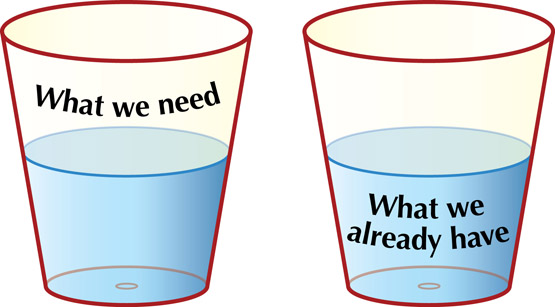
Good news, eh? Of course, but that’s what we have. We need, of course, is providing more access to retirement savings plans; and here the numbers don’t look so good.
According to the 2013 Government Accounting Office Report, Challenges and Prospects for Employees of Small Businesses, an estimated 51 to 71 percent of employees of small businesses lack access to such plans. (The difference in percentages is based on the different survey data used by the GAO).
So if we do the math, that means that of the approximately 42 million who work for small businesses with fewer than 100 employees, as many as 30 million employees could lack access to employer sponsored retirement plans.
That statistic in terms of new plan start-up isn’t very encouraging. A press release from Judy Diamond Associates said that their research indicated that there were substantially fewer new plans launched in 2013, the most recent year for which data is available, than in 2012.
Curious about years prior, I reached out to the public relations firm that represents ALM who were kind enough to provide me year-by-year numbers for new 401(k) plans over the past 10 years.
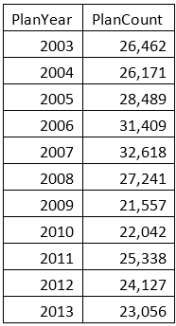
As you can see, there was a huge decline from 2007 to 2009 during the financial crisis. New plans increased starting in 2011, but then started to decline again with about a 5% decline from 2012 to 2013. Not the trend that we need.
Are there lessons to be learned here from the retirement plan systems in countries like the in the U.K. and Australia?