


The “Made in Germany” brand has undoubtedly taken a hit in the past few weeks. The brand, along with the phrases “German engineering”, “German engineered”, etc. have made their way into just about every advertisement for goods coming from German companies. Volkswagen made the theme part of its advertising campaign, perhaps more than any other company. It has come to signify quality, precision, and attention to detail (despite its origins as a tag of inferiority in late 19th century England). But what will the fallout be for all of those other German producers when one of the most high profile German companies takes the qualities the German brand is built on and focuses them towards cheating their customers, the public, and numerous national governments?


The bulk of the German economy is made up of Mittelstand, or small to medium sized companies. These are not Volkswagen, Bayer, Adidas, or Deutsche Bank (which has received special funding deals from the capital markets because investors think it is the Bundesbank, talk about what’s in a name), but generally small, closely held companies that focus on doing one thing very well. Most often they make specialty tools or parts that are largely invisible to consumers so they don’t need to worry too much about how they view a mark. They invest for the long term and spend a great deal of energy building personal relationships and reputations for quality with their customers. So a knock to the German brand may not affect them too much in the short term (except for those working with Volkswagen) but could affect their ability to attract new business.
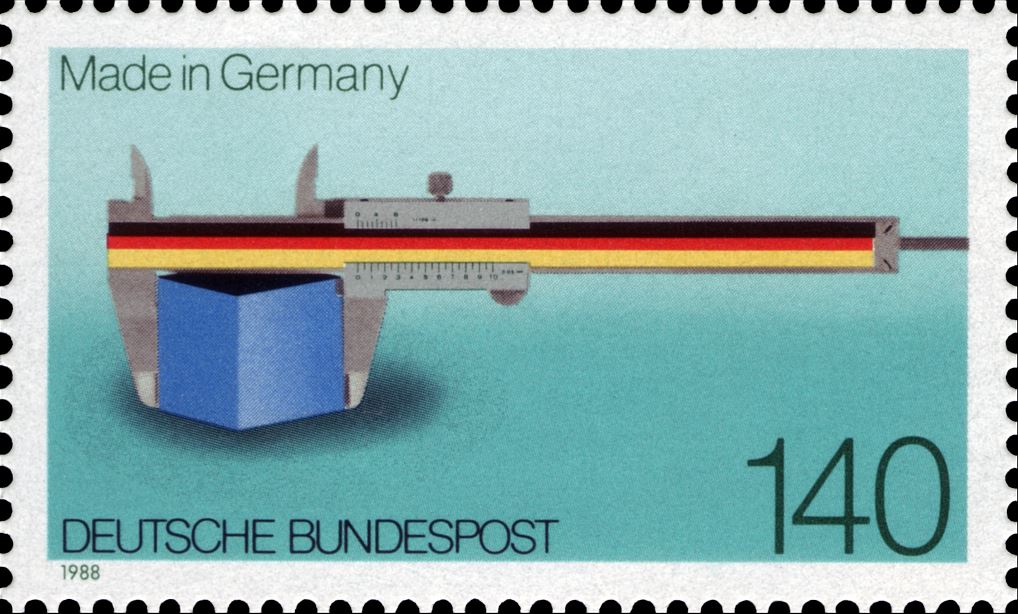
Policing a brand is difficult. Mark owners spend considerable energy ensuring their vendors, franchisees, etc. adhere to standards of use, service, and production to prevent a weakening of the mark and, ideally, create a brand known for a certain quality. But how do you police a brand when that brand is an entire country? Moreover, the brand is not held by a single stakeholder, but rather by the German people. Much will depend on the response of the German public, government, and other German companies. All have been quick to condemn Volkswagen, but people are eyeing the other German car makers, as well as the other major auto industry players. With Germany in a leadership role in Europe, and increasingly globally, it may not be enough that every car maker was doing it if the other German brands get sucked in.
Perhaps this is why the emissions scandal seems to have generated so much more news and backlash than General Motors ignition switch problems or Toyota’s “sticky” gas pedals. Both of those resulted in a number of deaths directly attributable the problem and the company’s decision not to recall. The emissions cheating may have resulted in deaths, but in an abstract way in which it is impossible to connect the death of any individual directly to Volkswagen’s additional emissions. It seems to me that putting a name and face to an actual casualty tends to whip up anger more than scientific reports and estimates that are unreadable to most. Maybe we expect cold calculations regarding product recalls but don’t expect the company to outright cheat? Maybe indifference is bad but lying is worse? Or maybe Volkswagen represents Germany in a way that General Motors and Toyota don’t represent the United States and Japan.