

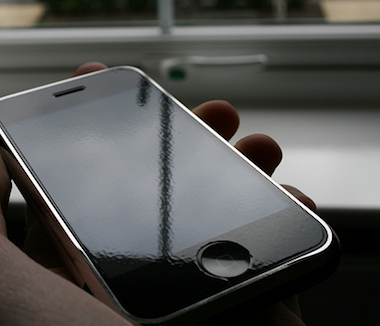
Apple lost a patent battle to the University of Wisconsin Monday. And it could cost them big.
The trial is now moving into determining just how much Apple, Inc. owes the university for violating their patent, but the damages could reportedly be as high as $862 million. Given that major price tag, this will likely further incentivize more universities to start leveraging their patents to seek a payday.

The jury in Madison, Wisconsin reached the verdict Monday that Apple had infringed on the patent of a University of Wisconsin’s licensing arm, Wisconsin Alumni Research Foundation. Filed in 2014, WARF claimed Apple infringed on its 1998 patent for improving chip efficency. And though Apple denied any infringement and denied the patent was valid, the court ruled against the tech giant.
Which means soon Apple could be shelling out big money. And universities with big research wings could be paying attention—if they’re not already.
“Almost every major university has a lawsuit or two in process,” said Calvin Chu, former licensing officer of Columbia University‘s tech transfer office, Columbia Technology Ventures, told Reuters.
And these lawsuits aren’t fruitless: So far they’ve lead to plenty of patent payouts in the millions for universities like Northwestern, New York, Princeton, and more. While patent litigation has decreased 13 percent over the past year, hitting its second-lowest point in 20 years, the number of patent lawsuits filed by universities has increased since Carnegie Mellon University won a $1.17 billion patent verdict against Marvell Semiconductor in 2012 (though it was eventually bumped down to $278 million in damages).
As The Los Angeles Times reports:
Throughout academia, many colleges are establishing and expanding offices that help with such “technology transfer,” hiring experts to advise faculty to become more entrepreneurial and even holding campus competitions for marketable ideas.
“It’s definitely the trend in academia,” said Fred Farina, Caltech’s chief innovation and corporate partnerships officer.
As federal research funding declines, universities’ licensing and startups are increasing significantly and adding to the national economy, according to a recent report by the Assn. of University Technology Managers. The survey of nearly 200 universities showed an 11% increase in the number of patents issued in 2014 over the year before, to 6,363, and a 34% rise, to 965, in the number of new commercial products begun at those schools.
Universities and nonprofits also lead the pack in lawsuits like this, boasting a 48 percent success rate for patent holders. And the patents themselves are the gifts that keep on giving: So far WARF has used this patent to sue Intel Corp in 2008 (which was settled on the eve of trial) and a second lawsuit against Apple, for the company’s newest chips in the just-released phones and iPads.
Another win for a university in a patent suit with a high payout could give universities a reminder that despite diminishing state funds for research labs, there’s money to be made through patent litigation. With that kind of payout, soon universities won’t be able to afford not to.