

In advance of the National Organics Standards Board meeting in April, the board’s Crops Subcommittee shared a draft proposal calling for the end of organic certification for hydroponic and aquaponic growers. This proposal, if enacted, will have far reaching and damaging effects on hundreds of producers, thousands of retailers and wholesalers and millions of consumers by significantly reducing the supply of organic produce in the United States.
 The Coalition for Sustainable Organics believes that everyone deserves organic and this proposal will make it harder for consumers to access organic produce. The proposed ban would impact virtually all organic fruit and vegetable growers since the current manner to produce their seedlings and nursery stock would be prohibited.
In addition, even if exemptions were proposed for seedlings and nursery stock, there would still be an impact of well over $1 billion in reduced production and higher prices for organic tomatoes, herbs, sprouts, mushrooms, peppers, lettuce, cucumbers, berries and other fresh produce.
The policy proposed in the discussion document will diminish the relevancy of organic produce as a meaningful solution to the environmental challenges faced by growers. The National Organic Program of the USDA should continue to allow growers to adapt to their site-specific conditions within the organic principles of avoiding the use of GMOs, synthetic pesticides and fertilizers while creating active biological systems to nourish the plants.
The Crops Subcommittee ignored science regarding currently certified organic growing operations. Whether a plant is grown in the outer crust of the Earth, in a pot, or in a floating garden, all approaches share the need for the biological process to break down nutrients into a useable form for the plants. In short, it is the biology that determines whether a system is organic, not the growing media.
Karen Archipley, co-owner of Archi’s Acres, a certified organic greenhouse operation in Escondido, CA, that produces living basil, kale and other fresh produce, has expressed her concerns about the proposal.
“I am deeply disappointed in the document,” Archipley said. “The Crops Subcommittee ignored the science regarding the rich biology we use to nourish our plants.
“We are proud of the military veterans, their spouses and the many civilians that we have trained to grow using hydro-organic methods and to open their own new farms to deliver high quality and flavor products that our customers love. Organic growers must do our part to conserve natural resources and grow in harmony with nature based on the conditions in our local environment.”
More important that grower concerns are consumer opinions. As noted in a 2016 survey of purchasers of organic fruits and vegetables, consumers support the continued use of organic production systems that utilize containers. An overwhelming majority of organic consumers of fruits and vegetables believe that organics are more about healthier products for themselves and their families than soil health.
The organic industry should continue to focus on delivering product that meets the expectations and needs of the consumers. Artificially limiting organic production by forcing all growers to use a one-size-fits-all production methodology that is suited for only certain types of crops in certain climates is the wrong approach. Organic production should remain open to a diversity of farms located in all types of regions and climates.
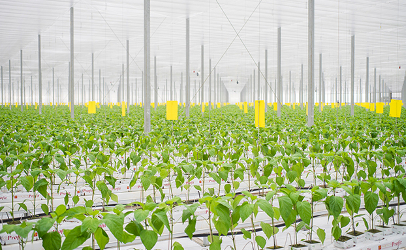 Container growing is a controlled growing system in which plants derive nutrients from approved organic substances in water and/or growing material such as coconut husks. A 2015 study* showed water savings of more than 90 percent for container systems versus open-field production systems. Container growing methods also promote sustainability by:
- Generally requiring fewer resources per pound of fruits, vegetable or herbs produced compared to food grown outdoors in the soil;
- Using less water, in most cases, needing less land, significantly reducing soil erosion and extending the growing season of plants; and
- Reducing runoff of nutrients or other chemicals into streams, lakes and water aquifers.
The U.S. Department of Agriculture has opened a formal comment period where everyone, including consumers, producers, restaurants and supermarkets can express their view on the Crops Subcommittee’s proposal.
The deadline to comment on this subject is March 30 at: https://www.regulations.gov/comment?D=AMS-NOP-16-0100-0001.
The National Organic Standards Board (NOSB) Discussion Document can be found at” https://www.ams.usda.gov/sites/default/files/media/CSHydroponics.pdf
* “Comparison of Land, Water, and Energy Requirements of Lettuce Grown Using Hydroponic vs. Conventional Agricultural Methods” by Lages Barbosa, Guilherme et al. Ed. Rao Bhamidiammarri and Kiran Tota-Maharaj for the International Journal of Environmental Research and Public Health 12.6 (2015): 6879–6891.PMC. Web. 22 Sept. 2016.
(To sign up for a free subscription to Food Safety News, click here.)