

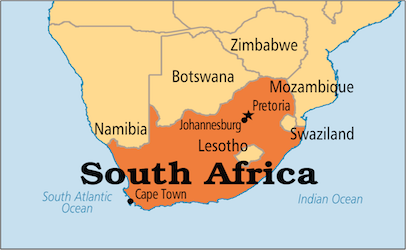
 The deadly South African listeriosis outbreak now has a stunning 28.6 percent fatality rate, according to the latest report by the National Listeria Incident Management Team (IMT). The new IMT report says 200 of 1,024 confirmed cases of Listeria resulted in the deaths of the victims.
The outbreak is slowing down, but it’s not over. The National Institute for Communicable Diseases (NICD) has logged 55 new cases in the seven weeks after the source of the outbreak was announced on March 4.
That’s when Minister of Health Dr. Aaron Motsoaledi named ready-to-eat processed meat products from the Enterprise Foods’ production facility in Polokwane as the source of the Listeria monocytogenes and initiated recalls.
In the seven weeks prior the March 4 actions, 169 confirmed cases were added to the outbreak.
Dr. Motsoaledi declared the current outbreak last December after South Africa experienced a sharp increase the number of listeriosis cases from an average of 60-to-80 cases a year. The 1,024 confirmed cases of listeriosis with 200 deaths have occurred between Jan. 1, 2017 and April 24. 2018.
The number of newly reported cases has decreased since March 4.

Neonates, less than 28 days, is the most affected age group, followed by adults aged 15 – 49 years of age. Gauteng Province reports 59 percent of the cases or 601 out of 1,024 cases. SA’s Western Cape accounts for 128 cases or about 13 percent of the total with KwaZulu-Natal province reporting 7 percent or 73 cases.
According to the IMT report, whole-genome sequencing analysis was used on 521 clinical isolates to date. Of these, 85 percent or 443 of the 521 contained the sequence type ST6.
The remaining isolates contained 19 sequence types, including ST1, ST54, ST876, ST2, ST5, ST204, ST219. ST224, ST71, ST101, ST121, ST155, ST3, ST403, ST515, ST7, ST8, and ST88. This group accounts for 15 percent of the total or 83 out of the 521 cases.
Whole genome sequencing, performed on 595 food and environmental isolates, Of these, 13 percent (79/595) were identified as ST6. The remaining strains (87 percent, 516/595) represented 26 sequence types, including ST20, ST1, ST121, ST5. ST321, ST9, ST155, ST2, ST3, ST87, ST120, ST378, ST101, ST108, ST2288, ST31, ST7, ST11, ST122, ST14, ST37, ST4, ST54, ST76, and ST88.
The first phase of South Africa’s listeriosis emergency response plan (ERP) is complete. It shared the response plan with provincial stakeholders, environmental health practitioners, communicable disease coordinators and others. Phase Two includes on-site visits to Tiger Brands and RCL facilities for training and inspection activities.
Also, SA’s National Consumer Commision (NCC) and Department of Environmental Affairs (DEA) are jointly managing recalls of various brands of ready-to-eat meats. The two agencies are destroying about 80 tons of ready-to-eat meat products each day.
The report of the rising death toll in the listeriosis outbreak follows Tiger Brand’s disclosure to its shareholders that company-sponsored testing also found ST6, the outbreak strain, in its facilities.
Such disclosures usually come later in the discovery process or by subpoena, but Tiger Brands choose not to wait. The most significant food company in South Africa, Tiger Brands is also the defendant in litigation brought against it on behalf of listeriosis victims and their survivors.
(To sign up for a free subscription to Food Safety News, click here.)