

 Political ramifications are coming in from two events in the past week involving the meat industry.
The first event was a July 12 forum sponsored by the U.S. Food and Drug Administration on issues surrounding the cultured meat grown from in vitro animals cell culture.
A big newsmaker at that event was Dr. Michael Hansen, senior scientist for Consumers Union, the advocacy division for the iconic Consumer Reports. A part of Hansen’s testimony disclosed a CU survey showing the public pretty well rejects “clean meat” as the name for these new products.
“By an overwhelming margin, our survey found that consumers want clear labels identifying meat produced in the lab from cultured animal cells,” Hansen said. “Federal regulators should ensure these emerging food products are clearly labeled so consumers can make informed choices for their families and easily distinguish them from conventional meat.”
A plurality in the CU survey favored calling it “lab-grown meat.”
For the Good Food Institute, which supports making meat from cultured animal cells, that hurt. It accused CU of “misuse of basic consumer research.”
Writing on his blog, Good Food Institute Co-founder and Executive Director Bruce Friedrich said “lab-grown meat” comes up on top of polls that provide no context. He says CU asked consumers about labeling for “food produced in a laboratory from animals cells to look and taste like meat.”
Friedrich says because of the way the question was framed, no one should be surprised that the top reply was “lab-grown meat.” He goes on to charge that CU used “push polling to its limits.”
Push polling refers to a tactic often employed during political campaigning. In that setting, it involves an individual or organization attempting to manipulate or alter prospective voters’ views or beliefs under the guise of conducting an opinion poll.
Friedrich was also critical of CU for not making its survey questionnaire available on its website.
Finally, Friedrich took exception to depicting meat from cultured animal cells as “lab-grown.” He says like beer and cheerios, all processed food starts out in a lab before moving out to production facilities like breweries.
This dust-up probably means the naming dispute for this new product isn’t not going to be settled for a long time. Scott Gottlieb, commissioner of the Food and Drug Administration, this week signaled that plant-based products labeled as “milk” or “yogurt” on grocery shelves will soon be a thing of the past. That would be a bonanza for the dairy industry, which has long sought to defend a “standard of identity” for “real milk.” How the issue will play out for meat remains to be seen.
The Good Food Institute people favor “clean meat” because they are aware of the hill they will have to climb if the words “cultured animal cells” create the same consumer suspicions as the phrase “genetically modified.”
The second event was the July 16 release by Los Angeles-based Mercy for Animals of more disturbing video involving alleged animal abuse at Tosh Farms in Kentucky. This one first went down as a routine undercover exercise by Mercy with video of mistreated pigs and connecting Tosh as a supplier to JBS Swift’s Louisville plant.
“Based on our initial review, we have suspended shipments from that supplier site pending a full investigation,” said a JBS spokesman.
Mercy filed a complaint against Tosh with the Simpson County District Attorney, but it was not clear if Tosh broke Kentucky law. Tosh said it planned staff re-training, but said its veterinarian found no real problems.
Only then did the political ramifications begin.
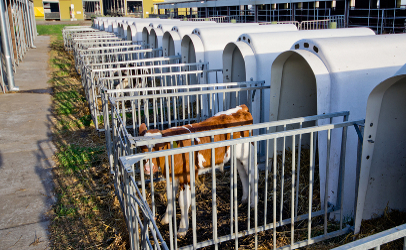 Mercy was accused of playing it’s Kentucky abuse investigation to sway a California ballot initiative. At play on the Golden State ballot is Proposition 12 would expand living space for pigs, calves and egg-laying hens. Egg-laying hens would need to be placed in cage-free housing. Breeding pigs and calves raised for veal would be required to have at least 24 and 43 square feet of floor space, respectively. If approved, the new requirements would become effective in 2022.
Claims that Prop 12 would prevent the type of abuse shown in the Mercy video of the Kentucky pig farm are “utterly false,” according to Bradley Miller, national director of the Humane Farming Association, and spokesperson for Californians Against Cruelty, Cages, and Fraud.
The group People for the Ethical Treatment of Animals (PETA) is also opposing Prop 12, saying it does not include expanded housing for chickens.
Mercy’s Matt Rice told California media that while state voters overwhelming oppose putting animals in tiny cages, it happens out of state.
In 2008, California voters overwhelming adopted Proposition 2. It took effect in 2015. The law requires that calves raised for veal, egg-laying hens, and pregnant pigs be confined only in ways that allow the animals to lie down, stand up, fully extend their limbs and turn around freely.
Exceptions are made for transportation, rodeos, fairs, 4-H programs, lawful slaughter, research and veterinary purposes. Misdemeanor penalties, including a fine not to exceed $1,000 and/or imprisonment in jail for up to 180 days are included.
Federal courts have upheld provisions added by the California Legislature to apply the state’s requirements to anyone selling eggs in the state.
Prop 12 is on California’s November’s ballot.
(To sign up for a free subscription to Food Safety News, click here.)