

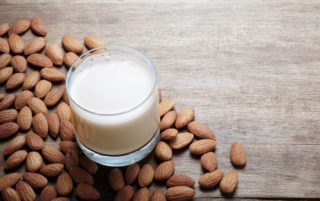
 At a recent Politico event, Federal Drug Administration (FDA) Commissioner Scott Gottlieb signaled the agency’s shift to a new era of more stringent enforcement in the dairy business. Gottlieb did so with an amusing quote: “An almond doesn’t lactate, I will confess.”
Gottlieb’s curious combination of words was referring to the federal regulation that defines what may be legally marketed as “milk.” Section 131.110 of the Code of Federal Regulations states that “milk is the lacteal secretion, practically free from colostrum, obtained by the complete milking of one or more healthy cows.” Gottlieb’s comment reflected that since almonds do not lactate, the beverage currently known by consumers as “almond milk” does not strictly fall under the definition of milk.
But almond milk is not alone. Popular nondairy alternative milks are produced from soy, rice, oats, flax, cashews, peanuts, and more. A shift by the FDA in its regulation of these beverages could result in plant-based milk manufacturers having to completely change their products’ marketing and branding focus, a process that often takes several months (or longer).
The FDA cannot implement these changes immediately, but instead must provide guidance to the industry and solicit public feedback. Much of that feedback will likely come from the dairy lobby, which publicly lauded Gottleib’s comments. “We are pleased to see that the U.S. Food and Drug Administration has finally recognized the need to increase its scrutiny of plant-based products imitating standardized dairy foods. The statement released earlier today by FDA Commissioner Scott Gottlieb echoes our long-standing public health concerns regarding nutritional deficiencies in plant-based foods bearing the term ‘milk,’” said National Milk Producers Federation President and CEO Jim Mulhern.
Gottlieb noted that the changes would take time, estimating that it would take “something close to a year.”