

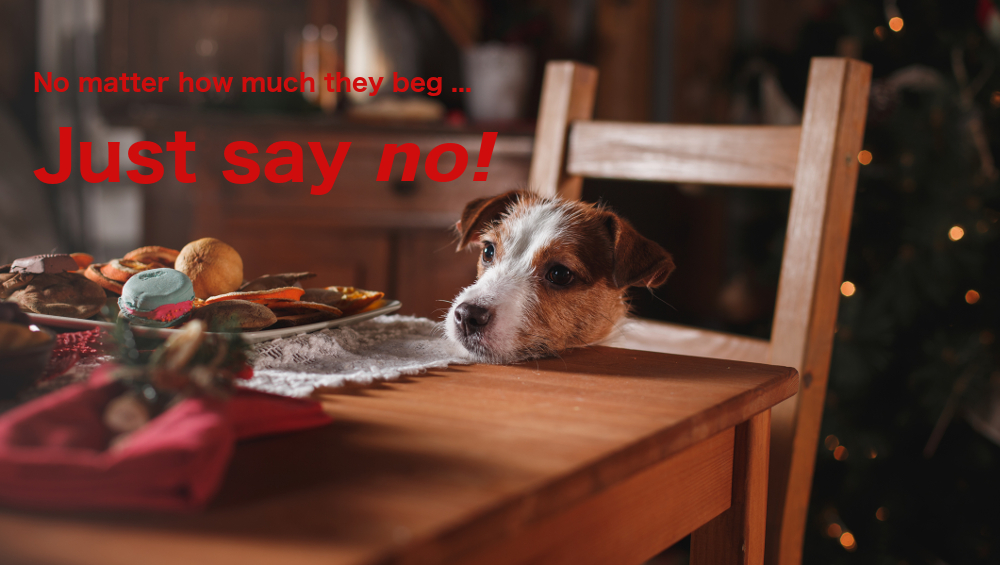
Some animals are scavengers, eating anything from poultry to poinsettias, and paying for their impulsive behavior with diarrhea, vomiting, or worse. Veterinarians call it “dietary indiscretion.”
The most dangerous time of year for pets in the United States is right now: the period leading up to, and including, the Christmas and New Year holidays. This is the time of year that presents both pets and people with a plethora of opportunities to be “indiscreet” eaters.
It is tempting to offer a pet a special holiday treat: an unfamiliar food, a chance to lick raw cake batter from a mixing bowl, or a dish of leftovers from the banquet table. It is easy to overlook the risks posed by Christmas decorations, snack foods, candies, and candles.
Some of these temptations are equally hazardous to the humans in our households. Both flour and raw eggs are potential sources of Salmonella, and raw flour may contain E. coli bacteria.
Leftover food that sits out for hours at room temperature during and after holiday meals are breeding grounds for toxin-producing bacteria, including Staphylococcus aureus (staph) and Clostridium perfringens. Both of these pathogens can make pets and people sick with acute nausea, vomiting and diarrhea.
Cats, especially, are sensitive to staph toxins. In fact, the earliest test for the presence of this toxin in a food sample was the aptly named Kitten Test, in which a portion of the food was fed to kittens. An episode of vomiting within a few hours confirmed the presence of the toxin.
Clostridium perfringens can be deadly for dogs. A 2012 article published in the Canadian Veterinary Journal reported on the death due to acute bloody diarrhea, of a two-year old Pomeranian show dog that had appeared perfectly healthy the day before. Large numbers of Clostridium perfringens were found in the dog’s intestinal tract on necropsy.
Following these tips will help you to keep your pets and family members safe during the holidays.
DO refrigerate leftovers promptly.
DO handle raw meat and poultry as though contains Salmonella and Campylobacter, because it probably is contaminated with one or both of these pathogens.
DO place all chocolate, candies and plants out of reach of pets.
DO brush up on practices for the safe handling of foods.
DO visit the ASPCA Animal Poison Control Center website to familiarize yourself with foods, plants and household products that may be toxic to your pets.
DON’T allow your pets or children to sample raw cake batter, raw cookie dough, raw pie crust or any other raw baked goods.
DON’T offer unusual food to your pets. This is not the time of year to experiment.
DON’T feed your pets raw poultry.
DON’T offer cooked bones of any type to your dog. Cooking makes bones more brittle and they may splinter and injure your pet.
DON’T set aside safe food handling practices in your hurry to prepare for the deluge of holiday guests.
(To sign up for a free subscription to Food Safety News, click here.)