

USCIS released telling data containing average processing times per form and petition type for fiscal years 2014 to 2018. While the normal pendency period for almost every type of case has increased since 2014, there have been significant delays for certain types of petitions. Foreign nationals seeking green cards have experienced longer wait times than foreign nationals benefitting from a non-immigrant visa petition. The numbers show that the change in the length of adjudication period has been especially significant over the past two years.
USCIS does not depend on government funding but is financed by fees collected in connection with the filing of each petition/application. Congress has enabled USCIS to recover the full cost of immigration-benefit processing and to set fees accordingly. This should provide for a direct correlation between case load and the monetary support necessary to facilitate the adjudication of these cases. However, in its annually mandated report to Congress last year, USCIS cited an inability to reconcile its fee structure with an increase in the complexity of cases. USCIS names new statutory and policy decisions in addition to extra security screenings as some of the reasons why cases are taking longer for the agency to adjudicate.
On Feb. 12, 2019, 86 Congress members wrote to the director of USCIS about their concerns regarding these processing delays. They asked that USCIS provide more transparency in its adjudication procedures and take the steps necessary to address, reduce, and prevent future delays.
Below are the statistics regarding the most common petitions/applications in business immigration:
Average Processing Time (in months)
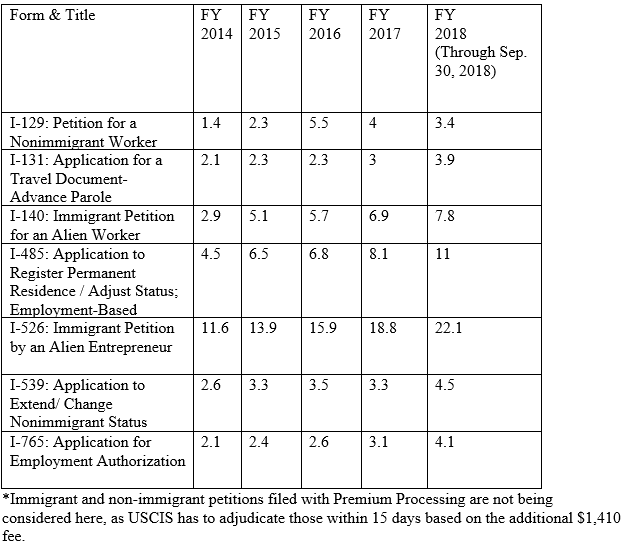
The long processing times for immigrant petitions and immigrant-petition-based benefits (sought through the filing of Forms I-485, I-131, and I-765) are likely to cause issues for some foreign nationals. Employers seeking to file for permanent residency for their employees already working in the United States must plan to do so far in advance, allowing sufficient time for these applications to process before their employees’ nonimmigrant status will expire.
For more on processing time, click here.