

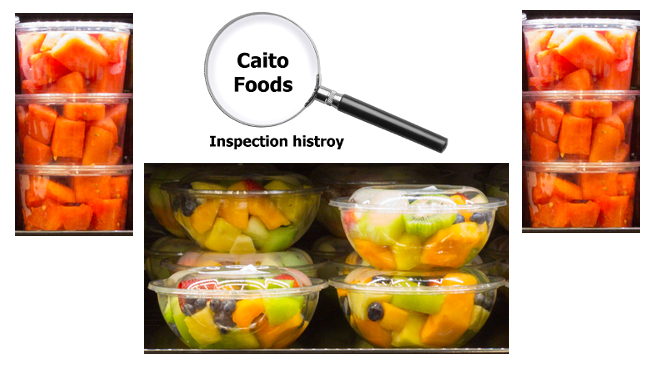
The Food and Drug Administration found multiple sanitation issues during a 2016 inspection of the Caito Foods fresh produce facility that prepared pre-cut melon products currently implicated in a Salmonella outbreak.
According to the Indianapolis company’s website, Caito specializes in fresh produce distribution and fresh food processing, selling to to customers nationwide.
The September 2016 FDA inspection was undertaken following detection of Listeria monocytogenes in a sample of cut butternut squash by the Ohio Department of Agriculture (ODA), according to documents obtained from FDA in response to a Freedom of Information Act request.
The company decided not to recall the squash from the sampled lot, because the product was intended to be cooked by the consumer. Also, the company did not learn about the contamination until Sept. 9, 2016, which was five days after the “BEST IF SOLD BY” date for the batch.
FDA investigators spent two days on a “directed inspection” in response to the Listeria monocytogenes finding. Their inspection focussed on the processing of raw fruits and vegetables, including butternut squash.
The “Establishment Inspection Report” noted several observations, which were provided to management at the completion of the inspection.
- Condensate dripping onto uncovered asparagus spears on the over-wrap line during the, even though the pre-operation sanitation checklist indicated “No condensation” for that date.
- Pre-operation sanitation check list for the date during which the butternut squash sample was produced identified three locations as “unsatisfactory” with no corrective actions indicated.
- During the inspection, an employee on the production line was observed placing “. . . waste into a trash can under the product line, pushing the waste down into the can with their hand, until their arm from the elbow down was fully in the trash can.” The employee immediately returned to handling cut watermelon chunks without changing or sanitizing gloves.
- Condensate water formed a puddle on the floor at one of the entrances to the receiving cooler, a potential reservoir for Listeria, which could be tracked into the rest of the facility.
Caito’s production facility was inspected again by FDA in 2018, in response to an outbreak of Salmonella Adelaide infections linked to freshcut melon products. That outbreak sickened 77 individuals in nine states.
On April 12 this year, Caito recalled various pre-cut melons and fruit medley products after the products were linked to cases of salmonellosis. As of April 24, there were 117 confirmed patients in the 10-state outbreak. At least 32 of the patients have been admitted to hospitals, according to an update this week from the Centers for Disease Control and Prevention.
The FDA is conducting an on-going investigation to determine the cause of the outbreak, including a traceback investigation to determine, if possible, a farm of origin for the melons. According to an agency spokesperson, FDA’s inspection of Caito’s production plant is still in progress.
(To sign up for a free subscription to Food Safety News, click here.)