

Sick with Legionnaires?
Call (612) 337-6126
 Elliot Olsen has regained millions of dollars for clients harmed by Legionnaires’ disease. If you or a family member contracted Legionnaires in Newark, New Jersey, please call (612) 337-6126 for a free consultation.
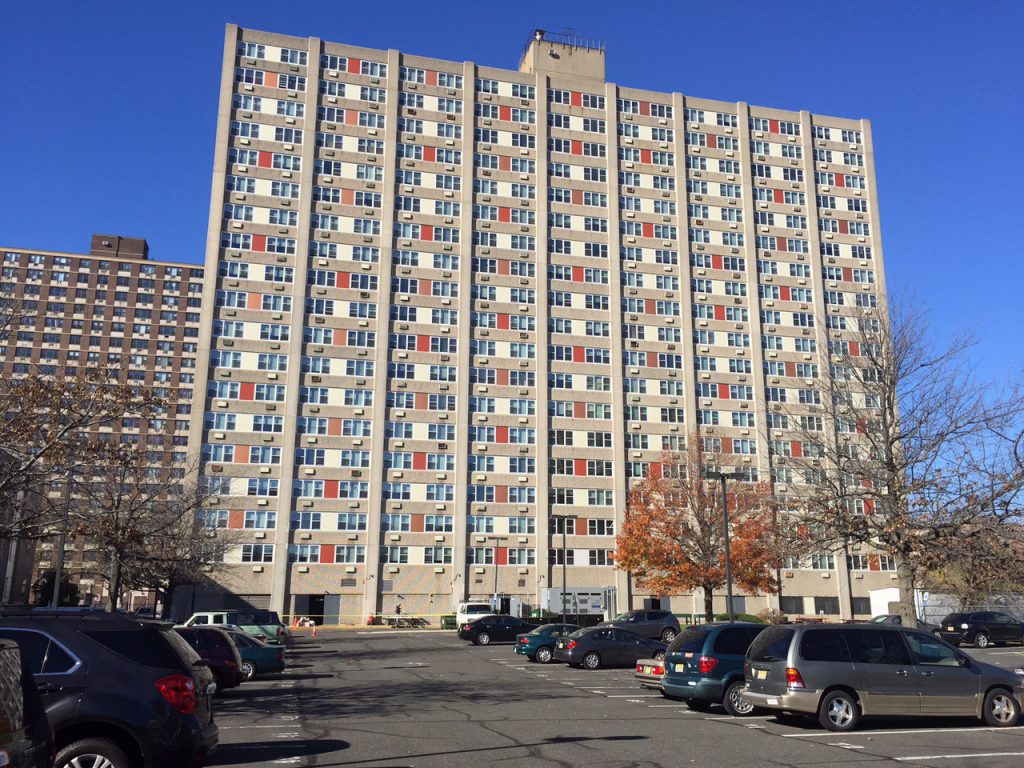
New Jersey officials are investigating a Legionnaires’ disease outbreak affecting a Newark senior apartment complex. Three residents of the building have taken ill with the disease since the beginning of December.
Newark Mayor Ras Baraka issued a public health alert, announcing the outbreak at a news conference outside of the Nevada Street Apartments, located at 2 Nevada Street, where officials believe all three cases originated.
“Residents here were diagnosed with Legionnaires’ disease,” Baraka said. “We have to figure out exactly where it originated from.”
Investigators are testing the building’s water and cooling systems to determine if the building is the source of the contaminated water.
“It becomes more dangerous for folks that are elderly and immunodeficient, so it is very important for us to deal with it now,” Baraka said, “particularly since this is a senior building.”
People usually get infected by breathing in aerosolized (small) water droplets – that is, mist or vapor containing Legionella, the bacteria that causes Legionnaires’ disease, a potentially deadly type of pneumonia. Aerosolized water can come from numerous sources, including showers, faucets, hot tubs, humidifiers, and decorative fountains.
Dr. Mark Wade, director of the Newark Department of Health and Community Wellness, said city officials are working with the New Jersey Department of Health.
“Just because these people were diagnosed in this building does not necessarily mean that (the bacteria) came from the water supply here,” Dr. Wade said. “We need to find out where it came from.”
The conditions of the three residents have not been released, although one report said all were in stable condition. Another report said only one patient had recovered, and the status of the other two cases was “not immediately clear.”
The Jonathan Rose Companies owned the 306-unit, Section 8 building for senior citizens until it was sold last month to the Hudson Valley Property Group.
Feeling sick?
City officials warn that if you are a resident, visitor or employee at the Nevada Street Apartments and are feeling symptoms, you should seek medical attention. Those symptoms are similar to the symptoms of other types of pneumonia, and they even can resemble those of flu:
Take precautions
Officials recommend residents apply the following precautions:
- Consider taking a bath instead of a shower, since a shower could create a water mist. Try to minimize your time in the bathroom while the tub is filling.
- It is fine to brush your teeth, wash your hands, or wash dishes, but fill the sink slowly to avoid creating a mist.
- It is fine to drink cold water from the tap but start with cold water when heating water for tea, coffee, or cooking. You cannot get Legionnaires’ disease by drinking water.
People with questions about Legionnaires’ disease can contact the Newark Department of Health and Community Wellness at (973) 733-7592.
Legionnaires FAQs
What is Legionnaires’ disease?
Legionnaires’ disease – also known as legionellosis and Legionella pneumonia – is similar to other types of pneumonia, which is an infection of the air sacs in one or both lungs that can produce fluid in the lungs.
Who is most at risk?
Anyone can get Legionnaires’ disease, but it is especially problematic for the elderly. People most susceptible to infection include:
- people 50 years of age or older
- smokers, current and former
- heavy drinkers of alcoholic beverages
- people with chronic lung disease
- people with compromised immune systems
- recipients of organ transplants
- individuals who are on specific drug protocols (corticosteroids, to name one).
How common is it?
According to the Centers for Disease Control and Prevention (CDC), an estimated 25,000 cases of pneumonia due to Legionella bacteria (Legionella pneumophila) occur each year, but only 5,000 cases are reported because of its nonspecific signs and symptoms.
Ten percent of those who become infected with Legionnaires’ disease will die from the infection.
Where do Legionella live?
The bacteria, which grow best in warm water, are found primarily in human-made environments. Outbreaks and clusters have been linked to many sources, such as:
- the cooling towers of air conditioning systems
- large plumbing systems
- water systems such as those used in hospitals, nursing homes, and hotels
- showers and faucets
- hot water tanks and heaters
- swimming pools
- hot tubs and whirlpools
- equipment used in physical therapy
- mist machines and hand-held sprayers
- decorative fountains.