

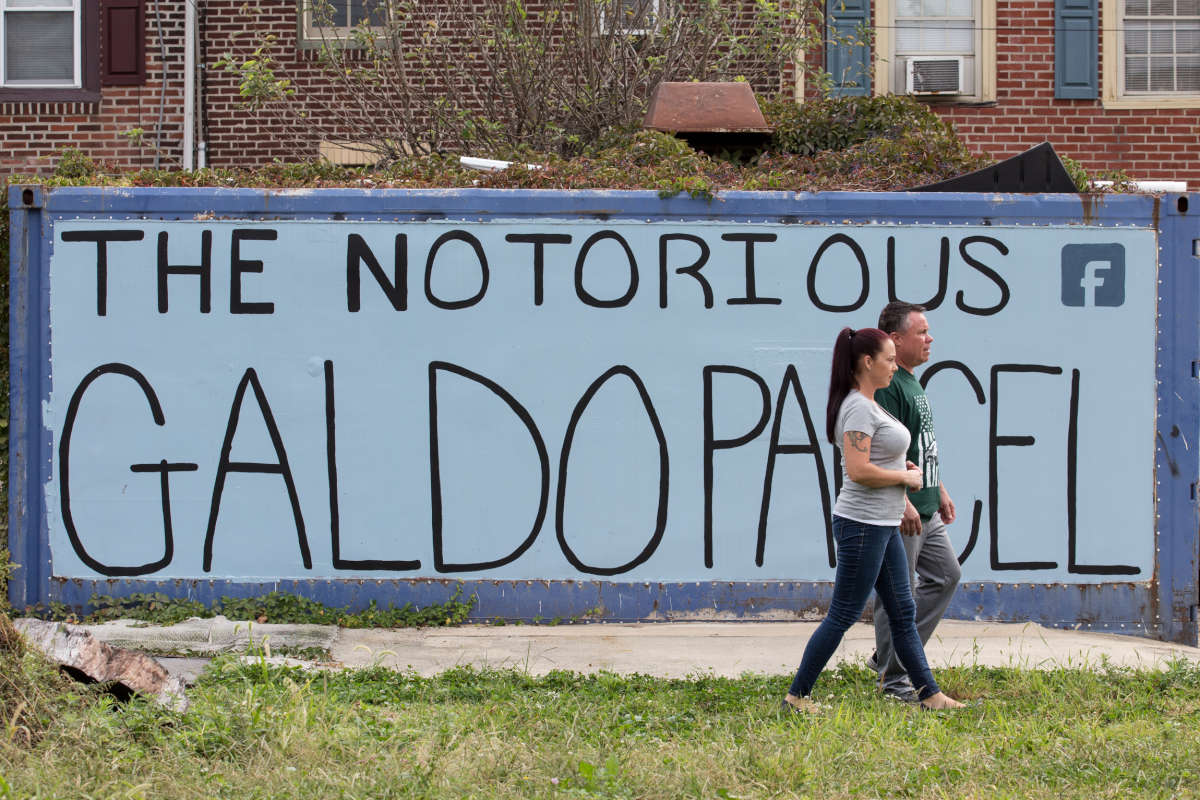
Did you know that under certain circumstances a private individual can acquire government-owned land without the government’s consent? Although the Commonwealth’s immunity from adverse possession claims has never been in question, whether political subdivisions of the Commonwealth are subject to adverse possession claims has been less clear. On September 26, 2019, the Supreme Court of Pennsylvania addressed this matter in the case of City of Philadelphia v. Galdo, 2019 Pa. LEXIS 5452. In Galdo, the Supreme Court held that political subdivisions in Pennsylvania may be subject to claims of adverse possession, except where the property is devoted to a public use. The facts of Galdo provide great insight into this matter.
In 1974, the City of Philadelphia condemned 1101-1119 N. Front Street in Philadelphia for transit purposes related to the construction of Route I-95 (the “Parcel”). The City, however, never physically occupied the Parcel or used it for public transit purposes as originally intended. Instead, the Parcel remained vacant and unmaintained, with the City viewing it as “surplus property” that was not actively being used.
In 1989, Frank Galdo, a neighbor, began using and improving the Parcel and using it exclusively as his own. Between 1990 and 2014, he poured concrete slabs and parked his vehicles on the Parcel; installed a fire pit, picnic table, carport, wooden pavilion, treehouse deck, sand volleyball court and horseshoe pit on it; planted several trees and grass on it; and installed two oversized trailers on the Parcel for storage purposes. Notably, Mr. Galdo never obtained any permits to make improvements to the Parcel and did not pay property taxes or insure the Parcel. The City never gave him permission to possess the Parcel at any time.
In 2014, the City filed an ejectment action against Mr. Galdo. He responded by filing a counterclaim to quiet title, claiming ownership of the Parcel by adverse possession. Mr. Galdo claimed that he had been in continuous and exclusive possession of the Parcel without the City’s consent or authorization since September of 1989. He further asserted that the Parcel had not constituted a public use since 1976.
The trial court concluded that the City enjoyed the Commonwealth’s immunity pursuant to an agency theory. On appeal, the Commonwealth Court rejected the trial court’s conclusion, acknowledging that political subdivisions are not immune from claims of adverse possession. The Supreme Court affirmed, holding that, in general, political subdivisions may be subject to claims of adverse possession. The exception being where the property is devoted to a public use. In reaching its decision, the Supreme Court found that the public transit purposes underlying the condemnation lapsed in the late 1970s when the work relating to the I-95 construction was completed.
This case makes it clear that municipalities should be vigilant and monitor their property or else face a potential loss by adverse possession. Developers and individuals alike can also potentially benefit from situations where municipality-owned property is ripe for a claim of adverse possession, or where a municipality decides to sell its unused property to a private entity for the public’s benefit.
Please feel free to contact any member of the McNees Wallace & Nurick Land Use Group for assistance with any land use or development issues or if you have any questions regarding this post.