

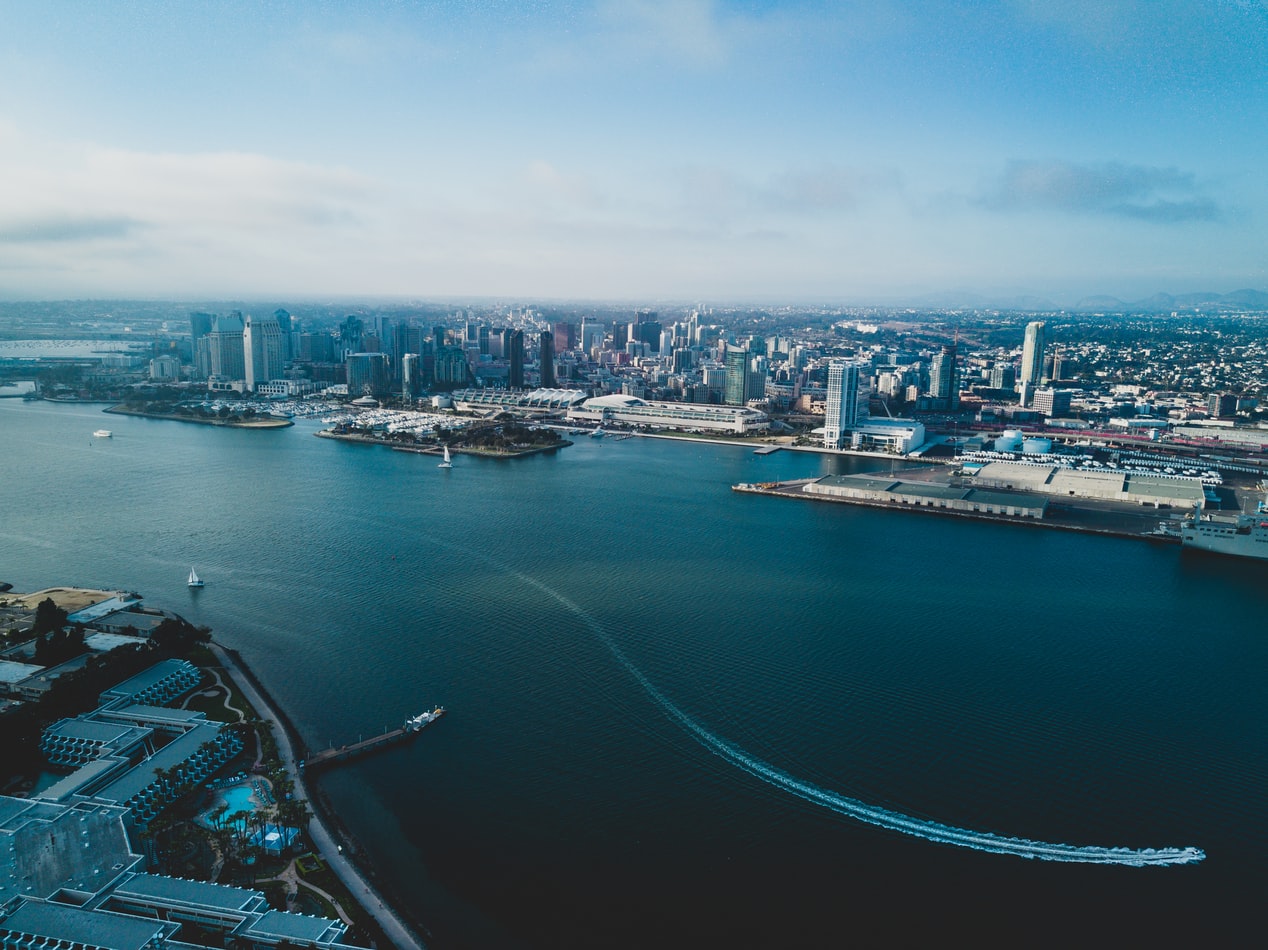
On May 22, 2020, the San Diego Court of Appeal resolved a long-running battle over dredging of San Diego Bay to support Army and Navy facilities there. The dredging efforts were federal projects, but subject to California Coastal Commission review. Although the original plan was to deposit the dredging spoils on adjacent land (protecting that land from erosion and providing lateral support), the military discovered unexploded ordinance and amended the project — with Coastal Commission approval — to dispose dredge spoils offshore. This led SLPR, LLC to sue the San Diego Unified Port District and the State for inverse condemnation (i.e., state action that damages private property), loss of lateral support, to quiet title (i.e., to determine the boundary between private property and state tidelands), and nuisance (which frequently accompanies inverse claims).
Years of litigation in state and federal courts led to a trial on whether a 1930s quiet title judgment had determined the boundary between the land now owned by the plaintiff SPLR, LLC and state tidelands. Earlier appellate rulings had found the 1930s judgment to be ambiguous and remanded for a trial using additional (“extrinsic”) evidence to determinate its scope. The trial court found that the quiet title judgment had resolved the boundary and this was sufficient to prevent the plaintiffs from re-litigating the quiet title claim (a doctrine known to lawyers as “res judicata” or “claim preclusion”). Given that outcome, the trial court granted summary judgment to the State concluding that the remaining claims could not be asserted because the plaintiffs did not file in the 60-day period allowed by the Coastal Act to challenge permitting decisions of the California Coastal Commission.
The Court of Appeal affirmed, discussing along the way the “artificial accretion rule.” When coastal land grows due to natural accretion (sand buildup along the shore), private property grows and the mean high tide line recedes, pushing state tidelands seaward. Artificial accretions (like dredge-and-fill projects, construction of piers, and the like), however, do not alter the boundary between private and public land and the newly built land and structures are on state property (and require permits).
The parties did not litigate, and the Court did not decide, whether the Coastal Commission would have permitting immunity under the Government Claims Act for the damage alleged in this case, nor whether the plaintiffs could prove that the Coastal Commission’s regulatory role in a federal project was sufficient to allow a tort claim.
The case is a useful reminder that no land use dispute is too old to find its way to court, statutes of limitation defense are crucial, and that documents proving title to public land — no matter how old — should be in your permanent records. The full opinion is here. It is not yet final, as petitions for rehearing by the San Diego Court of Appeal or review by the California Supreme Court are possible.