

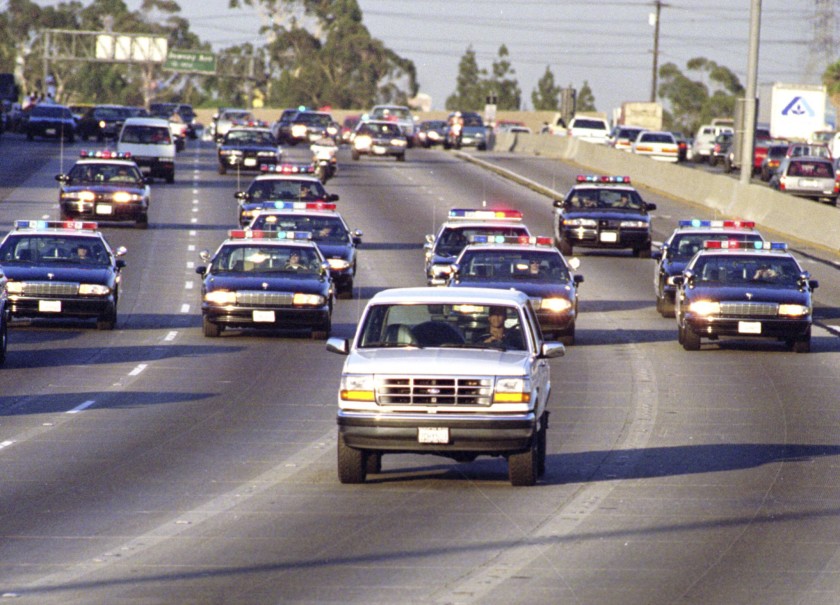
It’s 2:00 a.m. A stolen van has been leading officers on a high-speed chase, weaving in and out of traffic, reaching speeds of 100 mph. The van turns onto a dead-end street. When it reaches the dead-end, it makes a multi-point turn, and accelerates toward the officers. Officers need not hesitate; need not give a deadly force warning; need not contemplate alternatives to deadly force. Officer safety — and likely the public’s safety, too — justifies deadly force.
That’s the Ninth Circuit’s conclusion this week in affirming summary judgment for five officers in Monzon v. City of Murrieta finding probable cause to employ deadly force in such dynamic and urgent circumstances, even when officers are not in the path of the oncoming vehicle, and that not every shot must be justified. Maybe more important for lawyers than the holding is the lesson the case teaches on gathering and presenting objective evidence to successfully defend use-of-force suits.
Officers, of course, may exercise deadly force when reasonable under the totality of circumstances (as set forth in Penal Code 835a), and qualified immunity protects all but the plainly incompetent or malicious from the need to go to trial. Yet, lawyers’ ability to dispose of an excessive force claim short of trial can be illusive if factual disputes can be argued. Body-worn cameras can be an especially useful tool, as Scott v. Harris, a 2007 SCOTUS opinion, obliges courts to disregard when ruling on summary judgment a plaintiff’s testimony directly contradicted by the objective evidence, including camera evidence.
The Ninth Circuit decided Monzon as it did because of the evidence. There, it was not a body camera that made the difference. Instead, it was the stolen vehicle’s “black box” data recorder. Proof of the vehicle’s speed, its acceleration from a dead stop, and that the brakes were never engaged, allowed the Ninth Circuit to conclude the van posed a threat to the officers sufficient to justify deadly force.
Absent that evidence, one can easily imagine a different result. Monzon thus presents a fresh reminder on the importance of objective evidence in excessive force cases, and that such evidence is not limited to body cams. Just as black-box data may be powerful evidence in a car accident case so, too, may it “speak[] volumes about what actually occurred” in a use of force case. The same may hold true of other “big data” technologies. So, keep your antenna up for these sources of objective data that can win on summary judgment!