

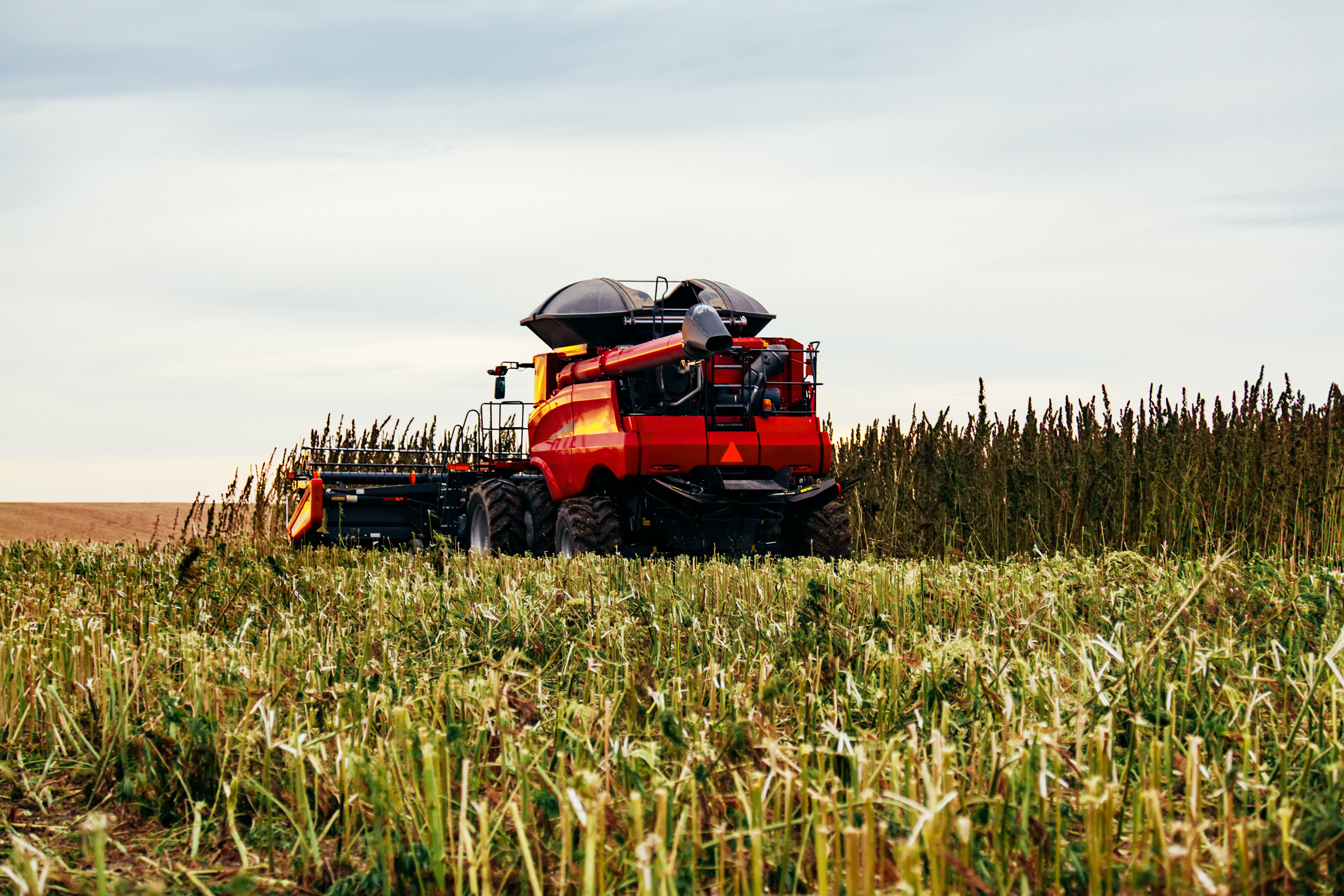
On August 20, 2020, the Drug Enforcement Administration (“DEA”) published an Interim Final Rule on industrial hemp and hemp derivatives (the “Interim Rule”), which immediately went into effect, to conform DEA regulations with the Agriculture Improvement Act of 2018 (the “2018 Farm Bill”).
As we previously discussed, the 2018 Farm Bill effectively removed industrial hemp from the definition of “marijuana” in the Controlled Substances Act (CSA). Additionally, tetrahydrocannabinols contained in industrial hemp, such as Cannabidiol (commonly known as CBD), were also removed from the purview of the CSA.
The 2018 Farm Bill defines “Hemp” as:
the plant Cannabis Sativa L. and any part of that plant, including the seeds thereof and all derivatives, extracts, cannabinoids, isomers, acids, salts, and salts of isomers, whether growing or not, with a delta-9 tetrahydrocannabinol concentration of not more than 0.3 percent on a dry weight basis.
Accordingly, because cannabis and its “derivatives, extracts, [and] cannabinoids” are not considered “marihuana,” so long as their delta-9 tetrahydrocannabinol (“THC”) concentration is at or below 0.3% on a dry weight basis, the regulation of “Hemp” fell outside the authority of the DEA. However, the DEA’s Interim Rule attempts to draw a hard line in the sand as to when the plant, and any products derived therefrom, are considered “marihuana,” thereby still subject to the DEA’s purview.
Specifically, Interim Rule promulgates the DEA’s position that hemp processors can convert otherwise legal “Hemp” into illegal “marihuana,” thereby bringing it back under the DEA’s authority, if such processing and extraction increases the THC content above the 0.3% THC threshold, even momentarily. Specifically, the Interim Rule states:
[T]he definition of hemp does not automatically exempt any product derived from a hemp plant, regardless of the Δ9-THC content of the derivative. In order to meet the definition of ‘hemp,’ and thus qualify for the exemption from [S]chedule I, the derivative must not exceed the 0.3% Δ9-THC limit. The definition of ‘marihuana’ continues to state that ‘all parts of the plant Cannabis sativa L.,’ and ‘‘every compound, manufacture, salt, derivative, mixture, or preparation of such plant,’ are [S]chedule I controlled substances unless they meet the definition of ‘hemp’ (by falling below the 0.3% Δ9-THC limit on a dry weight basis) or are from exempt parts of the plant (such as mature stalks or non-germinating seeds) . . . As a result, a cannabis derivative, extract, or product that exceeds the 0.3% Δ9-THC limit is a [S]chedule I controlled substance, even if the plant from which it was derived contained 0.3% or less Δ9-THC on a dry weight basis.
Accordingly, the DEA’s stance creates a substantial risk for processors who will be considered to be in possession of a Schedule I controlled substance during the extraction process if the THC content exceeds the 0.3% THC threshold at any point during processing, an almost inevitable result of the extraction process. Nevertheless, the Interim Rule states:
the definition of hemp does not automatically exempt any product derived from a hemp plant, regardless of the Δ9-THC content of the derivative. In order to meet the definition of ‘hemp,’ and thus qualify for the exemption from [S]chedule I, the derivative must not exceed the 0.3% Δ9-THC limit.
Although the DEA impliedly recognizes the fact that hemp processing can result in a temporary increase in THC content, it still took the position that, should the THC content exceed 0.3% THC at any point during the extraction process, processors will be considered to be in possession of a Schedule I controlled substance, regardless of whether the finished product complies with federal law.
Consequently, the Interim Rule creates significant criminal risk for anyone processing industrial hemp, as the DEA has asserted that the processing of “Hemp” into extracts, derivatives, and isolated cannabinoids (which are arguably legal under the 2018 Farm Bill) can result in unintentional violation of federal law, thereby subjecting processors to the risk of significant criminal liability. That said, the Interim Final rule does not appear to be a shift in DEA policy since the passage of the 2018 Farm Bill in December 2018, nor has DEA issued any warnings to industrial hemp manufacturers or otherwise signaled a change in enforcement policy by issuing the Interim Final Rule.
In addition, the DEA took several other steps in the Interim Final Rule towards the deregulation of Hemp products:
- Adding language stating that the definition of “tetrahydrocannabinols” does not include “any material, compound, mixture, or preparation that falls within the definition of hemp set forth in 7 U.S.C. § 1639o”.
- Removing from Schedule V a “drug product” in an FDA-approved finished dosage formulation that contains cannabidiol (CBD) and no more than 0.1 percent (w/w) residual tetrahydrocannabinols (e.g. Epidiolex).
- Removing DEA import and export controls for hemp extract that does not exceed the statutory 0.3% THC limit.
The DEA is accepting public comment on the Interim Final rule until October 20, 2020 via regulations.gov (Docket No. DEA-2020-0023).
Contact us
Husch Blackwell has significant experience working with the DEA and regularly advises industrial hemp cultivators and manufacturers under state-regulated hemp programs. Our Cannabis and FDA lawyers have the necessary regulatory expertise to assist companies engaged in the industrial hemp industry. Please contact Steve Levine, Seth Mailhot, Emily Lyons, Megan Herr or your Husch Blackwell attorney for further information.