


The Technical University of Denmark, DTU, has released the results of a research project involving a formula for a freeze-dried starter culture that camel milk farmers can use to make safe, fermented milk products.
Researchers say the formula means a lot for farmers and consumers in Africa. The quality and safety of milk is dependent on the rate of contamination by pathogens. Common types of contamination, including E. coli, Salmonella, Listeria and more, appear in milk with high frequency. Since fermentation occurs spontaneously with African camel milk due to a lack of cooling facilities, the milk often will contain dangerous pathogens.
The study states that “To our knowledge, we have for the first time demonstrated that some Lactococcus lactis strains isolated from camel milk can inhibit the growth of food related pathogens in both raw and pasteurized camel milk.”
This study shows that certain L. lactis strains, gram-positive bacteria used extensively in the production of buttermilk and cheese, have antimicrobial abilities that can be applied as a starter culture.
The typical commercial cultures have not worked well in acidifying camel milk. Thus, they do not have an antimicrobial effect, vital for eliminating pathogens. This study found that these certain L. lactis strains are optical for starter cultures that will eliminate pathogens in camel milk.
This study was a collaboration between Haramaya University, Copenhagen University, and the Technical University of Denmark and was funded by the Danish Development Fund, Danida.
Camel milk in Africa
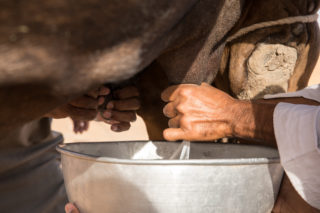
Improving the safety of camel milk is a potentially lifesaving innovation, according to the scientists. The dangerous pathogens that can contaminate milk can cause severe illness or even death. And camel milk is a vital nutrient source for many African countries, as up to 9 percent of milk production in Africa comes from camels. Most of the milk is sold as a fermented product at local markets and roadside stalls.
In a study published in the Journal of Food Science on the chemical composition and nutritional quality of camel’s milk, researchers reported levels of sodium, potassium, zinc, iron, copper, manganese, niacin and vitamin C were higher than in cow milk. But levels of thiamin, riboflavin, folacin, vitamin B-12, pantothenic acid, vitamin A, lysine and tryptophan were lower than cow milk.
Camel milk is low in fat but has a high percentage of unsaturated fatty acids. It also has components like long chain immunoglobulins or antibodies, which some people say helps boost immunity in those who drink it.
According to the Food and Agriculture Organization of the United Nations (FOA), “From all the data presented it is clear that the camel produces a nutritious milk for human consumption.”
Importance of Food Safety in developing markets
According to the World Health Organization, African and South-East Asia Regions have the highest incidence and highest death rates, with foodborne hazards responsible for 137,000 deaths and 91 million acute illnesses in Africa every year, mostly affecting children under the age of 5.
At the 2020 Global Food Safety Initiative conference March, Kristen Macnaughtan, program officer of the agricultural development program at the Bill and Melinda Gates Foundation, explained how malnutrition impacts the body’s ability to fight pathogens, including foodborne bacteria, viruses and parasites. She explained that one of the best ways to fight foodborne illness is to be well fed and healthy as malnutrition puts the body at a large disadvantage. Many people fighting foodborne illness do not have antibiotics. “A lot of people who have high exposure can develop asymptomatic diseases. Your body is still fighting it, but you’re no longer showing it.”
Macnaughtan said that this is a reason you often do not see people in emerging markets with the typical signs of food poisoning, is because they have become asymptomatic, even though their bodies are still fighting the pathogens and they can be contagious.
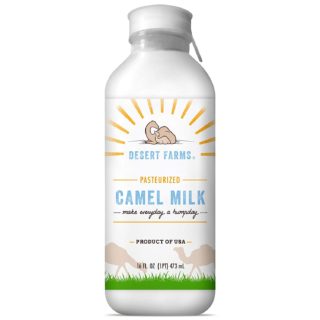
Camel milk is sold in the U.S. and can even be found on Amazon in powder or liquid form. Contrary to camel milk in Africa, the U.S. price is hefty, priced at $115.00 for six 16 ounce bottles.
(To sign up for a free subscription to Food Safety News, click here)