

 Late last year, the High Court of Australia overturned more than 100 years of precedent when it handed down its decision in Calidad Pty Ltd v Seiko Epson Corporation [2020] HCA 41 (Calidad v Seiko). Rather than following the existing principle of ‘implied licence’, in its decision, the High Court adopted a US common law patent doctrine, which provides that a patentee’s monopoly rights over its inventions are ‘exhausted’ after sale (the exhaustion doctrine).
Background
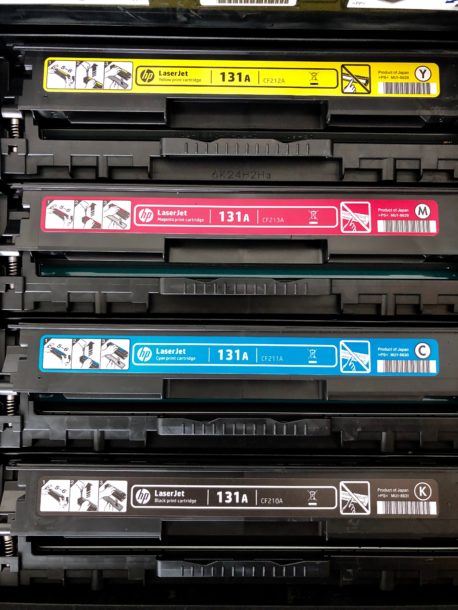
The Respondent in the case, Seiko Epson Corporation (Seiko), manufactured and sold printer cartridges under the brand name ‘Epson’ (Epson cartridges). The patented Epson cartridges were a single-use product, meaning that once the ink in the cartridge was depleted, it was necessary to dispose of, and replace, the entire cartridge.
Ninestar Image (Malaysia) SDN BHD obtained empty Epson cartridges and modified them to enable the cartridges to be refilled. The Appellant, Calidad Pty Ltd (Calidad) then purchased the modified cartridges and imported those cartridges into Australia for public sale.
Calidad relied on the ‘implied licence’ doctrine to argue that they had not in fact breached Calidad’s patent, as an implied licence to use, maintain, import, export, resell or otherwise dispose of the Epson cartridges was applied to the product upon its first sale.
Seiko alleged that the modifications extinguished any implied licence, amounted to a ‘making’ of the patented Epson cartridges and that by importing and selling the modified cartridges, Calidad was infringing Seiko’s rights as patentee.
Implied Licence Doctrine
According to the ‘implied licence’ doctrine, when a patented product is sold by or with the consent of the patentee, and that sale is unrestricted in terms of the subsequent sale or use of the patented product, the patentee provides with that sale, an implied licence to use the product as the purchaser (and any subsequent purchaser) thinks fit.
The implied licence doctrine stems from an attempt to reconcile Australian patent law and the established legal principle providing that a purchaser of a product becomes the owner of that product and therefore has the absolute right to use or dispose of the product as it considers fit. The implied licence doctrine was intended to resolve the legal tension that arises when the purchaser (legal owner) of a patented product wants to dispose of that product without the permission of the patentee.
Court Judgments
Initially in Calidad v Seiko, both Calidad and Seiko ran their respective arguments by reference to the implied licence doctrine.
At first instance, Burley J found in favour of Seiko, stating that the Epson cartridges were so materially altered that the implied licence no longer applied and Calidad had therefore infringed Seiko’s patent rights.
On appeal, the Full Court rejected Burley J’s reasoning, stating that the question to be decided was whether the modifications made to the Epson cartridges fell within the scope of the implied licence. The Full Court considered that the modifications did not fall within the scope of the implied licence and agreed with Seiko’s submissions that Calidad had therefore infringed the patent.
On appeal to the High Court, Calidad argued that the Court should apply the exhaustion doctrine, as opposed to the implied licence doctrine, and by a 4:3 majority, the High Court agreed.
The exhaustion doctrine
According to the exhaustion doctrine, a patentee’s rights in relation to their patented products are ‘exhausted’ once those products are sold without any restrictive conditions with respect to their use.
The majority of the High Court observed that the fundamental differences between the implied licence doctrine and the exhaustion doctrine are as follows:
- the implied licence doctrine assumes that a patentee’s rights in relation to their patented products survive the sale of those products. Pursuant to the implied licence doctrine, a patentee can qualify the licence, and that qualification can be ‘enforced as a matter of common sense’, as opposed to enforcement under contract law.[1]
- the exhaustion doctrine assumes that a patentee’s rights in relation to their patented products are exhausted upon the sale of those products. That is, ‘the sale takes the product outside the scope of the patentee’s monopoly rights’.[2] The patentee may restrict the purchaser’s use of the product by way of contract.
High Court Judgment
The majority’s position was that the implied licence doctrine is ‘complicated’, and is only capable of achieving a partial alignment with the fundamental principle of law respecting chattels ‘when it is clear that no restrictions have been imposed at the point of first sale’.[3]
Conversely, in relation to the exhaustion doctrine, the majority stated that:
The exhaustion doctrine has the virtues of logic, simplicity and coherence with legal principle. It is comprehensible and consistent with the fundamental principle of the common law respecting chattels and an owner’s rights respecting their use. At the same time, it does not prevent a patentee from imposing restrictions and conditions as to the use of a patented product after its sale but simply requires that they be obtained by negotiation in the usual way and enforced according to the law of contract or in equity.[4]
The High Court found in favour of Calidad, adopting the exhaustion doctrine and determining that any implied licence was exhausted on sale. The modifications made to the Epson cartridges were held to be within the scope of the rights that a purchaser (and therefore legal owner) of a product has to prolong the life of their product, and therefore did not amount to a ‘making’ of Seiko’s patented product. Calidad’s importation and sale of the Epson cartridges were held not to amount to infringement.
Implications
The High Court’s decision will create greater certainty for patentees in Australia and should encourage the use of contractual provisions to protect a patentee’s rights and to govern a purchaser’s use of patented products after sale.
The decision will also bring Australia’s patent law in line with the position in the United States and Europe, providing greater certainty for patentees whose products span numerous jurisdictions
[1]Calidad Pty Ltd v Seiko Epson Corporation [2020] HCA 41 at [72]
[2] Ibid at [75]
[3] Ibid at [77]
[4] Ibid at [76]