

Wisconsin news is in a tizzy about pandemic unemployment benefits leading to shortages of job applicants. News reports in Wisconsin feature retail establishments, and the outcry about worker shortages from the restaurant lobby has been non-stop. Sen. Nass even wants to start requiring unemployed workers to do four job searches a week and end all pandemic-related eligibility for regular unemployment benefits.
Hogwash.
In other states, unemployment benefits may be an issue. But, in Wisconsin unemployment eligibility and benefits are NOT the issue.
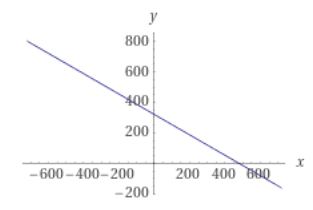
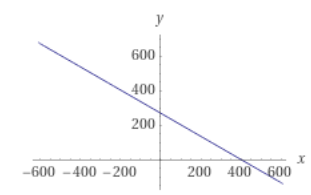
That is because Wisconsin uses a partial wage formula of
WBR minus 2/3(Wages earned in a week minus $30) = UI received that week
for computing eligibility for unemployment benefits. This formula rewards workers for partial work, because they still remain eligible for unemployment benefits.
Depending on the claimant’s weekly benefit rate, a claimant can return to work and still be eligible for unemployment benefits. So, a working claimant can receive both wages from work and unemployment benefits, including the federally-funded $300 PUC currently being offered until 6 Sept. 2021.
Here is the eligibility chart for a claimant with a weekly benefit rate of $300 (the x-axis is the amount of wages earned in a week).
And, here is the eligibility chart for a claimant with a weekly benefit rate of $250 (the x-axis is the amount of wages earned in a week).
Retail and restaurant work is notoriously part-time work, in large part because full-time work is reserved to the employees for whom job benefits like health insurance are offered. Furthermore, these employers generally avoid any chance of having to pay overtime wages.
Worker shortages in northern and rural Wisconsin or in specific sectors of the economy are either because there are fewer available workers (rural and Northern Wisconsin have experienced a declining population during the last decade) or businesses are still thinking a $9 or $11 per hour starting wage is attractive, despite workers easily seeing numerous other businesses offering $15 or more per hour.
And, workers in highly paid jobs can see better wages, improved social services, and a better standard of living in cities like Minneapolis or Madison. Hence, it is in those cities where the population is growing.
Hint: Living in rural and Northern Wisconsin would be imminently more possible and attractive to folks if broadband Internet was widely available in those areas.
Yes, there may be a few Wisconsin workers who mistakenly think they cannot collect unemployment benefits while working part-time.
Note: A reporter keeps asking for examples of actual workers who are turning down work in order to keep receiving unemployment benefits. So far, no examples are forthcoming.
But, just because a few workers do not understand how unemployment works simply means that Wisconsin and its employers have not done a good enough job explaining how unemployment actually works.
Saying people in Wisconsin are not working because of unemployment benefits is like saying 2 + 2 = 5. The numbers just do not add up.