

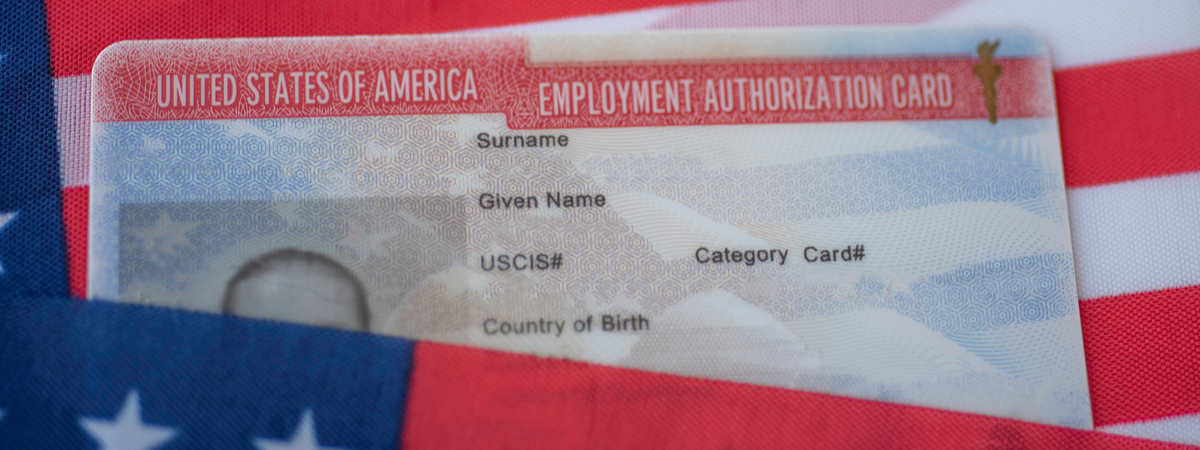
Due to an immigration application backlog, which was worsened by the pandemic’s adverse effects on USCIS and the nearly four-month office closure of Application Support Centers (ASCs) and Field Offices, the wait time for Employment Authorization Document (EAD) processing has been ranging anywhere from six to 12 months. This delay in processing has interrupted the lives of many foreign employees looking to work and companies looking to hire or retain them. Over the last two years, companies have faced obstacles in onboarding new employees; some have had to terminate employees in critical roles within their organizations while the employees wait for their EADs. The loss of these employees has disrupted workflow and revenue for affected companies.
To seek relief from these delays, the American Immigration Lawyers Association (AILA) and its partners filed a lawsuit. On Nov. 10, AILA settled with the Department of Homeland Security. The settlement provides structural changes for nonimmigrant H-4 and L-2 spouses who have experienced delayed processing times for their EAD applications.
The highlights from the settlement are:
- H-4, E, or L spouses qualify for automatic extension of their existing EAD if they properly filed an application to renew their EAD before it expires, and they have an unexpired Form I-94 showing their status as an H-4, E, or L nonimmigrant.
- The automatic extension of the EAD will continue until the earlier of: (1) the end date on Form I-94 showing valid status, (2) the approval or denial of the EAD renewal application, or (3) 180 days from the date of expiration of the previous EAD.
- To evidence the automatic extension of the previous EAD, the following combination of documents are acceptable for Form I-9 purposes: (1) Form I-94 indicating the unexpired nonimmigrant status (H-4, E, or L), (2) Form I-797C for a timely filed EAD renewal application (Form I-765) stating “Class requested” as “(a)(17),” “(a)(18),” or “(c)(26),” and (3) the facially expired EAD issued under the same category.
- E and L dependent spouses are employment authorized incident to their status; therefore, they are no longer required to request employment authorization by filing Form I-765 but may continue to file Form I-765 if they choose to receive an EAD to fulfill Form I-9 requirements until USCIS revises Form I-94 to contain a notation indicating that the bearer is an E or L spouse.
The usefulness of the settlement is limited. Employers should be mindful that the automatic extension benefit is subject to the underlying nonimmigrant status of H-4, E, and L spouses; it only extends to the expiration date of their Form I-94. This means that most will not be able to fully benefit from the 180-day automatic extension. Additionally, the settlement does not extend to J-2 spouses or first time EAD applicants and also fails to address how USCIS will process the backlogged EAD applications.
Those with questions about the settlement or how to complete I-9s for those individuals affected by the settlement should work with experienced immigration counsel.