

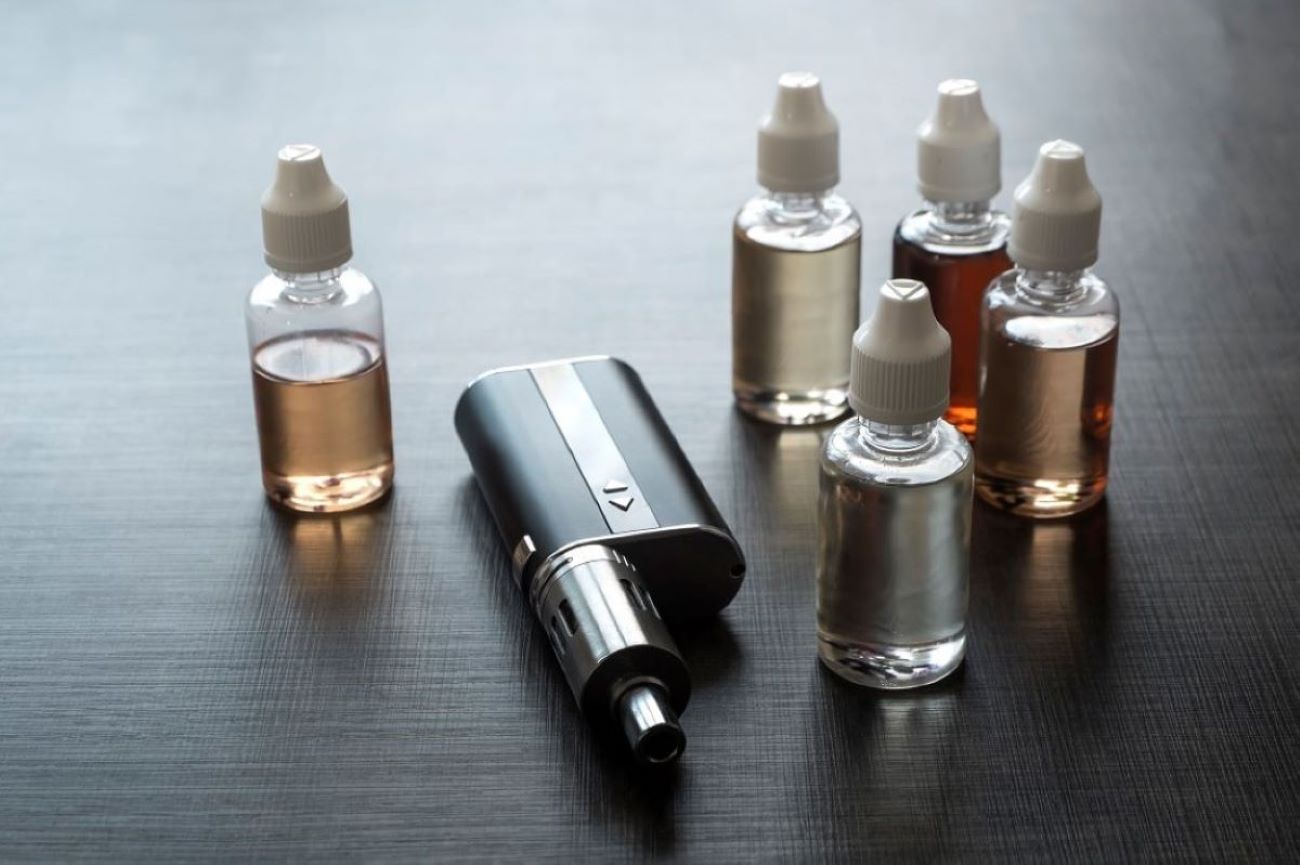
On January 1, 2022, two new state laws will become effective in Illinois and Oregon and could cause significant disruption to the vapor industry. We provide background on the legislation and discuss the potential implications for the sales of vapor products in the respective states.
Illinois
On January 1, 2022, SB 0512, The Preventing Youth Vaping Act, will take effect in Illinois.
Under this new law, an electronic cigarette is broadly defined as
- any device that employs a battery or other mechanism to heat a solution or substance to produce a vapor or aerosol intended for inhalation;
- any cartridge or container of a solution or substance intended to be used with or in the device or to refill the device; or
- any solution or substance, whether or not it contains nicotine, intended for use in the device
Critically, SB 0512 considers an electronic cigarette to be adulterated (and prohibited for sale) if, “it is required by 21 U.S.C. 387j(a) to have premarket review and does not have an order in effect under 21 U.S.C. 387j(c)(1)(A)(i) or is in violation of an order under 21 U.S.C. 387j(c)(1)(A).” In other words, if an e-cigarette is required by the federal Family Smoking Prevention and Tobacco Control Act (21 U.S.C. 387j(a)) to have premarket authorization from the U.S. Food and Drug Administration and does not have a Premarket Tobacco Product Application (PMTA) order in effect (or is in violation of such an order), it would be considered adulterated under the Illinois law.[1]
Although the law exempts e-cigarettes “first sold prior to August 8, 2016 and for which a premarket tobacco product application was submitted to the U.S. Food and Drug Administration by September 9, 2020” from the adulteration definition, products that are subject to timely submitted PMTAs that FDA has either refused-to-accept, refused-to-file, or have received marketing denial orders from FDA would likely still be considered adulterated by the state (as well as FDA).
However, because this part of the state adulteration provision only applies to e-cigarettes that are required to have PMTA authorization, it would appear not to apply to e-cigarettes that are not “tobacco products” under the federal Food, Drug and Cosmetic Act – i.e., e-cigarettes that do not contain tobacco-derived ingredients and that do not fall within the meaning of “components and parts” of tobacco products. In other words, e-cigarettes that utilize synthetic (tobacco-free) nicotine or CBD-containing e-cigarettes, for example, that arguably are not tobacco products under federal law, would not be considered adulterated in Illinois for not having authorized PMTAs.
Any distributor, secondary distributor, retailer, or person who violates the Illinois law shall be guilty of a Class 4 felony, which carries a 1-to-3-year prison sentence and fines of up to $25,000 if convicted.
Oregon
On January 1, 2022, HB 2261, will take effect in Oregon.
The legislation prohibits the shipment of “inhalant delivery systems” to any person in Oregon other than a distributor or a retailer (ORS 180.441(1)(A)). Thus, the legislation effectively prohibits direct-to-consumer (DTC) sales (including online sales) of the vast majority of vapor products in Oregon.
“Inhalant delivery systems” are defined in the legislation as “a device that can be used to deliver nicotine in the form of a vapor or aerosol to a person inhaling from the device; or a component of a device described in this paragraph or a substance in any form sold for the purpose of being vaporized or aerosolized by a device described in this paragraph, whether the component or substance is sold separately or is not sold separately.”
As such, the legislation would appear to prohibit the DTC sale of most types of vapor products, but likely would not cover non-nicotine closed-system products:
| Type of Vapor Product | Subject to Oregon HB 2261 shipment ban? |
| Bottled e-liquid (with or without nicotine) | Yes – language covers “a substance in any form sold for the purpose of being vaporized or aerosolized by a [inhalant delivery system] device” |
| Open-system/Open-tank ENDS Device | Yes – language covers “a device that can be used to deliver nicotine in the form of a vapor or aerosol to a person inhaling from the device” |
| Open-system ENDS components (e.g., tanks, coils, atomizers, batteries, etc.) | Yes – language cover “or a component of a [inhalant delivery system] device” |
| Closed-system ENDS (e.g.., pod/cartridge or disposables) pre-filled with nicotine-containing e-liquid | Yes – language covers “a substance in any form sold for the purpose of being vaporized or aerosolized by a [inhalant delivery system] device” |
| Closed-system ENDS (e.g.., pod/cartridge or disposables) pre-filled with non-nicotine containing e-liquid | No – this type of product (i.e., a pre-filled CBD or THC vapor device) would not fall within meaning of a inhalant delivery system |
For additional information and assistance in understanding this legislation and the impact it could have on your business, please contact Azim Chowdhury (chowdhury@khlaw.com). Azim will discuss these and other state vapor laws at Keller and Heckman’s upcoming E-Vapor and Tobacco Law Symposium on February 2-3, 2022. Register for the virtual seminar here.
[1] An e-cigarette is also considered adulterated if (A) it consists in whole or in part of any filthy, putrid, or decomposed substance, or is otherwise contaminated by any added poisonous or deleterious substance that may render the product injurious to health; or (B) it is held or packaged in containers composed, in whole or in part, of any poisonous or deleterious substance that may render the contents injurious to health. See section 15(a)(4) of SB 0512.