

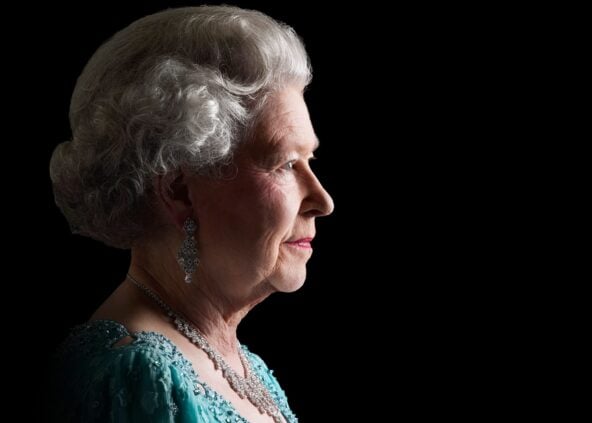
 (Author’s note… we’ve just returned from two weeks in Scotland, and were to have posted this on September 16th, but held publication until after the funeral of Queen Elizabeth II. We were in Edinburgh, a mere hundred miles away, when she passed on September 8th, and Edinburgh’s rainy, gray evening seemed appropriate. This is not an obituary, but publication is held until after the ceremony out of respect.)
The single, most important piece of information in serving a defendant is his/her/its location. Without the “where,” nothing else matters. Domestic defendants, foreign defendants, U.S. citizens living abroad… everything boils down to location. Now, for many places, just saying something like “I need to serve a defendant in Japan” is perfectly sufficient. The Hague Service Convention applies, and there is one way to get the job done. And there’s no question about whether translation is required. Likewise Mexico, Turkey, Korea, and the like. In those countries, there’s also just a single way to get things done, and a single authority to ask for help.
But there are a few places around the globe that require further inquiry to determine options and requirements. This post continues a series to look at particular places that aren’t quite so simple, for better or for worse.
THE UNITED KINGDOM
It’s not sufficient to just say you have a defendant to serve in the United Kingdom. The UK is comprised of four countries, three legal systems, two islands (or parts thereof), and one hell of a mess (more on that later). I highly recommend that you watch this video as a primer… my commentary stems from the explanation in it.
Point is, saying your defendant is in the UK is not a lot different from saying he’s in “Europe” or “Latin America”. Sure, it narrows down the concept, but not nearly enough. In an already-classic Ted Lasso clip, the coach asks incredulously, “how many countries are in this country?” The unison answer from his cohort: “four.”
It’s really a political mashup of three distinct countries and a fourth that used to be part of a larger whole. Great Britain is a geographic (and arguably cultural) idea… slightly different from the UK, and definitely different from “the British Isles.” Seriously… just watch the video above. Or watch this one. Or just Google “difference between the UK and Great Britain“. I won’t belabor the issue– just know that the constituent countries of the UK work a little differently.
Four constituent countries
Pretty straightforward here– the UK is comprised of:
- England (obviously the most populous and politically dominant, which will hit home shortly)
- Wales
- Scotland
- Northern Ireland
Three judiciaries
Not quite as straightforward– the UK’s legal systems are only three:
- England and Wales, in a unified system– the granddaddy of all common law systems worldwide. To be sure, since 2007, there’s been a split in doctrines, with Wales developing its own bodies of law separately from England, but the courts remain unified.
- Scotland– not exactly common law, not exactly civil law. Let’s just say the Scots march to the beat of their own drummer.
- Northern Ireland
Two islands
Don’t confuse the UK with the British Isles– the former is a political distinction, while the latter is geographic. The official name “The United Kingdom of Great Britain and Northern Ireland” has so much loaded into it that it’s frightening, requiring omission of details here just to preserve some semblance of brevity. The name also leaves out a fair amount, considering the several special jurisdictions that are decidedly part of the UK, but somewhat on their own administratively and politically. Chief among those: the Isle of Man (as in the Manx cat) and the Channel Islands, Jersey and Guernsey (like the cows).*
Add in Ireland, and you’re apt to start a fight if you don’t craft the description very carefully, depending on who you talk to. Ireland is an island– a pretty big one– and commonly considered one of the British Isles (to the chagrin of many Irishmen). But it hasn’t been a single political entity for a century, having been partitioned in 1922 to create the Irish Free State (the Republic of Ireland since 1948). Six counties in the north (logically, Northern Ireland) remained part of the United Kingdom, and continue so today.
Brexit
The one hell of a mess I mentioned earlier? It’s Brexit, which has spawned threats of:
- the unraveling of the Good Friday Agreement and a return to The Troubles (see here),
- Northern Ireland deciding to unify with the Republic on its own,
- Scottish withdrawal,
- Wales going its own way
… at this point, it’s impossible to predict where things go from here, and it’s entirely likely that this post will have to be amended in a couple of years. Stay tuned, because it’s more intriguing than any soap opera or murder mystery.
Bottom Line
This stuff is complicated. Where your defendant is located within the UK (or on the island called Ireland, for that matter) is a critical bit of information if a plaintiff hopes to properly get things done pursuant to the 1965 Hague Service Convention. Specificity is key.
* These are Crown Dependencies— not to be confused with Overseas Territories. Far too intricate a difference to describe here.