

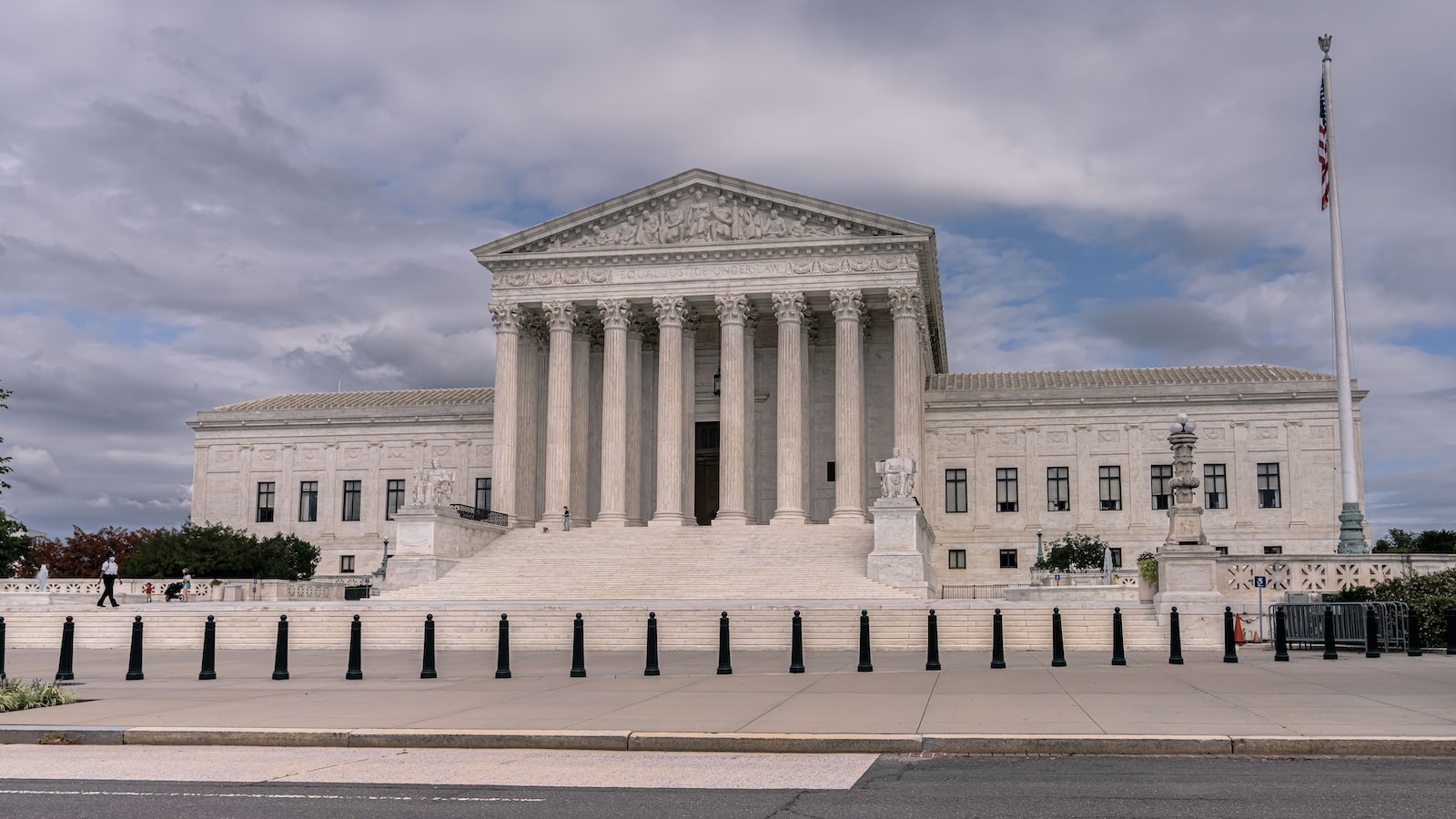
On June 1, 2023, in U.S. ex rel. Schutte v. SuperValu Inc., the Supreme Court clarified the state-of-mind (or “scienter”) standard under the False Claims Act (FCA), holding that a defendant’s subjective belief that a claim was false was sufficient to establish the FCA’s scienter element. In doing so, the Court rejected the Seventh Circuit’s analysis that focused on whether there was an objectively reasonable interpretation that the claim was accurate, regardless of the particular defendant’s subjective belief and knowledge.
Link to The Decisions Below The Decisions Below
We described the background of SuperValu in an earlier EOE post.
In short, the Supreme Court agreed to hear two consolidated cases from the Seventh Circuit — United States ex rel. Schutte v. SuperValu Inc., 9 F.4th 455, 472 (7th Cir. 2021) and United States ex rel. Proctor v. Safeway, Inc., 30 F.4th 649, 663 (7th Cir. 2022). Both cases addressed whether claims submitted to the government were knowingly false because they ran afoul of certain regulations. The core issue was whether the defendants could establish that they did not act knowingly because there was an “objectively reasonable” interpretation of an ambiguous regulation supporting their approach. Importantly, defendants argued that it did not matter if they actually believed that interpretation when the claims were submitted.
In a deeply divided opinion, the Seventh Circuit agreed with defendants. Relying on a non-FCA case – Safeco Insurance Co. v. Burr, 551 U.S. 47 (2007) – the Seventh Circuit reasoned defendants could not have acted “knowingly” if their actions were consistent with an objectively reasonable interpretation of the underlying regulation — even if the defendants did not believe that interpretation at the time. That approach was at odds with earlier decisions from the Sixth, Ninth, Tenth and Eleventh circuits, which allowed for some consideration of subjective intent.
Link to The Supreme Court’s Decision — Subjective Beliefs Matter The Supreme Court’s Decision — Subjective Beliefs Matter
In an opinion by Justice Clarence Thomas, the Court reversed the Seventh Circuit. Rejecting the “objectively reasonable” standard, the Court unanimously held that scienter under the FCA requires an inquiry into the defendant’s subjective beliefs about the falsity of the claim at the time the claim was submitted. As the Court noted: “what matters for an FCA case is whether the defendant knew the claim was false.”
Link to Silver Linings for Defendants? Silver Linings for Defendants?
Does the Court’s decision hold any positive news for defendants? Not really.
But while SuperValu unquestionably constitutes a victory for the government and relators’ bar on the issue of scienter, its effect may not be as far reaching as the Court’s last major FCA decision, 2016’s Universal Health Services, Inc. v. U.S. ex rel. Escobar. For example:
- Not a sweeping change. The Seventh Circuit’s approach, while not entirely an outlier, was still a minority view, and not one broadly adopted by other courts.
- Falsity arguments. More substantively, the Court’s decision does not address the separate element of falsity. Defendants faced with an ambiguous regulation can still argue that their claims for payment were not false because the regulation was, in fact, not violated. Indeed, that argument is not foreclosed by SuperValu even if defendants actually (if wrongly) believed they were violating the regulation at the time they submitted the claims.
- Footnote 5 and recklessness. SuperValu concluded that objective reasonableness does not trump a defendant’s subjective belief when considering scienter. But the Court left open whether objective reasonableness can be relevant in considering “reckless disregard,” In footnote 5, the Court noted that, in some contexts, “a defendant may be called ‘reckless’ for acting in the face of an unjustifiably high risk of illegality that was so obvious that it should have been known, even if the defendant was not actually conscious of that risk.” The Court went on, however, to reserve judgment on whether an objective form of recklessness applied to the FCA, leaving open the potential that objective standards may still have relevancy in assessing scienter, at least in certain circumstances.
- Context matters. At issue in SuperValu was the interpretation of the term “usual and customary” public pricing in the context of pharmacy reimbursements. While that term has been long used in the healthcare industry, the same is not necessarily true of other, newer and arguably far more ambiguous regulations at issue in healthcare programs.
Link to Looking Ahead: Practical Implications for Handling Ambiguous Rules Looking Ahead: Practical Implications for Handling Ambiguous Rules
Outcome aside, SuperValu highlighted a common issue that companies billing the government often face — how to deal with ambiguous regulations and rules, the interpretation of which could result in an FCA violation. There is still no easy answer, but at least two guideposts exist:
- Know the rules. Take appropriate steps – internally or with the help of outside counsel – to know the applicable rules and regulations. Where ambiguity exists, get additional advice and document your interpretation and basis for reaching it.
- Consider getting clarification from the government. Perhaps easier said than done, but companies and their lawyers should consider ways to get, or at least attempt to get, clarification on an ambiguous regulation from the government agency or contractor. The Court’s opinion somewhat oversimplifies this issue: How does a company determine if there is an “unjustifiably high risk” of falsity? Practitioners know the frustration that can come from even good-faith attempts to obtain the government’s clarification in advance. Nonetheless, a response from a government entity or agency, or even evidence of an attempt to get a response, may offer some benefit if later investigation or potential litigation arises.