

- Many of the rate hikes represent almost a 100% increase in shipping rates
- The special permission is not only to increase the rates and charges, but these increases are effective immediately as they also waive the FMC’s required 30-day notice period for increasing rates
- Absent significant military or diplomatic action, our expectation is that these circumstances will not disappear quickly
The Federal Maritime Commission (FMC) has granted special permission to ocean carriers to immediately increase the rates on containers that are being rerouted around the Cape of Good Hope in Africa or are retaining feeder vessels for pickup of cargo at high-risk ports in the Red Sea due to increased hostilities. Since mid-November 2023, Houthi rebels based in Yemen have attacked Red Sea shipping bound for Israel or linked to Israeli ports. Reported security incidents have ranged from outright attacks, approaches, and business interruptions to mere sightings.
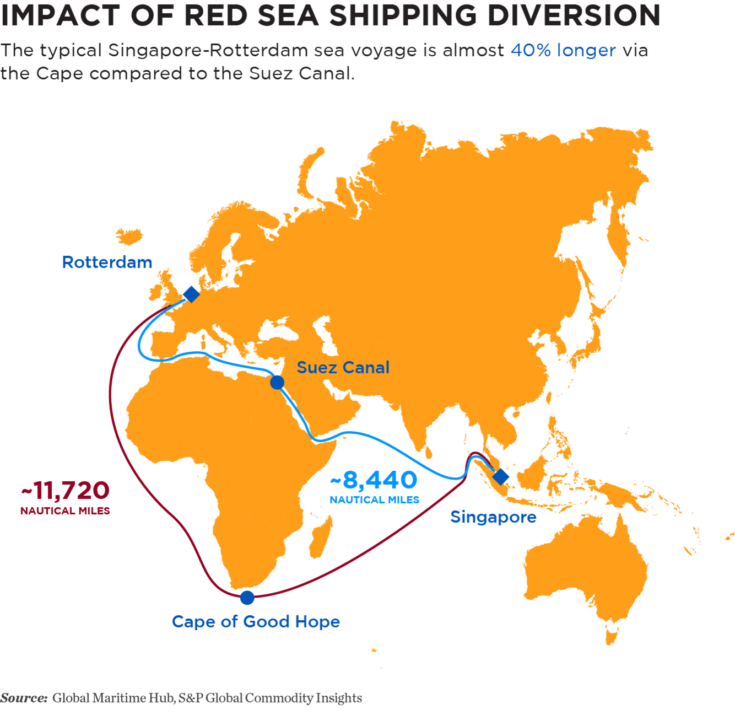
The announced grant of special permission in connection with rate hikes comes as the FMC has announced newly revised tariff regulations (effective February 1, 2024). These rule changes in conjunction with the prevailing risks to Red Sea shipping are likely to have a significant impact on the operations of ocean carriers and the supply chain segments they serve.
Already, multiple ocean carriers have applied for the increases and Notice waivers, including Maersk, Hapag-Lloyd, MSC, CMA CGM, Ocean Network Express, and American President Lines.
Expected Responses
In view of the robust and immediate increase in these rates, the following may be expected as responses by the various industry sectors:
- An increase of these requests by ocean carriers for Special Permissions from the FMC.
- The FMC is not expected to rubber-stamp approvals, as it had already alerted the shipping public that such requests would be given careful consideration and that the regulatory functions of the agency would not be automatically suspended.
- The shipper sector of the supply chain will be closely scrutinizing these requests and seeking contractual solutions to their application.
- Non-vessel operating common carriers (NVOCCs) will surely seek to protect themselves by:
- providing safeguards in Rules Tariffs;
- amending bill of lading Terms and Conditions to provide bases for passing on these increased charges on an immediate basis to their shipper customers; and
- amending NRA Quotations for purposes of reinforcing a legal basis for passing these increases through to their customers.
The implications of the rate hikes are likely to be far-reaching. The costs associated with alternative Europe-Asia shipping routes introduce significant expense to the supply chain and come at a time when shippers are just now recovering from the prolonged problems involving costly demurrage and detention because of port congestion and other aggravating factors which only recently seemed to be settling down. The situation in the Red Sea will certainly bear watching on a continuing basis not only by the supply chain but also by the FMC. If the current circumstances persist, the impacts will ripple through the global economy, potentially touching businesses with little direct involvement in the region.