

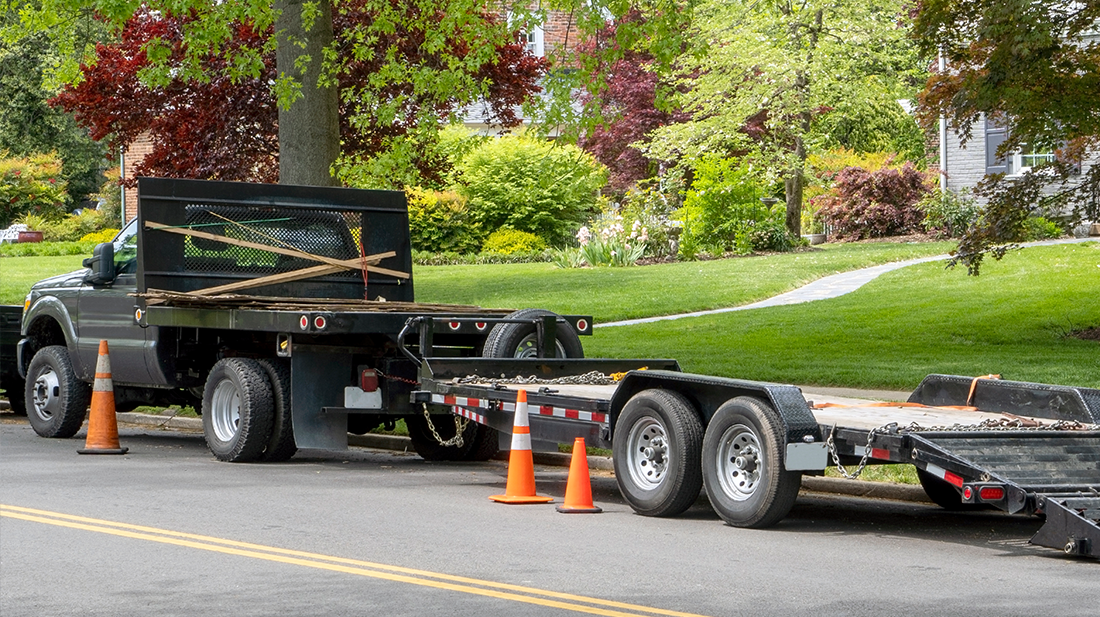
The Connecticut Supreme Court recently upheld the constitutionality of taxing an out-of-state company’s vehicles in Connecticut. The court upheld a New Britain Superior Court’s decision from 2022 that the Town of Somers did not violate the dormant commerce clause of the U.S. Constitution by taxing vehicles owned by a Massachusetts LLC and registered in Massachusetts that leave from and return each day to Somers.
The landscape construction company (“the company”) operated in several states and had offices in Massachusetts and Connecticut. The company owned two vehicles that were registered in Massachusetts and paid taxes on them in Massachusetts. However, both vehicles were driven daily and garaged each night in Somers.
Conn. Gen. Stat. § 12-71(f)(3) provides that a motor vehicle owned by a nonresident should be taxed in the town where such vehicle in the normal course of operation most frequently leaves from and returns to. The company argued that the statute violated the dormant commerce clause because the vehicles are used in interstate commerce and that the statute subjects the company to double taxation. The Connecticut Supreme Court did not agree with those arguments. The court determined that the statute was not discriminatory. The fact that the company pays multiple taxes on its vehicles is due to Connecticut’s and Massachusetts’ different and nondiscriminatory tax schemes. Connecticut’s property tax on vehicles is based on its physical location and the amount of time spent in the state. Massachusetts’ tax on vehicles is based on their registration in the state. The court further states “[t]he fact that [the company] is subject to multiple taxation as a result of its decision to register its vehicles in Massachusetts and to garage them in Somers does not render § 12-71(f) discriminatory.”