

Skip to content

Menu

LexBlog, Inc. logo
NetworkSub-MenuBrowse by SubjectBrowse by PublisherJoin the NetworkGet StartedSubscribeSupport
Contact Us
Search
Close

CTP Advances Proposal to Set Maximum Nicotine Level in Cigarettes

By Azim Chowdhury & Kaitlyn Johnson on December 26, 2024
Email this postTweet this postLike this postShare this post on LinkedIn

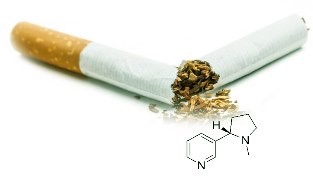
On December 10, 2024, the U.S. Food and Drug Administration (FDA or the Agency) Center for Tobacco Products (CTP) advanced a proposal to set a maximum nicotine level in cigarettes and certain other combusted tobacco products. The Agency requested the White House Office of Management and Budget (OMB) expedite a proposed tobacco product standard in what has been characterized as a “last-ditch” effort to drastically reduce the nicotine content in cigarettes. If finalized, the rule will have significant implications for Big Tobacco and its stakeholders, as it seeks to make cigarettes and other combusted tobacco products minimally addictive or non-addictive. The proposed tobacco product standard would likely not apply to electronic nicotine delivery systems (ENDS) or modern oral nicotine products (e.g., pouches), which are not combusted tobacco products. FDA’s continued pursuit of the nicotine product standard for cigarettes comes after the commercial failure of the only MRTP-authorized, very low-nicotine cigarettes marketed by 22nd Century Group Inc. 

FDA’s authority to establish tobacco product standards comes from the Family Smoking Prevention and Tobacco Control Act (TCA), 21 U.S.C. 387g(a)(4), which authorizes FDA to issue such standards that are appropriate for the protection of the public health (APPH). With respect to nicotine yields, the TCA prohibits the Agency from “banning all cigarettes, all smokeless tobacco products, all little cigars, all cigars other than little cigars, all pipe tobacco, or all roll-your-own tobacco products; or … requiring the reduction of nicotine yields of a tobacco product to zero….” 21 U.S.C. 387g(d)(3). 

On March 15, 2018, during the first Trump Administration and following then-Commissioner Scott Gottlieb’s announcement of FDA’s Comprehensive Plan for Tobacco and Nicotine Regulation, FDA issued an advance notice of proposed rulemaking (ANPRM) (Docket FDA-2017-N-6189) seeking public comment on issues and questions related to a potential nicotine product standard. FDA sought comments on:

  • Whether the scope of the nicotine reduction standard should include only cigarettes or also other tobacco products such as Roll-Your-Own (RYO) tobacco, cigars, pipe tobacco, and water pipe tobacco;
  • The appropriate nicotine level, with studies suggesting that 0.5 mg per rod could be an effective threshold; and
  • Additional questions addressing implementation time frames, analytical testing methods, technical feasibility, and potential countervailing effects (e.g., illicit market growth, dual use, and product switching) 

See our detailed analysis of the ANPRM here: FDA Issues Advanced Notice of Proposed Rulemaking on Potentially Lowering Nicotine Levels in Combustible Cigarettes to Minimally or Non-Addictive Levels | The Continuum of Risk.

Nearly 8,000 comments were submitted. Industry stakeholders are concerned that the proposed nicotine limits would not be technically achievable and could have unintended consequences, such as fueling the growth of contraband and an unregulated black market for cigarettes. 

The proposal is currently under review by the OMB’s Office of Information and Regulatory Affairs (OIRA). However, it remains uncertain whether the Biden Administration will take any steps to advance the rule to a Notice of Proposed Rulemaking (NPRM) in its final days in office. Any future NPRM would again be open for public comment before finalization.

We will discuss this and other potential tobacco product standards at Keller and Heckman’s 2025 Annual E-Vapor and Tobacco Law Symposium on January 27-28, 2025, in Las Vegas, Nevada. Details and registration information can be found here.

Photo of Azim Chowdhury Azim Chowdhury

Azim Chowdhury is a regulatory and public policy attorney with a focus on vapor, nicotine and tobacco product regulation. He is a Partner in Keller and Heckman’s nationally-ranked food and drug law practice.

Mr. Chowdhury advises domestic and foreign corporations in matters of…

Azim Chowdhury is a regulatory and public policy attorney with a focus on vapor, nicotine and tobacco product regulation. He is a Partner in Keller and Heckman’s nationally-ranked food and drug law practice.

Mr. Chowdhury advises domestic and foreign corporations in matters of Food and Drug Administration (FDA) and international regulatory compliance. In particular, he has developed expertise in tobacco and vapor product regulation relating to the implementation of the Family Smoking Prevention and Tobacco Control Act, and spearheaded the Tobacco and E-Vapor practice at Keller and Heckman. Specifically, Mr. Chowdhury has experience representing tobacco, e-cigarette and e-liquid manufacturers, distributors, retailers, suppliers and trade associations in matters of FDA, state and global regulatory compliance. He also assists corporations in establishing clearances for food and drug additives in the U.S., Canada, and European Union, with an emphasis on indirect additives used in food-contact materials.

Mr. Chowdhury has authored and edited numerous articles and publications, including Tobacco Regulation and Compliance: An Essential Resource, FDA Regulation of Tobacco: A Comprehensive Guide – An FDLI Primer and Tobacco and Nicotine Delivery: Regulation and Compliance, 2nd Edition. He is a frequent contributor to the Food and Drug Law Institute’s (FDLI) Update Magazine and has served on the Editorial Advisory Board of the Food and Drug Law Journal.  In addition, he has been interviewed in the U.S. News and World Reports Best Lawyers Edition (2016) and was named one of “10 Names to Know in the Vape World” in the October 2015 issue of Vape Magazine. Mr. Chowdhury received the 2018 National Law Review Go-To Thought Leadership Award for his consistent coverage of the emerging issues surrounding vaping and e-cigarettes on Keller and Heckman’s law blog, The Continuum of Risk.  As an industry leader, Mr. Chowdhury frequently speaks at industry conferences and events.

Mr. Chowdhury also has an active pro bono practice through Keller and Heckman’s Pro Bono Program, and has been featured in the Baltimore Sun for successfully obtaining asylum in the United States for a family who fled their home country of El Salvador because of violence they faced from an international gang.

Prior to entering private practice, he served as a judicial law clerk on the Court of Special Appeals of Maryland. Mr. Chowdhury received a B.A. and B.S. from Johns Hopkins University, a MBA from the University of Maryland Robert H. Smith School of Business, and a JD, cum laude, from the University of Maryland School of Law.

Education: Johns Hopkins University (B.A., B.S., 2003); University of Maryland Robert H. Smith School of Business (M.B.A., 2006); University of Maryland School of Law (J.D., 2006, cum laude).

Admissions: District of Columbia; Maryland

Read more about Azim ChowdhuryEmailAzim's Linkedin ProfileAzim's Twitter Profile
Show more Show less
Photo of Kaitlyn Johnson Kaitlyn Johnson
Email
  • Posted in:
    Food, Drug & Agriculture
  • Blog:
    The Continuum of Risk
  • Organization:
    Keller Heckman
  • Article: View Original Source

Call us at 1-800-913-0988 or email sales@lexblog.com.

Facebook LinkedIn Twitter RSS
  • About LexBlog
  • The Field We Built
  • Our Beliefs
  • Our Team
  • Contact LexBlog
  • Disclaimer
  • Editorial Policy
  • Terms of Service
  • Get Started
  • Publishing Solutions
  • Compass
  • Submit a Request
  • Support Center
  • System Status
Copyright © 2026, LexBlog, Inc. All Rights Reserved.
Law blog design & platform by LexBlog LexBlog Logo