

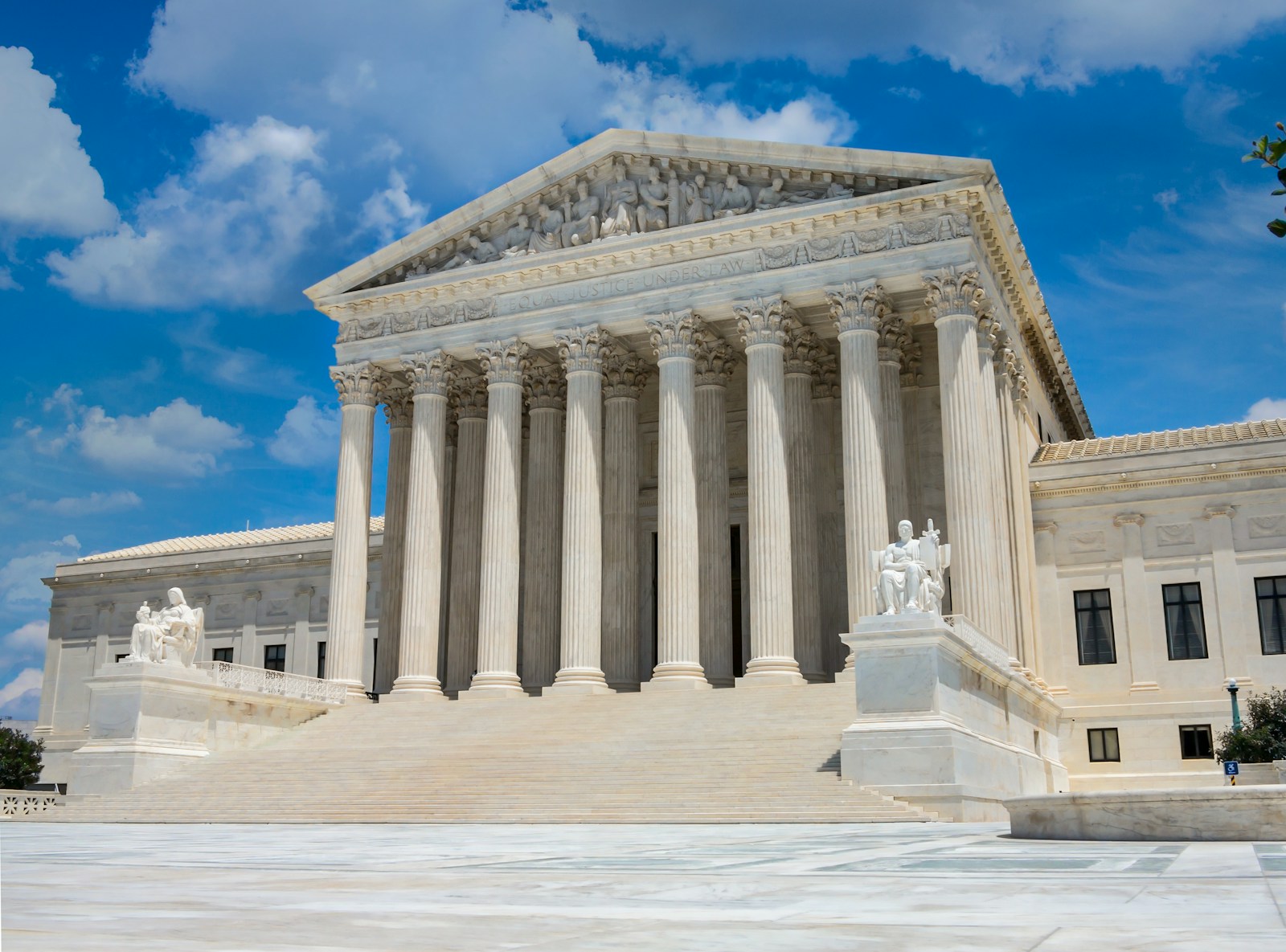
Today, in the matter of E.M.D. Sales, Inc. v. Carrera, the United States Supreme Court held that employers must not meet a heightened standard of proof when defending claims under the Fair Labor Standards Act (“FLSA”). The decision is a victory for employers defending FLSA actions across the country.
In the Carrera matter, the Supreme Court was asked to address the standard of proof employers must meet to demonstrate a plaintiff/employee is exempt from the FLSA. The plaintiff/employees in Carrera alleged they were denied overtime wages under the FLSA. The defendant/employer, E.M.D., argued the employees fell within the FLSA’s “outside sales” exemption and were therefore not entitled to overtime wages. In a bench trial, the district court applied a heightened “clear and convincing” evidence standard to E.M.D.’s outside sales defense and ultimately found in the employees’ favor.
On appeal, the specific question presented was whether an employer must prove this defense by a “preponderance of the evidence”—a far lower bar used by most federal circuits—or by “clear and convincing evidence”—a much higher standard previously adopted by the Fourth Circuit. Our prior discussion of the Carrera case and its implications can be found here.
In a huge win for employers, the Supreme Court held that the lower, preponderance of the evidence standard should apply. Writing for a unanimous Court, Justice Kavanaugh noted that the Fourth Circuit “stands alone in requiring employers to prove” FLSA defenses by clear and convincing evidence. The Court noted that, as a general matter, civil cases only require a higher burden of proof in three circumstances:
- If a statute demands one;
- If the Constitution requires one; or
- In certain “uncommon” cases.
Ultimately, the Court found none of these circumstances applied to FLSA actions. With respect to the latter category of “uncommon” actions, Justice Kavanaugh noted these primarily arise “when the government seeks to take unusual coercive action—more dramatic than entering an award of money damages” against an individual. Civil actions brought under the FLSA do not fit this category.
The Court also found the standard of proof in other, employment-related civil actions to be relevant. The Carrera plaintiffs argued that FLSA exemption defenses should require a heightened evidentiary standard because of the “public’s interest in a well-functioning economy where workers are guaranteed a fair wage.” But Justice Kavanaugh countered that Title VII cases—which only require a preponderance of the evidence standard—also seek to vindicate important public interests. Accordingly, the employees’ policy arguments for implementing a heightened standard of proof left the Court unconvinced.
The Court ultimately concluded that “the default preponderance standard governs when an employer seeks to prove that an employee is exempt” under the FLSA. The Court reversed and remanded the case for further proceedings consistent with its opinion.
As noted at the outset, the decision is a huge win for employers seeking to defend against FLSA claims. Carrera ensures that—regardless of where it is sued—the ordinary, preponderance of the evidence standard, applies when an employer seeks to show a plaintiff/employee is exempt from the FLSA.