

Consumer Reports has released details of an investigation highlighting the most contaminated poultry processing plants in the U.S., pinpointing those with persistently high levels of Salmonella contamination.
The worst offenders
Based on data from the USDA’s Food Safety and Inspection Service (FSIS), the report identifies 56 plants across 22 states that have been in the agency’s Category 3 designation for at least six months. Category 3 plants exceed the maximum allowable Salmonella threshold, signaling persistent contamination risks. These facilities process young chicken carcasses, chicken parts, ground chicken, and turkey products.
Some of the offenders are:
- Mar-Jac Poultry (Jasper, AL): Processes young chicken carcasses for foodservice (USDA Plant ID: P1307).
- Tyson Foods (Springdale, AR): Processes young chicken carcasses under its brand (USDA Plant ID: M5842+P5842+V5842).
- Foster Farms (Fresno, CA – Cherry St.): Handles both young chicken carcasses and chicken parts (USDA Plant ID: P6137A).
- Butterball (Mount Olive, NC): Produces ground turkey (USDA Plant ID: M7345+P7345).
- Cargill Meat Solutions (Dayton, VA): Processes ground turkey (USDA Plant ID: P18).
Some facilities, such as Foster Farms in Livingston, CA, and Pitman Farms in Sanger, CA, have certain segments in Category 3, such as chicken parts, while others meet higher standards, showing varied contamination risks by product type.
Poultry processing and Salmonella testing
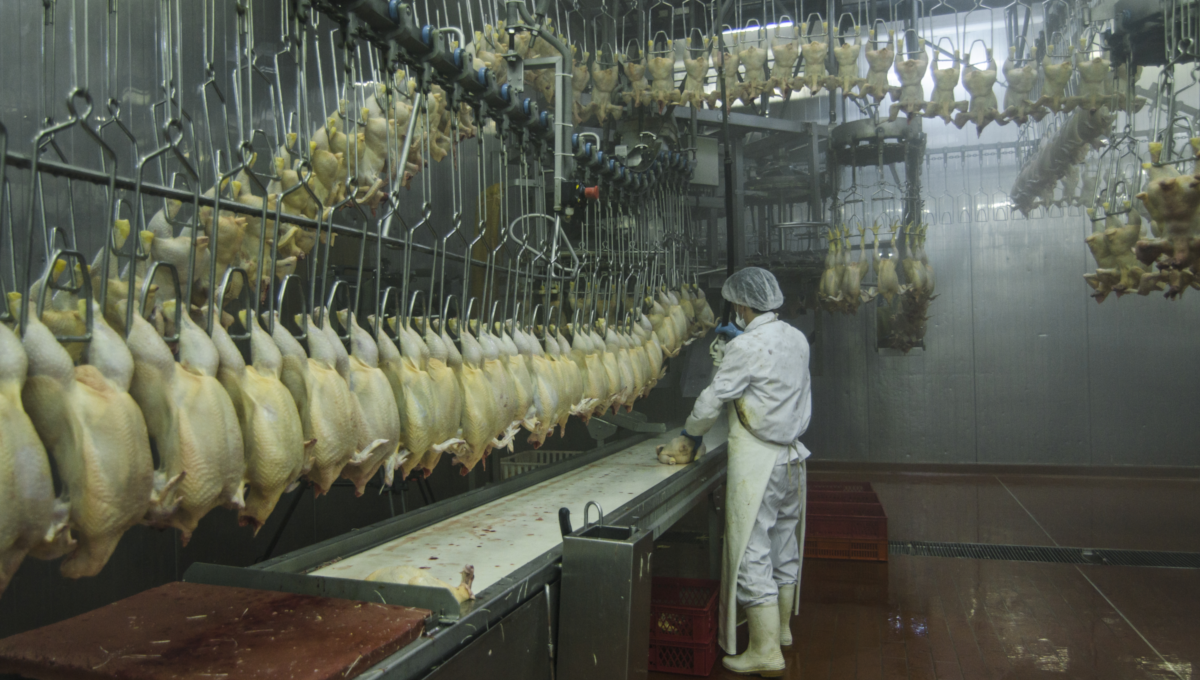
Poultry processing in the U.S. is a highly mechanized operation aimed at efficiently converting live birds into packaged meat products. Broiler chickens, raised for meat, are typically shipped to processing plants when they reach market weight after about seven weeks. Once at the plant, chickens are stunned electrically, slaughtered, and processed through various steps, including feather removal, evisceration, cleaning and chilling to reduce bacterial growth.
The FSIS monitors Salmonella levels at these plants, categorizing them based on a year’s worth of testing results:
- Category 1: Plants with Salmonella positives at 50 percent or less of the allowable limit.
- Category 2: Plants meeting the limit but with some results exceeding 50 percent of it.
- Category 3: Plants exceeding the limit entirely, posing significant contamination risks.
While the poultry industry reports a low overall Salmonella positivity rate — 2.7 percent for large plants, well below the USDA’s 7.5 percent standard — Category 3 plants remain a major concern due to their failure to meet safety standards.
Health risks and contributing factors
Salmonella contamination is a significant public health threat, causing over 1 million illnesses in the U.S. annually. Symptoms include fever, diarrhea and abdominal cramps, with severe cases requiring hospitalization. The Consumer Reports investigation highlights that while outbreaks can originate from any plant, Category 3 facilities are particularly concerning because of their consistent failure to meet FSIS standards.
Another factor contributing to contamination risks is low pathogenic avian influenza (LPAI), such as H9N2. Chickens infected with both LPAI and Salmonella shed more bacteria, increasing the potential for contamination. Unlike highly pathogenic avian influenza (HPAI) known as H5N1, which kills birds quickly, LPAI’s subtler effects can go unnoticed, amplifying the spread of Salmonella within flocks.
Industry standards and consumer protections
The poultry industry emphasizes it has strict safety protocols. The National Chicken Council (NCC) reports more than 300 safety checks throughout processing, with USDA oversight ensuring wholesomeness. However, the persistence of Category 3 plants suggests gaps in implementing these protocols. Measures such as organic rinses and chilling processes have been approved by the USDA, but Consumer Reports data shows these are insufficient at the listed facilities.
Consumers can mitigate Salmonella risks by following basic food safety guidelines including washing hands and utensils after handling raw poultry, using separate cutting boards for meat and vegetables, cooking chicken to 165 degrees F and storing poultry below 40 degrees F. Additionally, consumers should ensure proper handling at grocery stores, such as bagging raw meat separately.
The full Consumer Reports analysis can be found here.
(To sign up for a free subscription to Food Safety News, click here.)