

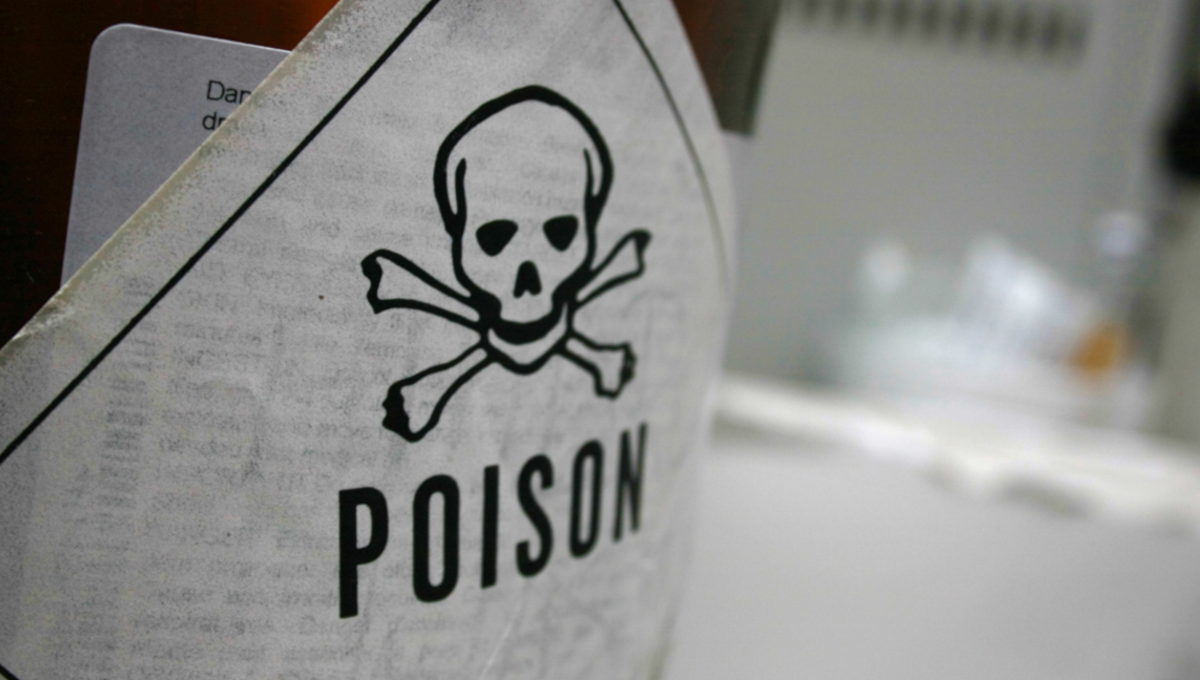
Foodborne illness typically traces back to contaminated meat or greens, but intentional contamination has a grim legacy that stretches across human history — from ancient poisonings to modern malice.
Deliberate food contamination persists, spanning cases from razor blades in pizza dough — like the 2020 Saco, ME, incident, where a man sabotaged Hannaford Supermarket products, prompting recalls and panic — to cleaning solution slipped into coffee, as seen in a 2019 Illinois case where a fast food worker dosed a customer’s drink with bleach because of a dispute, landing the victim in the hospital. Though rare, these food crimes expose motives of revenge, chaos, or even financial gain — using adulterated food to sicken, kill, manipulate, intimidate, or destabilize entire communities.
Here are some examples of how food has been turned into a weapon.
Michigan’s nicotine-tainted beef
In 2003, Sean Salley, a disgruntled supermarket worker in Grand Rapids, MI, pleaded guilty to poisoning 250 pounds of ground beef with Black Leaf 40, a nicotine-based insecticide. The USDA’s Food Safety and Inspection Service reported 92 illnesses across 17 counties, with victims suffering vomiting and dizziness between January and February 2003. No deaths occurred, but 40 people sought medical care, some were hospitalized. “It was revenge, pure and simple,” a Michigan prosecutor told The New York Times. Salley’s grudge against the grocery chain Meijer, his employer, triggered a 1,700-pound recall. He was sentenced to 9 years in prison.
Oregon’s bioterror salad bars
In 1984, the Rajneeshee cult laced salad bars with Salmonella enterica Typhimurium at 10 restaurants in The Dalles, OR. The CDC confirmed 751 illnesses, 45 hospitalizations, and no deaths, marking it the largest bioterror attack on U.S. soil. Their goal was to sway a Wasco County election by incapacitating voters. Cult leaders, including Ma Anand Sheela, faced prison. Sheela served 29 months of a 20-year sentence.
Ohio’s unintentional deadly potluck
A 2015 church potluck in Lancaster, OH, turned tragic when home-canned potatoes in potato salad harbored botulinum toxin. The CDC reported 29 cases, 25 confirmed as botulism, with one death — a 54-year-old woman — and 21 hospitalizations. Unlike the cases of intentional food poisoning, this tragedy stemmed from human error, not malice. The Food and Drug Administration blamed improper canning, not intentional tampering. It ranks among the worst U.S. botulism outbreaks since 1978,
Canada’s parasite revenge
In 1970, Eric Robert Kranz, a 23-year-old McGill University graduate student in Montreal, poisoned his roommates’ milk and juice with Ascaris suum eggs— the microscopic, resilient eggs of a pig roundworm parasite that can infect humans and cause illness. Angered by a personal spat, Kranz triggered fever and lung problems in four victims, though none died. He confessed and received a suspended sentence. A court official called it a petty grudge gone awry.
Chilean grapes and economic sabotage
In 1989, two Chilean grapes tested positive for cyanide in Philadelphia, sparking a U.S. import ban costing Chile $330 million. No illnesses resulted, and the FDA found levels too low to harm. The suspected sabotage — likely tied to trade disputes — was likely aimed at economic damage rather than public harm. It showed food’s vulnerability beyond health risks.
Detection and prevention challenges
Intentional contamination often mirrors non-foodborne outbreaks — nausea, diarrhea, fever— complicating detection efforts. Investigators piece together clusters of cases, using clues like nicotine traces in Michigan or lab-confirmed Salmonella in Oregon. The FDA’s Food Safety Modernization Act of 2011 has strengthened defenses against accidental hazards but falters against premeditated acts.
Victims bear the brunt. Oregon survivors faced chronic gut issues post-Salmonella. Michigan’s beef eaters endured days of misery. Ohio’s accidental death left a family grieving. Salley’s nine years, Sheela’s truncated term, and Kranz’s suspended sentence reflect varied justice. The Chilean case saw no arrests.
(To sign up for a free subscription to Food Safety News, click here.)