

Traditional accounting methods—centered on periodic reporting and structured spreadsheets—once served finance leaders well.
Today’s business environment moves faster than monthly cycles can handle. Rising regulatory demands, market volatility, and data overload require finance teams to generate insights in real time—not after the fact.
Take a global retail enterprise that, despite running on an ERP system, struggled with fragmented data, delayed reporting, and a lack of actionable insights. It’s a challenge shared by many: the infrastructure exists, but the intelligence is stuck in silos.
Modern finance must move beyond accuracy toward agility. That’s why organizations are embracing financial data visualization tools coupled with predictive analytics and machine learning. These aren’t just dashboards—they’re decision engines. They detect patterns, flag anomalies early, and unlock a shared understanding across teams.
Finance is shifting from reporting the past to navigating the future. And data visualization is powering that shift.
The Friction beneath the Numbers: Legacy Challenges in Focus
The global retail example isn’t an exception—it reflects a broader reality. Many finance teams, even with modern ERPs, still battle entrenched challenges that slow down reporting and cloud decision-making.
Legacy reporting tools—static dashboards, isolated systems, and spreadsheet-driven processes—can’t keep pace with today’s dynamic environment. As financial data scales and diversifies, these outdated workflows create more drag than direction.
Here’s a snapshot of the most common blockers preventing finance from becoming a true strategic enabler:
| Challenge | Operational Impact |
| Disparate financial systems | Manual consolidation, delayed reporting, inconsistent metrics |
| Static, retrospective reports | Limited agility in decision-making |
| High-volume, low-utility data | Difficulty surfacing actionable insights |
| Spreadsheet dependency | Error-prone reporting, version control issues |
| Lack of narrative in reporting | Stakeholders struggle to connect financials to business goals |
The result? Slower decisions, increased risk, and finance teams struggling to connect insights to action. For CFOs and controllers under pressure to drive enterprise value, this isn’t sustainable.
To move from hindsight to foresight, organizations need to reimagine how financial data is delivered—faster, clearer, and in context.
From Fragmented Reporting to Financial Clarity: The Rise of Data Visualization
For the global retailer, the challenge wasn’t access to data—it was making sense of it fast enough to drive decisions. The shift came when they adopted a unified financial data visualization platform, turning finance from a reporting engine into a real-time intelligence partner.
Unlike static reports, modern visualization tools reveal trends, surface anomalies, and highlight relationships—faster and with more context.
Key Capabilities Powering Finance Transformation:
- Real-Time Dashboards Instant visibility into critical metrics—revenue, liquidity, margins—minimizes delays between performance and action.
- Interactive Reporting Dynamic filters let users drill into financials by cost center, region, or time frame—no spreadsheets, no wait time.
- Scenario Exploration & Storytelling Visual tools make “what-if” modeling intuitive, enabling finance teams to align forecasts with strategy and communicate impact clearly.
To see how these features work together, Exhibit 2 summarizes the core capabilities driving data-led financial transformation.
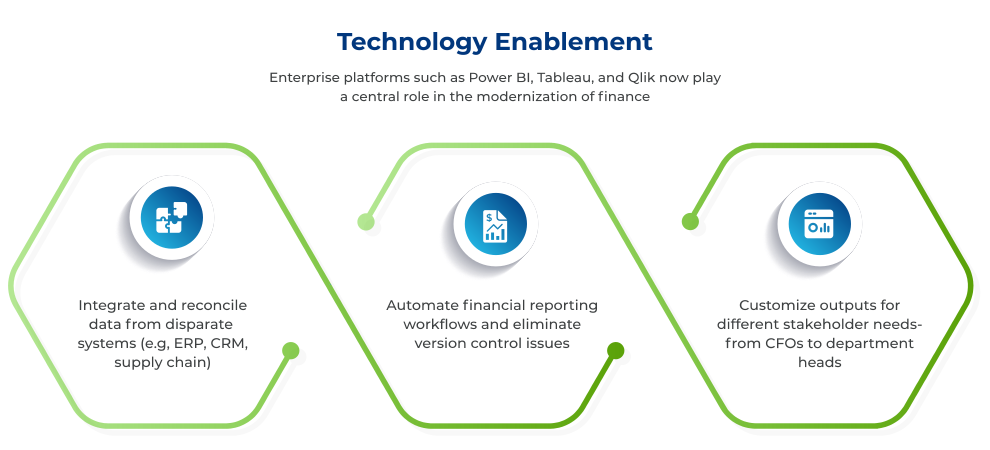
Strategic Alignment
Beyond technical enablement, the true differentiator lies in strategic alignment. What sets data visualization apart is not just speed—but relevance. By presenting financial data in a visual language, it becomes easier for cross-functional leaders, board members, and non-finance stakeholders to engage with financial insight.
As CFO mandates evolve from compliance to collaboration, visualization enables finance teams to communicate not just the numbers—but their meaning.
Real-Time Finance, Real-World Impact
Financial data visualization does more than speed up reporting—it gives finance a voice across the business. When insights are real-time, visual, and intuitive, they resonate beyond the numbers—with decision-makers in operations, marketing, and the boardroom.
For CFOs expected to drive strategy—not just ensure compliance—this shift is pivotal. Visualization tools turn finance into a live decision engine.
In the case of the global retail enterprise we introduced earlier, adopting a unified visualization platform became a turning point. Within just three months:
- Manual data compilation was replaced with real-time analysis
- Reporting cycles were significantly shortened
- Functional leaders gained shared dashboards for faster alignment and action
Eventually, finance stopped looking backward—and started leading forward.
Key Strategic Gains Observed

Visual dashboards enabled leadership to identify emerging margin pressures by region mid-quarter and adjust pricing strategies in real-time—something previously only possible post-period close.

Department heads gained visibility into cost structures and operational efficiency drivers, fostering accountability across business units and elevating finance from enforcer to enabler.

Anomalies in cash flow, delayed receivables, and inventory mismatches were surfaced before month-end, allowing corrective action without disrupting quarterly targets.

With intuitive visuals, the CFO’s office could now present performance narratives that resonated across non-financial stakeholders, improving communication at the board level.
Data Governance is the Trust Layer in Real-Time Finance
Data visualization delivers speed—but without trust, speed turns risky. As enterprises embrace real-time dashboards, the integrity of the data behind them becomes non-negotiable.
To ensure long-term value, organizations must govern financial data with discipline. That means embedding controls around master data, automated validations, access rights, and audit trails—especially when dealing with sensitive client or regulatory information.
Without this foundation, even the smartest dashboards can mislead.
For CFOs and CPA firms, data governance isn’t just a technical requirement—it’s the backbone of real-time finance. It powers reliable advisory, supports compliance, and earns the trust needed to turn insight into action.
Conclusion: Finance That Sees before It’s Told
In a business world that changes by the minute, finance can’t afford to wait for the month-end.
It must see what’s coming—and act before the rest of the company even asks. That’s the power of data visualization done right. It doesn’t just improve reporting.
It gives finance the foresight to lead, challenge, and create value in real time. Because in today’s market, whoever sees clearer, moves faster.
And finance—finally—can be that advantage.
Looking to Turn Financial Data into Actionable Insight?
At Cogneesol, we help finance leaders modernize their reporting functions with integrated, insight-driven accounting solutions. From dashboard-driven visibility to streamlined forecasting, our finance and accounting services are built for speed, clarity, and strategic impact.
Let’s talk about how we can support your transformation.
The post How Financial Data Visualization Is Driving Real-Time Business Insights appeared first on Cogneesol Blog.