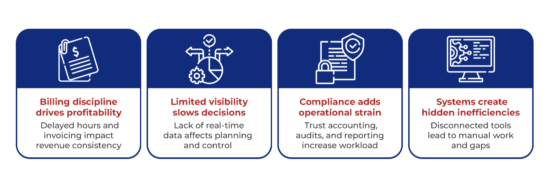
Strategic business insight, compliance rigor, and operational scalability are equally vital as traditional cost discipline
The financial operations of law firms are becoming more demanding. Between convoluted billing structures and tighter regulations, the leadership of law firms now expects the
Cogneesol Blog
The Cogneesol Blog, published by Cogneesol, focuses on topics related to finance and accounting transformation, automation, and the integration of AI technologies in financial operations. It covers trends such as hyperautomation, generative AI, and agentic AI, emphasizing their impact on finance functions including forecasting, compliance, underwriting, and document review. The blog also discusses workforce transformation, human-AI collaboration models, and workflow redesign to enhance operational efficiency and governance. Additionally, it addresses practical considerations in legal document review, comparing in-house and managed review approaches to optimize cost, compliance, and scalability.
Blog Authors
Latest from Cogneesol Blog
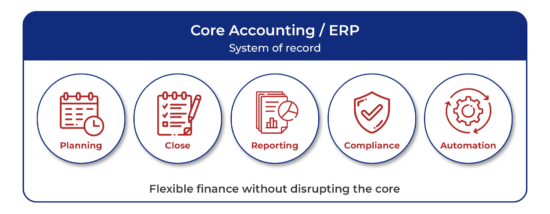
How Composable F&A Architectures Empower the Modern CFO
CFOs are expected to play a far more strategic role than in the past. Beyond running efficient finance operations, they are responsible for guiding growth decisions, managing risk in volatile conditions, supporting mergers and expansion, and delivering timely, reliable insights…
Nearshore IT Services in Finance and Accounting Outsourcing: Getting the Mix Right
For many organizations, offshore outsourcing achieved its intended purpose. High-volume, rules-based finance work moved to lower-cost locations, and the savings were clear. Over time, however, finance leaders began to recognize the limitations of this model, particularly in tasks that rely…
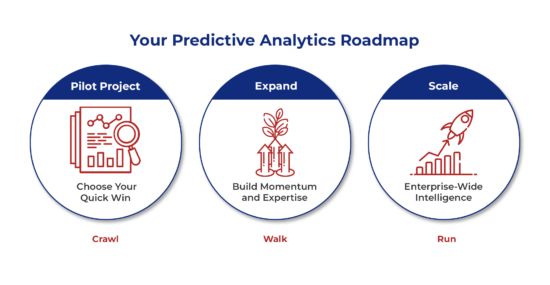
4 Use Cases Where Predictive Analytics Transforms Finance Decision-Making
Finance leaders face persistent volatility from multiple directions, with pressure building to accurately predict cash flow, protect margin, and optimize operational cost. Challenges are expected to intensify as external factors, such as inflation, fluctuating demand, supply chain disruptions, and a…
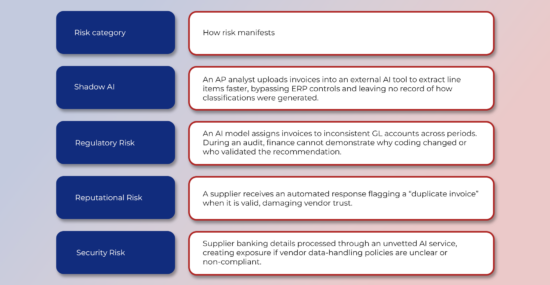
A Governance-First Framework for Implementing AI in Mid-Market Finance
Over the last few years, Finance and Accounting (F&A) functions have moved rapidly from experimenting with AI to embedding it across core operational workflows. In 2024, Gartner reported that 58% of finance teams were using AI, while KPMG’s latest Global…
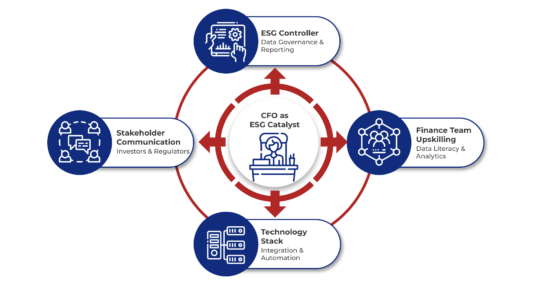
How to Integrate ESG into Core Finance Operations
CFOs no longer focus only on financial reporting and compliance. Their evolving role demands an understanding of a broader set of variables, including Environmental, Social, and Corporate Governance (ESG) factors. ESG is now becoming central to financial performance and long-term…
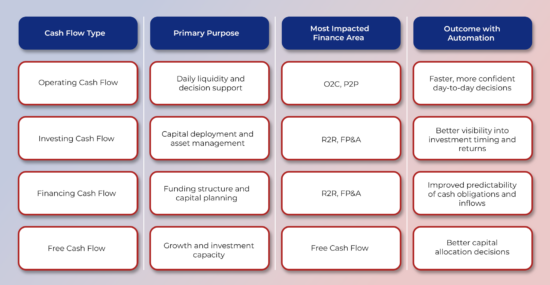
Automation that Moves the Needle: Increasing Cash Flow Optimization and Real-Time Visibility
For today’s CXOs, cash flow has moved beyond being a finance metric reviewed after the close. It has become a leadership priority, particularly in mid-market organizations where working capital discipline directly influences resilience, growth, and risk tolerance.
Volatility across demand…
Data Governance and Standardization the Key to Accurate Underwriting Across Multiple Commercial Brokers
An underwriter begins the week by reviewing two comparable submissions for industrial warehouses of similar size. Both stores have similar inventory and operate under nearly identical conditions. It clearly means that the evaluation should be easy and simple.
However, once…
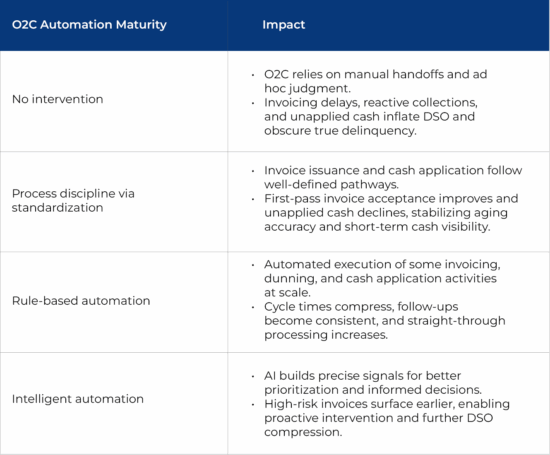
The O2C Acceleration Blueprint: How Mid-Market CFOs Can Cut DSO and Strengthen Cash Flow
Economic uncertainty and sustained periods of expensive capital are prompting CFOs to look inwards for liquidity rather than pursuing external financing or topline expansion. According to the Hackett Group’s 2025 Working Capital Survey, excess Accounts Receivable (AR) alone accounts…
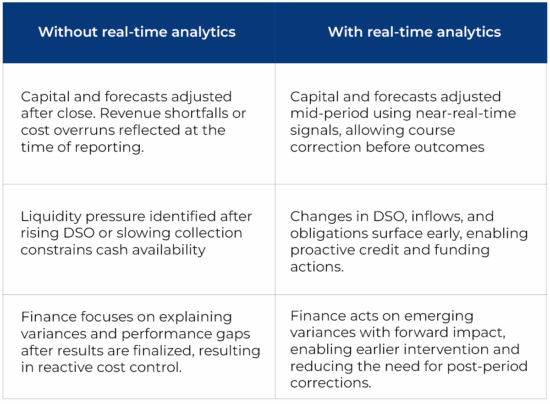
Becoming a Predictive CFO Who Uses Real-Time Analytics to Drive Business Growth
Over the past few years, uncertainty has become a permanent feature of the equilibrium in which businesses must operate. Opportunities for revenue growth, margin expansion, and efficient capital deployment are now sporadic, and risk can materialize without warning.
In this…