

— OPINION —
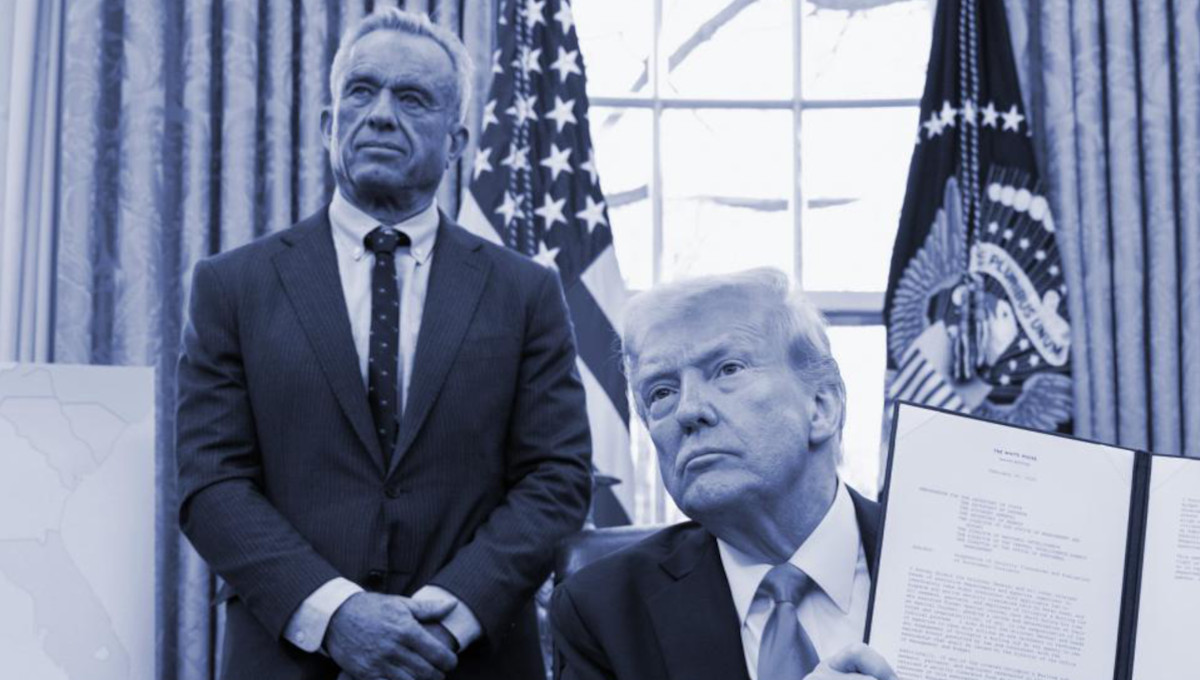
Donald Trump and his acolyte, Robert F. Kennedy Jr., vowed to “Make America Healthy Again.”
They lied.
- RFK Jr. fired every single member of FDA’s media communications team, including its director.
- The proposed 2026 budget for the FDA outlines plans to shift the responsibility for routine food safety inspections to the states.
- The 2026 FDA budget also proposes an overall reduction in full-time equivalent staffing for the Human Foods Program of 7.6 percent, with the Office of Investigations and Inspections reduced by 2.0 percent, and the Field Laboratory Operations by 54.4 percent.
Staff cuts at the FDA have already put the brakes on the agency’s ability to trace the source of foodborne disease outbreaks. In 2024, the agency investigated a total of 26 outbreaks and identified the source of 20 (77 percent). In 2025, the FDA has closed its investigation of 11 outbreaks after identifying the source of only 4 (36 percent); an additional 11 investigations remain under investigation, with a food source having been identified in four (36 percent).
The CDC has reduced its active surveillance of foodborne pathogens from six target organisms to just two, claiming lack of funding.
RFK, Jr. and Secretary of Agriculture, Brooke Rollins proposed allowing bird flu to “rip through” infected poultry flocks instead of culling the flocks to prevent further spread.
The USDA withdrew its proposed rule that, for the first time, would have placed (very lenient) limits on the presence of certain Salmonella strains in raw poultry.
Staff cuts at the USDA’s Animal and Plant Health Inspection Service have reduced the agency’s ability to combat livestock diseases, including bird flu.
The US Justice Department unit that used to handle drug and food safety cases on behalf of the FDA has been disbanded.
What can U.S. consumers expect as a result of these roll-backs?
- More foodborne disease, including more hospitalizations and deaths
- More outbreaks going unreported and unsolved
- Inconsistent food safety inspection standards from state to state
I have been a food safety microbiologist for more than 50 years. I have worked both in government and in the private sector.
During my entire career, I have advocated for a single agency to oversee food safety — an agency with Cabinet-level representation that would replace the current fragmented regulatory system in the United States.
But desperate times require desperate measures. The federal government is not doing its job. Nor does it plan to in the future.
States can—and must—act
The various states that have the resources to do so must take action to protect their populations from the failures of the federal government.
The West Coast Alliance is comprised of California, Oregon, Washington, and Hawaii. The Northeast Public Health Collaborative includes New York, Pennsylvania, New Jersey, Connecticut, Massachusetts, Maine and Rhode Island, as well as New York City’s Department of Health.
If a state government can override federal recommendations on vaccine access, the state also can superimpose its own food safety regulations on those handed down by the FDA and USDA in order to protect its population from foodborne disease.
I propose that the West Coast Alliance be extended to encompass food safety, including the following actions:
- Develop and implement a common set of inspection standards for produce and processed foods originating in California, Oregon, Washington, and Hawaii.
- Embargo all shipments of produce and processed foods originating from outside the borders of its member states unless each individual shipment is accompanied by a Certificate of Analysis issued by an accredited laboratory.
- Regulate discharge emanating from concentrated animal feeding operations (CAFOs) in the member states—discharge that pollutes the soil in which crops are grown and the water used to irrigate those crops.
I am not suggesting these actions will be easy or inexpensive. But, as the federal government no longer appears to be interested in protecting the public from unsafe food, the states that are able to do so must take over.
(To sign up for a free subscription to Food Safety News, click here)