

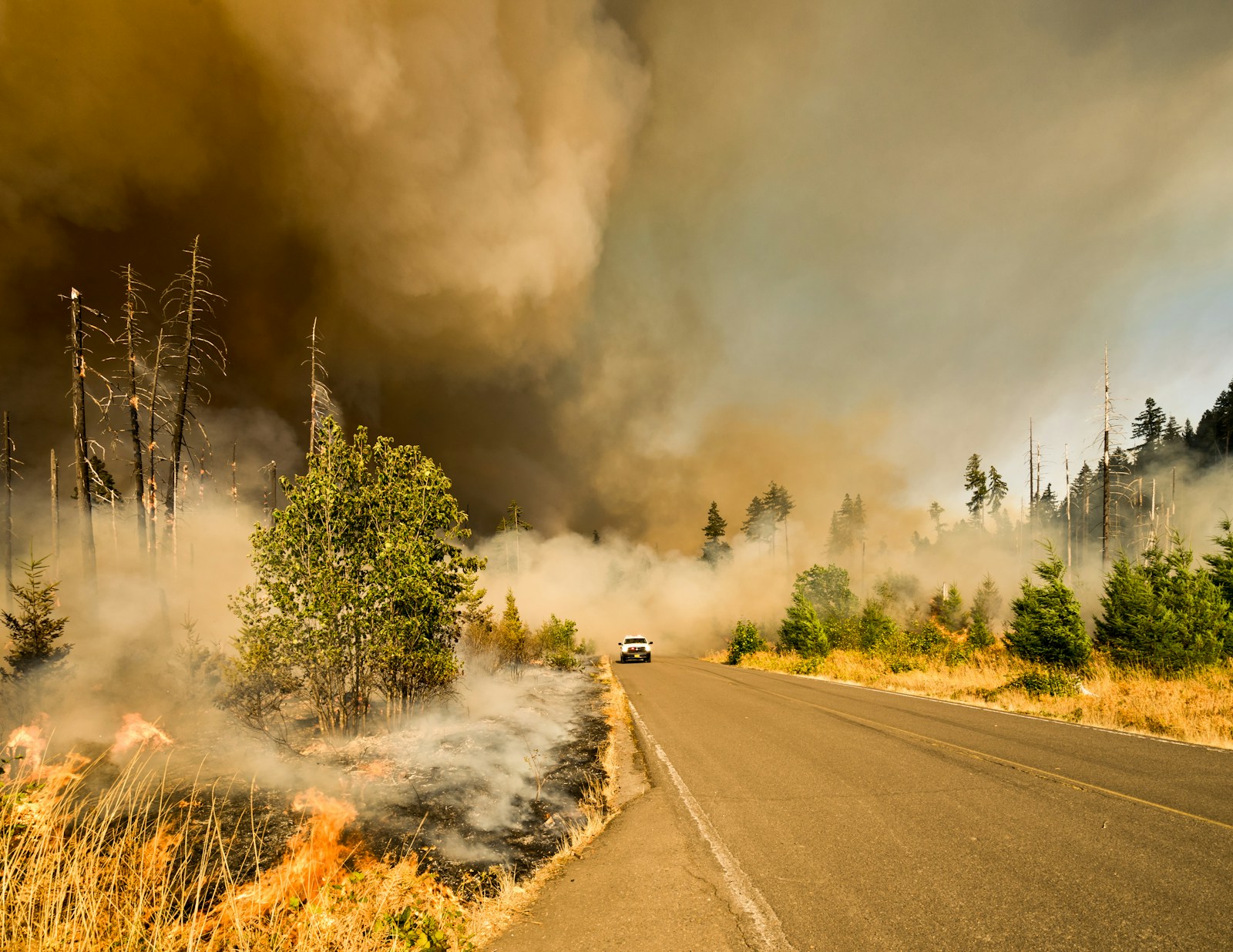
For much of the American West, this winter has been historically warm and dry. Due to the resulting snow drought, many experts are predicting an intense wildfire season in Colorado and across the West more broadly. Colorado legislators have taken notice. As in recent legislative sessions, there is currently a tranche of wildfire mitigation and resiliency bills in the General Assembly aimed at helping Colorado property owners reduce their risk exposure.
Background
As climate change accelerates, Colorado has begun to deal with an uncomfortable reality: fire seasons are beginning to look more like fire years. One need not look much further than the recent “out-of-season” wildfires in Boulder in late February and early March to see that these fires are not exclusively a summer problem, nor a rural one. The costliest wildfire in state history was less than five years ago; it happened in the Front Range in the month of December.
In response, the state has taken steps to protect home and business owners from this expanding risk. In 2023, the state adopted the Colorado FAIR Plan, aimed at providing property insurance to property owners who could no longer find insurance products on the private market. In last year’s session, the General Assembly passed a number of wildfire-related bills, including one that requires property insurers to include certain information in their risk models and share data with the Colorado Insurance Commissioner. Another allows fire protection districts to create vegetative fuel mitigation programs and levy fees on property owners who do not comply with a district’s fuel removal requirements.
2026 Bills
- HB26-1310. This bill requires the General Assembly to appropriate funds to the Wildfire Resilient Homes Grant Program established by HB23-1273. This program provides grants for home hardening to homeowners in areas of high wildfire risk. In awarding these grants, the new legislation requires the state to prioritize homeowners who are at or below 70% of the area median income and homeowners who lack the ability to perform the home hardening work because of age, disability, or illness. The bill is scheduled for a hearing before the House Agriculture, Water, and Natural Resources Committee on March 16.
- HB26-1289. Section 8 of this bill modifies the state’s tax code to expand an existing wildfire mitigation tax credit to include the thinning of woody vegetation that is at risk of beetle infestation or that has been killed by invasive beetles. Section 8 sets a maximum credit level of $1,000 for individuals and $2,000 for joint filers; it also allows the credit to be carried forward for up to five years. The bill is scheduled for a hearing before the House Finance Committee on March 16.
- SB26-049. This bill adds individual homeowners and homeowners’ associations as eligible grant recipients from the state’s Natural Disaster Mitigation Enterprise fund. It allows grants to be awarded for the installation of impact-resistant roofing, as well as for property-specific wildfire mitigation actions. The bill also creates an income tax deduction for contributions to a catastrophe savings account, an account that a homeowner may use to cover deductibles for claims stemming from hail, wildfire, or a catastrophic wind event; uninsured losses related to these events; and property-specific mitigation actions. The bill has been referred to the Senate Finance Committee but has not been scheduled for a hearing as of writing.
- SB26-089. This bill recreates the Wildfire Matters Review Committee to succeed a prior committee that ended on September 1, 2025. This is an interim committee with the purpose to “review the implementation and effectiveness of state policies and resources for wildfire prevention and mitigation and to consider and recommend legislation or other policy changes to address all matters relating to wildfire prevention and mitigation including public safety, forest health, and cooperation with appropriate federal agencies and local governments.” The bill has been referred to the Senate Appropriations Committee and Senate Agriculture and Natural Resources Committee but has not been scheduled for a hearing as of writing.
Looking Ahead
These bills, while far from providing comprehensive protection from the looming fire season, demonstrate that the General Assembly is continuing to reckon with the risks posed by unmitigated wildfires in the state. State agencies and cities have already begun efforts to build better collaborative infrastructure for addressing wildfire and water issues in the coming year. Both residential and commercial property owners in the state would do well to have a comprehensive understanding of their insurance coverage and of the various local, state, and federal programs that exist to incentivize wildfire mitigation and hardening efforts on private property. While the severity of the coming fire season cannot be predicted with certainty, savvy property owners can take steps to adjust their risk exposure proactively.
Otten Johnson attorneys are happy to discuss this legislation, or other bills that may impact real estate and land use in Colorado, in more detail.