

Revenue” Never Actually Received
Today’s guest post, by Reed Smith’s Paul Melniczak and Erin Apsokardu, is a little different. It’s not about product liability, but rather about a state tax issue with the potential for saving drug companies substantial sums. Since a dollar is a dollar, whether it is saved from bogus product liability actions or unnecessary tax payments, we were happy to have them tell our readers about it. As usual our guest posters are 100% responsible for what follows, deserving of all the praise (and any blame) that their work deserves.
**********
Imagine browsing the electronics section of your favorite retailer and spotting a tablet originally priced at $99, now marked down to $59. You take it to the register, and the cashier rings you up. The tax gets calculated on $59, right? You’d be shocked if the store tried to collect tax on the original $99 sticker price you never actually paid.
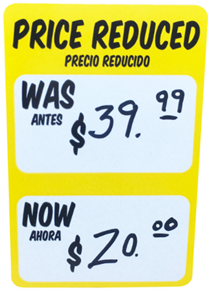
Pharma chargebacks are no different, or at least they shouldn’t be. If a pharma company makes a sale to a distributor with a wholesale acquisition cost (WAC) or “sticker price” of $99, but the distributor ultimately sells the product to a drugstore or healthcare provider for only $59, the pharma will offer a $40 price reduction to the distributor known as a chargeback. Ultimately, the distributor only owes the discounted price, not the WAC.
The notion that taxes should be based on the amount actually received, not some hypothetical list price, is driving a major state tax dispute involving several pharma companies in two states: Ohio and Washington. These issues should be on your radar if your company is making material sales into either state.
Why Ohio and Washington?
Most states tax pharmas and other businesses at the income level, just like the IRS, in which case it’s undisputed that chargebacks would naturally reduce a company’s taxable income. Ohio and Washington are among the few states that broadly impose taxes based on all “gross receipts” with minimal deductions, rather than net income or profit. Both states’ taxing authorities have taken the aggressive position that the WAC is somehow a “gross receipt” for a pharma company, even though it doesn’t actually have a contractual right to the WAC from the distributor. Those states take the same position for other price reductions and rebates, such as Medicare, Medicaid, and Managed Care rebates. In short, they charge real taxes on phantom receipts.
Returning to our store analogy: the states’ positions are akin to requiring the retailer to charge tax on the $99 sticker price rather than the $59 actual price paid. That position is not supported by the statute or other guidance in either state, and many pharmas are pushing back.
What This Means for Your Company
Fighting back against the state’s position can take two forms:
In either posture—either refunds or assessment appeals—the vast majority of state tax disputes can be resolved without the need for formal litigation. Resolution by negotiated settlement is always an option.
Next Steps to Consider
Evaluate your company’s state taxation history to determine whether a material amount of tax was paid in both states on the entire WAC amount (including chargebacks and other rebates). If not, determine whether either state has assessed unpaid taxes on this basis. If so, consider requesting a refund or appealing the assessment. Given that the four-year statute of limitations for refunds is running, acting sooner will preserve the company’s rights to the largest available refund.
Just as you wouldn’t pay sales tax on a price you never paid at the register, your company shouldn’t pay gross receipts tax on amounts it never received.