

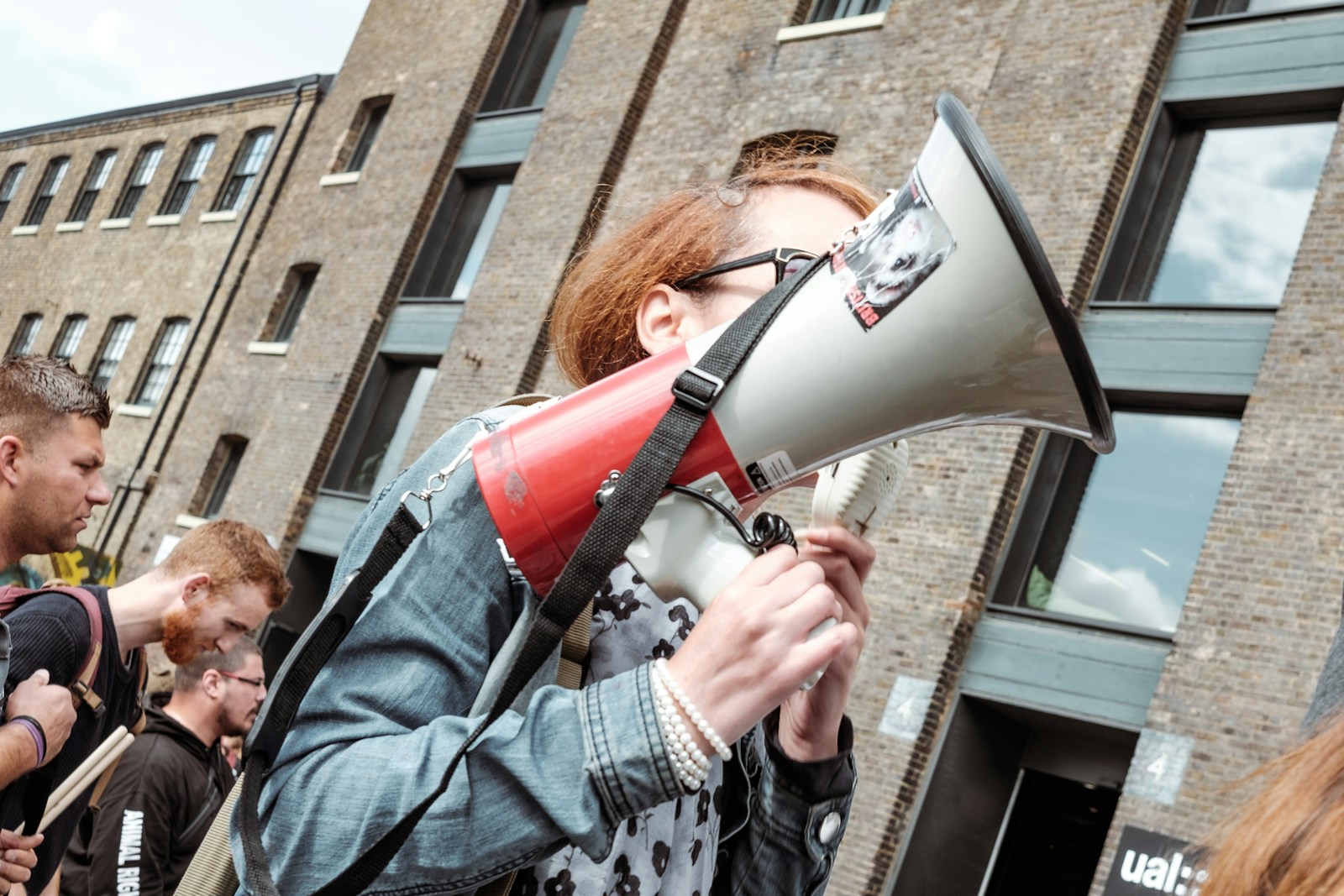
Targeted public protests can quickly place businesses and individuals in highly visible and legally sensitive situations. When demonstrators gather outside a workplace or private residence—for example, if an activist group takes issue with an organization’s business practices and elects to target that organization’s executives—the activity may feel disruptive, intimidating, or even threatening.
The legal framework governing targeted picketing and protesting reflects a balance between First Amendment protections and legitimate interests in privacy, access, and safety. Understanding where that balance lies is critical for anyone navigating a targeted demonstration.
Link to What Demonstrators Are Permitted to Do What Demonstrators Are Permitted to Do
Public sidewalks and streets are considered “traditional public forums,” where protest activity receives the highest level of constitutional protection. In those spaces, government restrictions on speech must be content neutral and narrowly tailored to serve a significant governmental interest, and leave open ample alternative channels for communication.
In public areas, demonstrators may generally stand or march on sidewalks, display signs and banners, engage in symbolic speech, and distribute literature.
Link to Where the Law Draws a Line Where the Law Draws a Line
Link to Ordinances May Restrict Residential Picketing Ordinances May Restrict Residential Picketing
The home receives heightened constitutional protection. The Supreme Court has upheld restrictions on targeted picketing directed at a single residence, recognizing a municipality’s authority to protect residential privacy and tranquility. When content neutral and narrowly tailored, local ordinances may regulate proximity to a residence, duration of picketing, excessive noise, and related conduct. For executives, business owners, or employees targeted at their homes, residential picketing ordinances may provide enforceable remedies, including both civil and criminal options.
Link to Unlawful Conduct Is Not Protected Speech Unlawful Conduct Is Not Protected Speech
While speech is protected, unlawful conduct is not. Demonstrators do not have a constitutional right to violate otherwise valid laws during a protest. This includes trespassing on private property, blocking entrances or exits, obstructing traffic, engaging in vandalism, or threatening violence. The distinction between protected speech and unlawful conduct often determines whether intervention is appropriate.
Link to If You Become the Target of a Protest If You Become the Target of a Protest
If you or your organization becomes the focus of residential or commercial picketing, consider the following steps:
- Engage Counsel Early. Targeted protests often implicate nuanced constitutional considerations. Legal analysis in this area is fact-specific and often time-sensitive, and retaining counsel is generally advisable.
- Review Applicable Regulations and Ordinances. Look into your municipality’s regulations governing residential picketing, noise, signage, obstruction, and permitting requirements. Content-neutral ordinances may provide tools for relief.
- Understand Law Enforcement Boundaries. Police cannot remove demonstrators based solely on the content of their message. However, they may enforce neutral laws addressing trespass, obstruction, safety concerns, and applicable residential picketing restrictions.
- Avoid Direct Confrontation. Engaging directly with protesters can lead to escalation, which in turn can create additional risk. Allow law enforcement and counsel to address potential violations and refrain from direct engagement with protestors whenever possible.
- Document Everything. Maintain a record of events, including video, photographs, and written logs of dates, times, and conduct. Documentation is essential if injunctive relief becomes necessary.
- Consider Injunctive Relief if Harm Is Immediate. Courts may issue temporary restraining orders in appropriate circumstances. Whether relief is granted typically depends on several factors, including the likelihood of irreparable harm and the balance of equities and public interest, including relevant First Amendment considerations. Consider whether injunctive relief may also be appropriate if digital and/or social media channels are being used to defame or otherwise harm an individual as related to the protest.
- Prepare Communications if Needed. Carefully worded communications, whether internal to your organization (i.e., to inform employees of the matter) or public facing, may be central to an organized and effective response to targeted protests. Confer with counsel as to whether a communication is advisable, including the goal of the communication and how best to narrowly tailor the communication to avoid bringing further attention to the matter.
Link to Conclusion Conclusion
When protest activity crosses from lawful expression into targeted disruption, early legal guidance can help ensure an appropriate response that respects constitutional protections while addressing legitimate safety concerns.
Venable has extensive experience with assisting clients in navigating these complicated and time-sensitive matters. For more information or assistance, contact Desirée Moore or Katie Wright Morrone.