
The Constitutional Court of Korea upheld the constitutionality of a controversial evidentiary provision permitting the use of pre-recorded video statements of certain sexual assault victims. In a split 4–5 decision (Case No. 2023Heonga20), the Court declined to invalidate Article 30(6) of the former Act on Special Cases Concerning the Punishment, etc. of Sexual Crimes. Six votes are required, under Korean Law, to strike down a statute, and the Court received 5 votes to invalidate the law in question. For additional articles on Korean Constitutional Law and Criminal Law, see: IPG Legal’s Constitutional Law Archive and IPG Legal’s Criminal Law Archive.
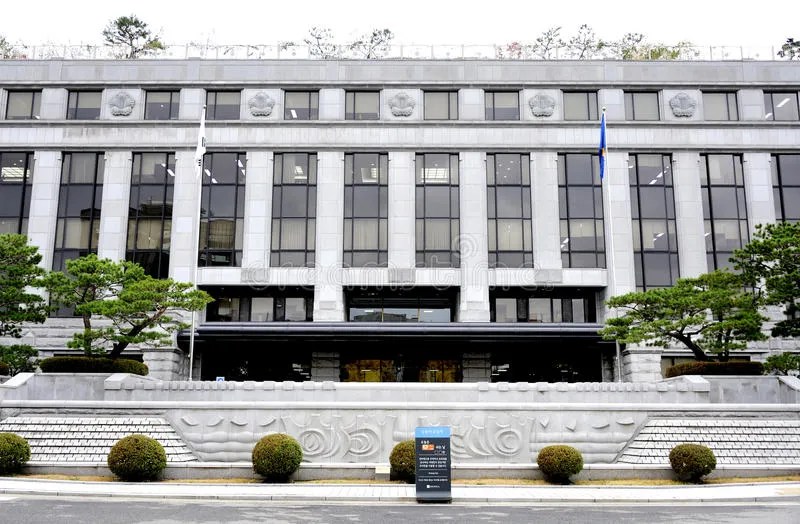
Korean Confrontation Clause Jurisprudence at Constitutional Court of Korea
The Court, with four votes, held that allowing video-recorded victim statements authenticated through testimony by a “person in a relationship of trust” does not violate the constitutional right to a fair trial, even where the defendant is unable to directly cross-examine the victim in court.
Case Background
- The defendant was charged with sexually assaulting a victim who was under the age of 13 and had an intellectual disability.
- The defendant objected to the admission of the victim’s recorded video statement.
- The court admitted the recording after “authentication” by a third party present during the investigation.
- The defendant was convicted without direct in-court testimony from the victim or the ability to cross-examine the alleged victim.
- On appeal, the Busan High Court referred the constitutionality of the provision of law to the Constitutional Court of Korea for review.
Legal Issue
The main legal issue was whether Article 30(6) improperly restricts:
- The defendant’s right to confrontation, and
- The broader right to a fair trial under the Korean Constitution.
The provision allows video-recorded statements of victims with diminished cognitive capacity (due to physical or mental disability) to be admitted as evidence without in-court testimony, provided “authenticity” is established.
Opinion of Four Justices (Need Six Justices to Rule a Law Unconstitutional in Korea)
Four justices placed significant weight on the need to shield vulnerable victims from further harm. They reasoned that requiring in-court cross-examination could expose such victims to additional psychological trauma, and therefore concluded that the provision serves a legitimate objective—namely, preventing secondary victimization and emotional distress for individuals with diminished decision-making capacity.
The justices further acknowledged that cross-examination is a fundamental component of a fair trial, but emphasized that the constitutional inquiry is not centered on the physical act of confrontation itself. Rather, the key question is whether the defendant is afforded a meaningful opportunity to assess and challenge the credibility of the evidence. In this regard, they noted that video-recorded statements preserve non-verbal indicators—such as demeanor, tone, and facial expression—and permit repeated review. In addition, courts retain the ability to supplement the evidentiary record through additional witness examination where appropriate.
On this basis, the justices concluded that the statutory framework satisfies the principle of proportionality and does not impermissibly restrict the defendant’s right to a fair trial.
Dissent of 5 Constitutional Court Justices
Five justices dissented, expressing substantial concerns grounded in due process and the integrity of criminal adjudication. The dissent underscored that, in many sexual offense prosecutions, the alleged victim’s account is often the central, if not determinative, evidence supporting a conviction. Against this backdrop, the dissent criticized the provision for imposing a categorical limitation on cross-examination without requiring a case-specific assessment of whether such a restriction is truly necessary.
The dissent further characterized video-recorded statements as a form of hearsay, shaped by the structure and questioning of investigative authorities and reflecting largely one-sided narratives. In their view, this format inherently carries risks of distortion, omission, or misunderstanding that cannot be adequately tested through retrospective review alone. While acknowledging the presence of procedural safeguards, the dissent emphasized that these mechanisms fall short of replicating the evidentiary rigor of direct cross-examination.
Importantly, the dissent rejected the notion that questioning a “person in a relationship of trust” could meaningfully substitute for examining the declarant herself. Such indirect verification, they reasoned, does not provide a sufficient basis to probe inconsistencies, credibility, or the circumstances under which the statement was made.
Accordingly, the dissent concluded that a blanket restriction on cross-examination, particularly in cases where the testimony is pivotal, constitutes a disproportionate limitation on the defendant’s right to mount a full and effective defense, and therefore raises serious constitutional concerns.
Prior Korean Constitutional Court Jurisprudence
This decision must be viewed alongside the Korean Constitutional Court’s 2021 ruling, which struck down a similar provision relating to victims under 19. Following that decision:
- The Korean National Assembly amended the law in 2023
- The revised framework imposes stricter admissibility requirements
Notably, the present case concerned the pre-amendment version of the statute as applied to disabled victims.
About IPG Legal
IPG Legal is a leading international law firm with offices in Seoul, Korea. The law firm represents multinational corporations, executives, and individuals in complex Korean legal matters, including criminal defense, labor disputes, and cross-border transactions.
About Sean Hayes
Sean Hayes is an international attorney and former law professor, and the first non-Korean attorney to work for the Korean court system. He regularly advises on Korean criminal procedure, constitutional law issues, and high-risk disputes involving foreign parties.
Sean’s profile may be found at: Sean C. Hayes. If you would like a consultation with an attorney, please Schedule a Call.