

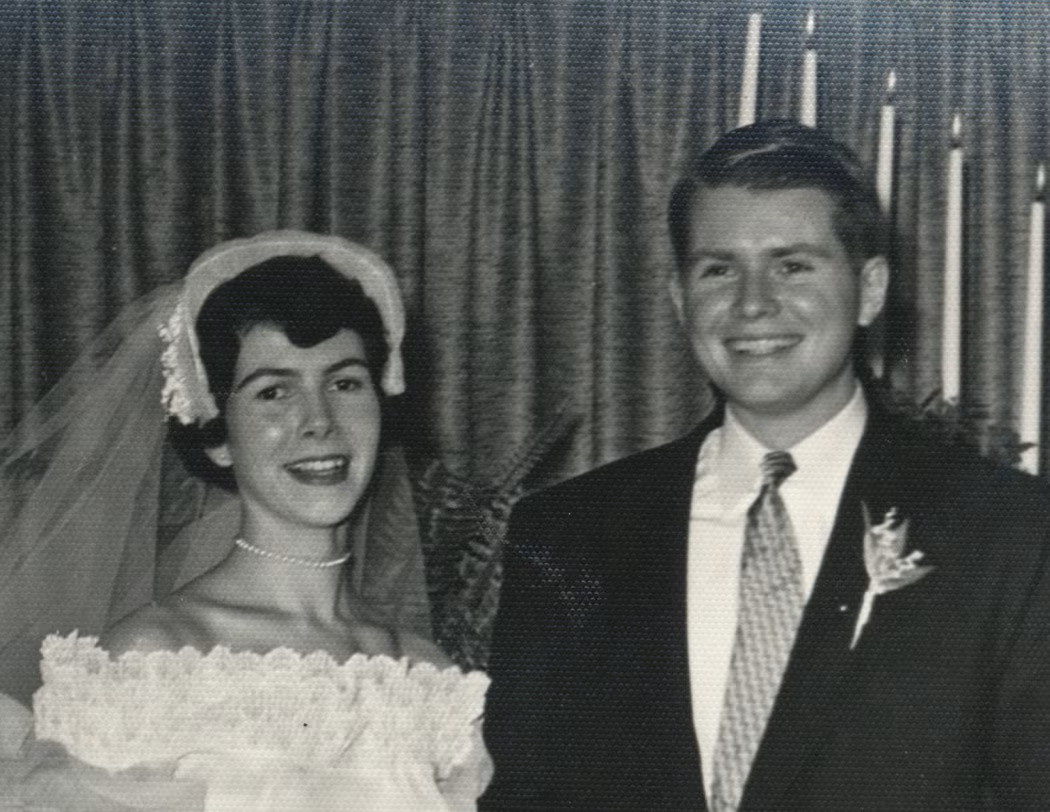
Ed Lyon, a pioneering urologist at the University of Chicago, wanted his retirement account to go to his 36 grandchildren. Seven years after his death, his heirs are still fighting to make that happen.
The family’s appeals to both the university and the account’s record-keeper, TIAA, were rebuffed. They were told they hadn’t provided the proper paperwork, leaving Lyon’s funds, worth $1.2 million at his death, and $1.7 million currently, in a state of limbo.
The case turns on a narrow interpretation of the law but shows a big problem in the world of estate planning. People often fail to realize what’s required to update the beneficiaries for their accounts. What seems like a mundane to-do item while the account holder is alive later becomes a major headache for would-be heirs.
In the Lyon family’s case, big tax benefits are at stake. Ed died in 2019, when rules let people take minimum distributions from inherited retirement accounts over their lifetimes, allowing the balances to grow tax deferred for decades.
Under federal law, employers are generally required to pay out workplace retirement accounts to a surviving spouse, or the last recorded beneficiary if the spouse has signed a waiver forgoing the funds. In most cases, these designations trump what’s spelled out in a will or trust.
The Lyon family agreed about how to distribute the money, in keeping with Ed’s and Val’s wishes. But it still got bogged down in what amounted to paperwork issues.
Ed and his wife Val were in their 80s in 2014 when they updated their estate plan. They designated Alice as their agent to make medical decisions, and her husband, Dan Davies, as their agent to make financial decisions. They updated the Edward S. Lyon Trust to include 36 separate trusts for their grandchildren where the retirement account money would go after his death.
The grandchildren would get the annual required distributions, half on their birthdays, half at Christmas. When they turned 60, the distributions would switch to monthly.
Pat Agnew, the estate lawyer who drew up the estate plan, claimed to have given the family instructions to update the beneficiary form.
The grandchildren were born between 1986 and 2014. Giving the retirement account to the younger generation would give them decades of tax-deferred compounding.
People who inherited retirement accounts before 2020 could stretch out required distributions over their lifetimes. The tax law changed in 2020, eliminating the stretch for most beneficiaries other than spouses.
In 2019, Ed was in poor state and Val was incapacitated. Davies went online at TIAA to double check that the beneficiary information was in order and the website said “on file.” When he called, the representative didn’t have anything on file about the update, so he completed a new form to change the beneficiaries to the grandchildren and waive Val’s spousal rights.
Ed died shortly after. Then came a letter from TIAA saying that it couldn’t process the 2019 form because it wasn’t properly signed, according to court filings. Val died in December of 2020. In January of 2022, TIAA informed the family that the power of attorney hadn’t given Davies authority to sign the spousal waiver on Val’s behalf.
State law varies in what authority is permitted under a power of attorney. The Lyons lived in Fontana-on-Geneva Lake, Wis. Davies’ powers included a general authority over retirement plans and the specific authority to designate beneficiaries.
The university said that wasn’t explicit enough to cover the spousal waiver of Val’s rights to Ed’s 403(b) account because of a Wisconsin law applicable to annuities, which it maintained applied to employee retirement accounts.
In court filings, the family said that argument was “absurd” because Ed didn’t take the annuity option, and Val had already waived her rights to the annuity back in 1998. The university called the 1998 waiver a “red herring,” because the plans require a new waiver with each beneficiary change.
Agnew, the Lyons’s estate lawyer, said he and another lawyer gave the university legal opinions that the documents should work the way Ed and his wife intended.
If the family loses, half of the money would be distributed to Val’s estate and half to Ed’s trust, according to court records. The grandchildren would still get it but they would lose valuable tax benefits.
The university said in court filings that it is bound by the plan rules and the law. TIAA said it played a merely ministerial role, and that it isn’t liable for the family’s claims that it breached its fiduciary duty or was negligent.
A lower court dismissed the family’s claims against the university and TIAA in the fall of 2025. They have appealed to the Seventh Circuit. Alice and Dan sat in on the oral arguments last month.
For more information see Ashlea Ebeling “One Small Fortune, 36 Grandkids and an Inheritance Stuck in Limbo” Wall Street Journal, May 15, 2026.