

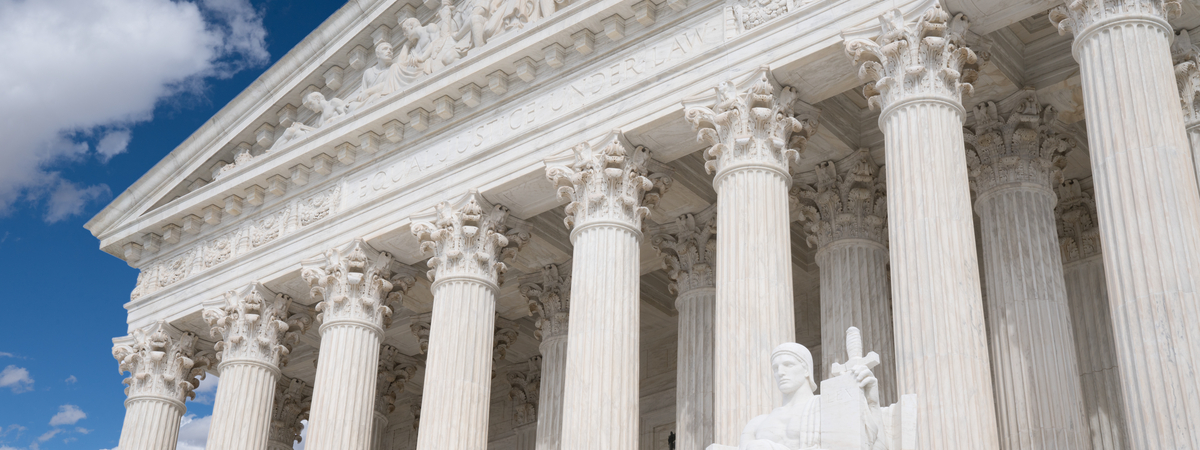
On June 30, 2026, a divided U.S. Supreme Court struck down President Donald Trump’s Jan. 20, 2025, executive order seeking to narrow birthright citizenship. In a 6–3 decision, the Court held that the executive order contradicted the 14th Amendment, reaffirming the longstanding interpretation of the Citizenship Clause of the U.S. Constitution.
The case, Trump et al. v. Barbara et al., No. 25-365, commonly referenced as Trump v. Barbara, challenged the executive order directing federal agencies to deny U.S. citizenship to children born in the United States unless at least one parent was a U.S. citizen or lawful permanent resident. The policy would have excluded children born to undocumented individuals, a portion of temporary visa holders, and other non-permanent residents.
Lower courts had enjoined the order without ruling on the merits before the Supreme Court granted certiorari. The government sought to lift the injunction and affirming the policy, arguing that the 14th Amendment was intended to secure citizenship for formerly enslaved individuals and their descendants and that its language limiting birthright citizenship to persons “subject to the jurisdiction [of the United States]” should be read to exclude undocumented persons and most temporary residents on the grounds that they lack permanent allegiance to the United States. The challengers countered that the Citizenship Clause reflects a broader common-law principle of jus soli, under which nearly all persons born within the territory are citizens, subject only to narrow historical exceptions. They also pointed to longstanding federal statutes — now codified in the Immigration and Nationality Act (INA) — that embody that same understanding.
The Court held that the executive order impermissibly contradicted the 14th Amendment. The majority concluded that the president may not replace settled law extending citizenship by birth to nearly all individuals born in the United States with a narrower framework limited to children of U.S. citizens or lawful permanent residents. Chief Justice John Roberts, writing for the Court, stated that the Citizenship Clause has long been understood to guarantee citizenship to all persons born on the U.S. soil with narrow and clearly defined exceptions (such as children of diplomats or occupying forces): “Citizenship, then and now, was the right to have rights—to freely participate in our political community. The Framers of the 14th Amendment extended that promise to ‘every free-born person in this land.’ We keep that promise today.” Justices Sonia Sotomayor, Elena Kagan, Amy Coney Barrett, and Ketanji Brown Jackson joined Justice Roberts on the constitutional holding. Justice Brett Kavanaugh concurred in the judgment, concluding that the executive order was invalid because it conflicted with the INA, rather than being unconstitutional on its face.
Justices Clarence Thomas, Samuel Alito, and Neil Gorsuch dissented. Justices Thomas and Gorsuch argued that the majority’s interpretation of the 14th Amendment exceeded its historical intent of guaranteeing citizenship to the descendants of enslaved people emancipated following the Civil War. Justice Alito, in a separate dissent, argued that the amendment’s text and history do not support birthright citizenship to the extent reflected in the majority’s interpretation.
The majority decision reaffirmed birthright citizenship as a constitutional guarantee, rather than a policy choice, and reinforced limits on executive authority by confirming that any effort to change settled federal law cannot be accomplished through executive action alone. Altering birthright citizenship going forward may require a constitutional amendment or new legislation consistent with the majority’s interpretation. The ruling carries several practical implications:
- Reaffirmation of rules governing U.S.-born children. Consular officers and the Department of Homeland Security will continue to treat U.S.-born children as U.S. citizens at birth, regardless of parental immigration status. The ruling removes the possibility — at least under current law — of differential treatment based on parental classification.
- No immediate change to visa eligibility standards. The decision does not alter statutory inadmissibility grounds or nonimmigrant visa criteria under the INA. Applicants for B‑2, F‑1, H‑1B, and other classifications remain subject to existing intent, ties, and eligibility analyses.
- Continued scrutiny of “birth tourism.” While not addressed directly by the Court, the reaffirmation of broad jus soli citizenship may reinforce continued consular focus on applicants traveling to the United States for the purpose of giving birth. Existing visa guidance and fraud/misrepresentation frameworks remain applicable.
- No change to rules governing acquisition of citizenship by descent. The ruling does not affect statutory transmission of citizenship to persons born abroad to U.S. citizen parents. Distinctions between acquisition of citizenship at birth inside versus outside the United States remain governed by the INA.