

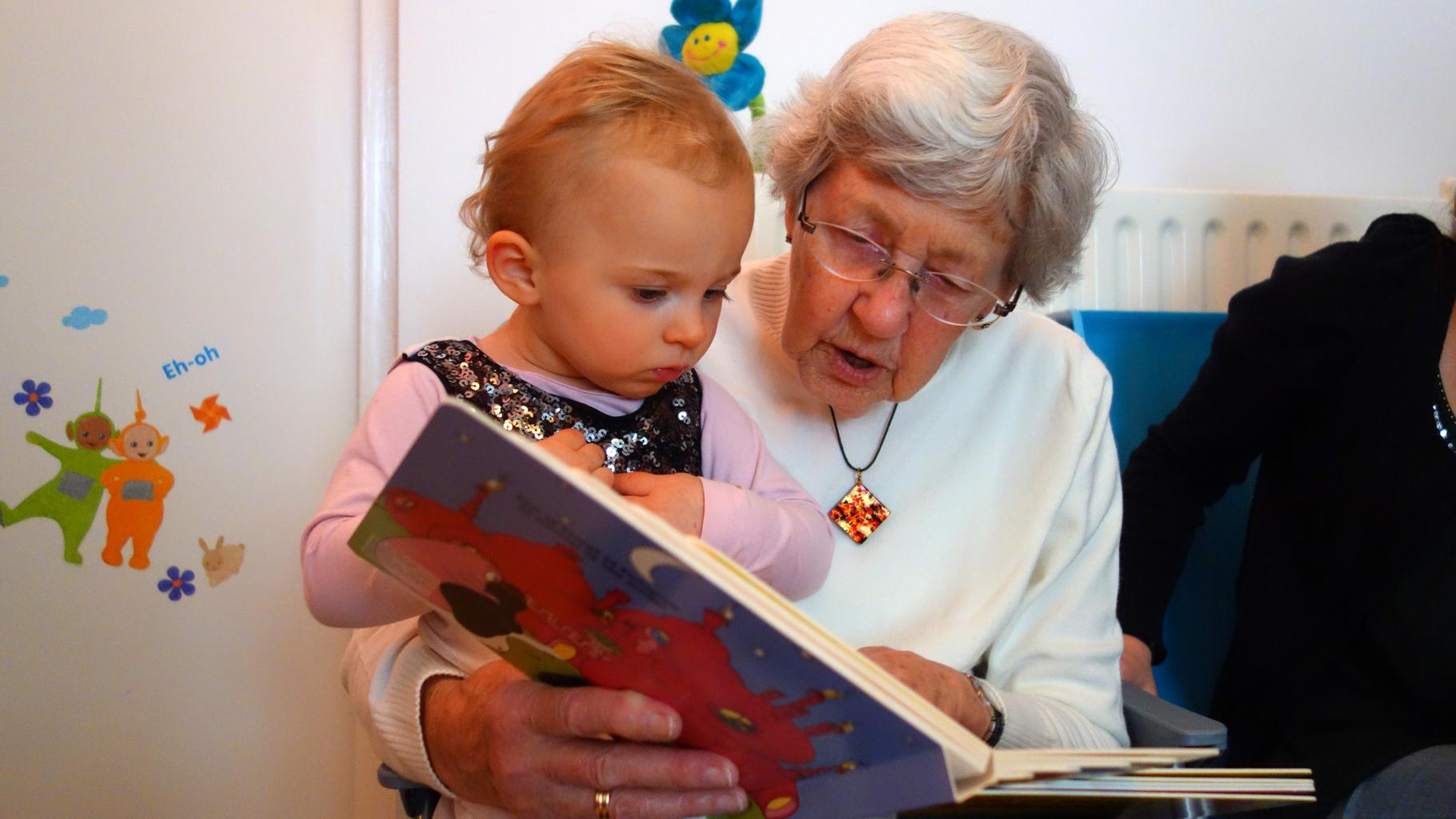
In this case, we have a newborn, an at-risk mother but with a credible grandmother. thus, the court feels that the risk is mitigated by supervision, and the child is temporarily placed with family, not removed…. noting of course that this is all temporary before trial.
MATTER OF KENDREW T., 2026 NY Slip Op 51004 – Kings Co. Family Court 2026:
“This neglect petition, which was filed by the Administration for
Children’s Services (“ACS” or “Petitioner”) against the Respondent
mother, Ms. Malaysia T, on June 5, 2026 alleges that Ms. Malaysia T.
neglected her newborn son Kendrew by misusing drugs, specifically
marijuana and cocaine, and not having been in a drug treatment program.
Ms. Malaysia T. acknowledged smoking marijuana regularly while pregnant
and believes it may have been laced with cocaine, leading to Kendrew’s
positive toxicology at birth. The ACS caseworker referred the mother for
intake at a drug treatment program, as well as random screens, for Ms.
Malaysia T. to engage in after she was released from the hospital but
she failed to attend in the two months prior to the filing of the
petition. Additionally, the petition alleges that Ms. Malaysia T. has a
history of “multiple mental health diagnoses, including PTSD, ADHD,
Borderline Personality Disorder, anxiety and depression” for which she
has been hospitalized and had not received any treatment in at least 1
to 2 years. The ACS caseworker referred her for an evaluation at Kings
County Hospital, where she gave birth, but the mother did not attend.
The subject child, Kendrew was born on XX/XX/2026, extremely
premature at 26 weeks and he weighed only 1 pound 4 ounces at birth. At
that time, Kendrew tested positive for cocaine and had a brain bleed,
which the doctor’s determined was unrelated to the presence of drugs in
his system. As a result of his condition, Kendrew was placed in the NICU
and it was initially unclear if he would survive, or if he would need
months of hospitalization before he was ready for release. Contrary to
expectations, Kendrew recovered much sooner, gained weight consistently
and the brain bleed was resolved. During Kendrew’s first month of life
his mother, Malaysia, who is only 18, and his grandmother, Ms. Tanya T.
visited him almost daily. Those visits were less frequent though still
consistent, at least by the grandmother, during the infant’s second
month in the NICU.
Once Kendrew was ready for discharge, ACS filed this petition and
requested a removal, opposing release to his mother, and also objected
to placing the infant with his maternal grandmother which had been the
family’s plan. The basis for this objection was prior ACS involvement
and an indicated case against the grandmother from 2023 and before for
lack of supervision and guardianship over Malaysia due to her failure to
attend school regularly and engage in mental health treatment, as well
as an allegation that Tanya T, along with Malaysia, smelled of marijuana
when they came to visit Kendrew in the hospital. The Respondent mother
opposed the request not to release Kendrew to her care or that of her
mother, and requested a hearing pursuant to FCA 1027. This Court ordered
that Kendrew remain in the NICU, where his mother and grandmother could
continue to visit him daily, pending the outcome of this hearing.
ACS called Caseworker Dorman as a witness and introduced various
exhibits. The Respondent mother called her mother, Tanya T, as a witness
and introduced exhibits, including scholarly articles. The Attorney for
the Child (“AFC”) did not introduce any evidence and, on summation,
opposed a release to the mother but argued in support of a temporary
direct placement with the maternal grandmother where the mother would be
allowed to remain living in the home with a “no leave alone” order.
DECISION
The Court of Appeals in Nicholson has mandated that, in FCA
1027 hearings, Family Courts “weigh, in the factual setting before it,
whether the imminent risk to the child can be mitigated by reasonable
efforts to avoid removal. It must balance that risk against the harm
removal might bring, and it must determine factually which course is in
the child’s best interests. Additionally, the court must specifically
consider whether imminent risk to the child might be eliminated by other
means, such as issuing a temporary order of protection or providing
services to the victim.” Nicholson v. Scoppetta, 3 NY3d 357, 378-79 [2004].
This Court agrees with both ACS and the AFC that the infant would be
at imminent risk of harm if released to his mother’s care. Kendrew is
still extremely vulnerable at only 4 pounds and this young first time
mother would need support for his care under the best of circumstances.
However, it is clear from the evidence that Malaysia has a long history
of mental health issues going back to her early childhood, and more
recently, a history of substance abuse in the form of very frequent
marijuana use and on at least one instance, cocaine. However, Malaysia
has stated that she is now willing to engage in treatment, and it is
often the case that the reality of motherhood is a significant motivator
in obtaining sobriety. When considering a child’s safety and wellbeing,
the Court must look not only to the present, but to the future as well.
If there is an option that keeps Kendrew safe but also allows his
mother to have daily contact with him and provides her with hope and
incentive to believe she can regain responsibility for his care, this
would clearly be in Kendrew’s best interest.
The importance of the infant-mother bond on a child of this age
cannot be understated. Studies have shown that interruption in this
bonding process can have a life-long impact on a child’s well-being that
cannot be remedied.[1] In writing about the “Developmental Issues for Young Children in Foster Care,”
the American Academy of Pediatrics stated, “Paramount in the lives of
these children is their need for continuity with their primary
attachment figures and a sense of permanence that is enhanced when
placement is stable. There are critical periods of interaction among
physical, psychological, social, and environmental factors. Basic
stimulation techniques and stable, predictable nurturance are necessary
during these periods to enable optimal cognitive, language, and personal
socialization skills.” Respondent’s Exhibit C in evidence, Pediatrics
Vol. 106 No. 5 November 2000, p. 1145-6.
Ms. Tanya T. had planned to be her grandson’s primary caretaker from
before his birth. She has maintained a stable 3-bedroom home which is
lived in by her daughter as well as her older adult son who is caring
for his teenage daughter. ACS found no safety concerns with the manner
in which the home was kept. Since the landlord decided to sell the
building, Ms. Tanya T. has already secured a new 3-bedroom apartment in
the same neighborhood and she is moving into it this week. This should
allow a seamless transition to the new home and there is no reason to
believe that this new apartment will not be similarly safe for Kendrew.
Ms. Tanya T. has already bought baby supplies and everything that is
needed for Kendrew to come to her home including a car seat.
The prior ACS cases involving Ms. Tanya T. as a parent never reached
the stage of a filing or any finding of neglect and they occurred when
Malaysia was a teenager. This Court is well aware of the challenges
faced by any parent of a teen who has a mental health diagnosis but does
not wish to engage in mental health treatment or take prescribed
medication. Regular school attendance, which is very difficult to obtain
with any teen who is resistant, is made even more so when that teen has
an untreated mental health condition. ACS has these same challenges
with the many teens who are in the agency’s care. Unfortunately, this
situation remained true up to Kendrew’s birth, as Malaysia continued to
not engage in treatment after her 18th birthday last year. Neither
Malaysia’s mother nor the efforts of ACS changed that, and even this
Court does not have the power to force Malaysia to obtain the help she
clearly needs for both her mental health and substance abuse. The Court
can only hope that the birth of her son has in fact motivated that
change. Therefore, this prior ACS involvement does not, in the Court’s
opinion, render Tanya T. an unsafe or inappropriate caretaker for her
infant grandson.
As for the allegations of potential marijuana use by Tanya T.
herself, the Court finds these to be vague and unsubstantiated. ACS did
not call any witness from the hospital who had allegedly “smelled”
marijuana coming from the grandmother. Therefore, it is asking the Court
to exclude this infant’s maternal grandmother as a resource simply on
the basis of a claim that is documented in the ACS record from an
unnamed source. Specifically, the ACS case record in evidence contains
three hearsay references to this allegation. The first, dated April
23rd, states that the Kings County hospital (“KCH”) social worker
informed the Caseworker Dorman that “she has received reports from
nurses that the mother and MGM has [sic] been to visit smelling of
marijuana and on one occasion the mother appeared high and could not
even hold herself up.” The second entry from June 1st states that a Dr.
Lahage stated that “the mother and MGM come in [sic] smelling of
marijuana and the mother had to be put out of the NICU one time.” The
last mention of this allegation is that, on May 7th, “CPS obtained
collateral from KCH nurse who stated that there was report of the mother
visiting the baby and noted to be smelling of marijuana and high on
something where she could barely stay up. The nurse also noted that MGM
also reeked of marijuana smell.” Petitioner’s Exhibit 3 in evidence, pp.
50, 60, & 62. Several aspects of these entries are notable and
diminish the weight this Court will give them. First, they are all very
similar in language and could well have all come from one nurse on one
date, especially in regard to the alleged marijuana scent from the
maternal grandmother. It is impossible to tell because the caseworker
did not obtain the dates of these observations or the name(s) of the
person(s) who made them; nor did Ms. Dorman speak to that person
directly. Additionally, there is nothing in the record as to whether Ms.
Tanya T. was asked about the alleged smell or her marijuana use and
what if any response she gave. Further, unlike Ms. Malaysia T. who is
observed to be high and unable to hold herself up, there is no such
allegation as to Ms. Tanya T.
During her testimony, Caseworker Dorman acknowledged that Ms. Tanya
T. had denied any marijuana use when asked and that she had never
observed the grandmother to appear under the influence of any substance
or smelled marijuana on her. The caseworker testified that she did not
smell any marijuana in the apartment when she made a home visit on April
7th and confirmed the presence of all the provisions for Kendrew. She
acknowledged that the smell of marijuana is present in the hallways of
apartment buildings, including the grandmother’s, and outside on the
streets of NYC. In fact, this Court has experienced that, since
marijuana has been legalized in New York State, people have even come to
court on occasion smelling of marijuana. At those times, when the smell
of marijuana fills the courtroom, this Court cannot tell which of the
several people in the courtroom is responsible. While marijuana is legal
and Ms. Tanya T. should not be faulted for its use any more than a
person who drinks alcohol, it would indicate poor judgment and be of
concern to the Court if a resource used either substance on the day one
is visiting a premature and vulnerable baby in the NICU (or coming to
court) to the extent where they have a scent of alcohol or marijuana.
However, without the opportunity to hear directly from the person who
allegedly sensed that smell on Ms. Tanya T. specifically and have her
testimony be examined by other counsel, this Court cannot credit this as
a basis to believe that Ms. Tanya T. used marijuana. It is also quite
possible that the frequency of Malaysia’s marijuana use has led to her
having the scent of marijuana and that this smell transferred to the
grandmother through close and extended physical contact.
The Court has had the opportunity to hear from Ms. Tanya T. directly
as she testified credibly in this hearing. Ms. Tanya T. stated that she
does NOT smoke marijuana and definitely did not smoke it on a day she
was going to visit her grandson in the hospital. However, she was
willing to go for drug testing and did take a test during the course of
the hearing which was negative for marijuana and any illegal substances.
She also expressed her concerns about her daughter’s mental health and
substance use over the years and her inability to get her daughter to
engage in help. While she acknowledged some issues in the past with
Malaysia’s behavior such that the grandmother had called the police, the
most recent being in March of 2025, Ms. Tanya T. expressed that her
recent behavior, especially since Kendrew’s birth had not been an issue
in the home, and that she did not believe there would be any safety
concern to allowing her daughter to remain living with them. She
explained that she would have Kendrew sleep in the same bedroom as her
own and would follow any order, including not to allow her daughter to
be alone with Kendrew. Ms. Tanya T. also stated definitively that she
would call the police again if needed to keep her grandson with her.
Although ACS has raised concerns about the grandmother’s ability or
willingness to enforce court orders that might require her to tell her
daughter to leave the home or call the police, their counsel was not
able to respond to the point made by the mother’s attorney that clearly
Ms. Tanya T. had shown her willingness to involve the authorities when
needed by the prior Domestic Incident Reports (“DIR”) placed in evidence
where Ms. Tanya T. called the police. See Petitioner’s Exhibit
5-8 in evidence, DIRs dated 2/12/20, 11/9/22, 11/23/22, 3/22/25. Ms.
Tanya T. made these calls even without the incentive that would be at
stake here, namely the grandmother losing the Court’s trust in her
ability to safely care for her grandson and risking having him removed
from the home. Additionally, Ms. Tanya T’s adult son, Mr. P, would also
be living in the home and stated he would assist his mother and
similarly was not concerned about his sister’s current behavior being
disruptive. See Petitioner’s Exhibit 4 in evidence, ACS Court
Report dated 6/9/26. His daughter is currently a subject of ACS
intervention as there is a pending neglect case against her mother and
the child has been released to her father, Mr. Parker. Thus, there is
added adult supervision in the home as well as added ACS oversight.
As required by the Court of Appeals in Nicholson, this Court
has balanced the risk of harm from removal against the risk of harm for
Kendrew being in the care of his grandmother with his mother in the
home, and this Court has found that the harm of removal of this newborn
from family during this critical bonding period is greater than the
theoretical risk that exists in that home given the evidence here and
the fact that orders can be made to mitigate the risk by requiring that
Ms. Malaysia T. not be left alone with her son and that she engage in
mental health and substance abuse treatment as a condition of her living
in the same home.
Therefore, at this time, the Court finds that Kendrew would be at
imminent risk of physical, mental and/or emotional harm if he were
released to his mother but that it is in his best interests to be
temporarily directly placed with the maternal grandmother, Ms. Tanya T,
under the following conditions:
1. Comply with ACS supervision including allowing announced & unannounced home visits;
2. Insure the infant sleep in the same room and Tanya T. and not allow Malaysia T. to be alone with him; or
3. All contact between Malaysia T. and her son must be
closely supervised and if Malaysia T. uses or appears under the
influence of substances in the home, or if she is interfering with the
grandmother’s care of the baby, Malaysia must be told to leave and the
police must be called if she does not leave voluntarily;
4. Not leave Kendrew unattended and only with caretakers approved by ACS;
5. Insure Kendrew attends any necessary medical appointments and comply with any recommendations for him;
6. Submit to random screens twice per month and test negative for all substances including marijuana;
7. Not be under the influence of any non-prescribed drugs in the presence of the subject child.
The Respondent mother must engage in outpatient mental
health and substance abuse treatment in order to remain in the home with
the subject child as soon as a program is available. Kendrew is ordered
to remain in the hospital until the grandmother Ms. Tanya T. insures
the new apartment is safe for this premature infant which will be no
later than THIS Friday June 19th.
[1]
Newborns “suffer significant negative effects when taken from their
parents, and especially when taken from their mothers. Studies show that
newborns prefer the sound of their mothers’ voice over those of other
females, which doctors see as evidence that the period after birth is
critical for bonding. It is also now widely accepted that skin-to-skin
contact between parents and their babies in the first hours of life has
significant health benefits for the infant. Physical contact and
proximity to their parents is therefore crucial for infants.”
Respondent’s Exhibit D in evidence, Shanta Trivedi, The Harm of Child
Removal, NYU Review of Law and Social Change, Vol. 43:523, p. 529
[2019]. Separations as brief as a week have been shown to negatively
impact the mother-child relationship. Kimberly Howard, et. al., Early Mother-Child Separation, Parenting, and Child Well-Being in Early Head Start Families,
Attach Hum Dev. 2011 January; 13(1), 1. “Short-term disruptions can
result in negative socio-emotional outcomes such as aggression and
negativity.” Id. at, 10. In short, disruptions in the
mother-child relationship can have many negative consequences for a
child, some of which can last to adulthood and the “physical
accessibility” of the mother has significant implications for positive
child development. Id. at 13. See also Mokhtar Malekpour, Effects of Attachment on Early and Later Development,
The British Journal of Development Disabilities, Vol. 53, Part 2, July
2007, No. 105, pp. 81-95; William Wan, What Separation from Parents does
to Children: “The effect is catastrophic,” Washington Post (July 18,
2018).”