

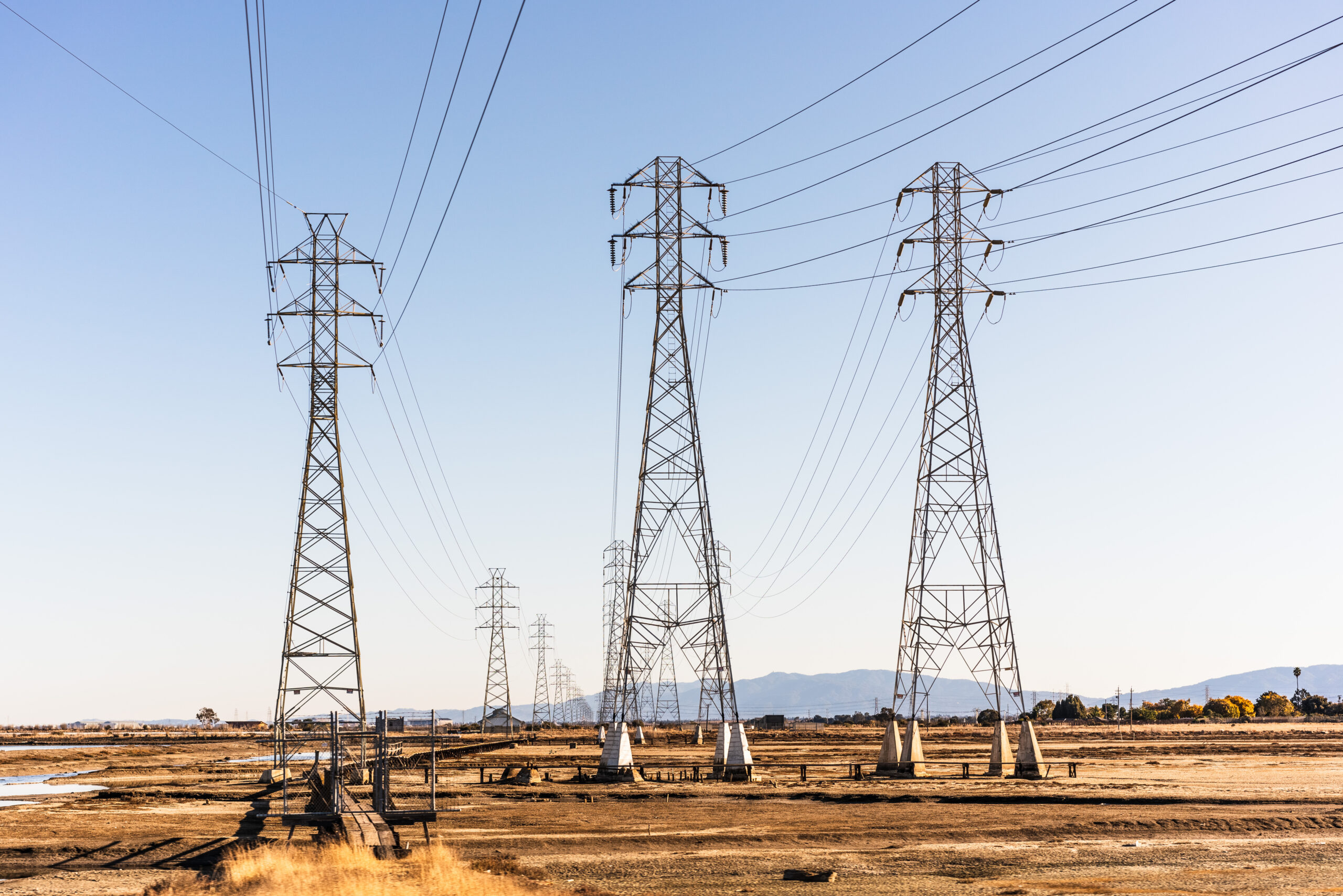
The nation’s six regional grid operators recently told FERC how they plan to keep the lights on as large loads reshape the grid. Their July 20, 2026 Informational Reports offer a rare, coast-to-coast snapshot of the regulatory landscape for data centers, AI campuses, and other large loads. They also signal what to expect when each grid operator files its Show Cause Response on August 17, 2026.
These reports were a direct response to FERC’s June 18 Show Cause Order, which found the tariffs of each of the six Regional Transmission Organizations (RTOs)/Independent System Operators (ISOs) under its jurisdiction deficient in how they handle large load interconnection. The Show Cause Order required each grid operator to file these Informational Reports as a first step.
While these reports preview each grid operator’s thinking, the substantive tariff proposals will come in the Show Cause Responses due August 17, 2026, where each RTO/ISO must either demonstrate that its current tariff is just and reasonable or propose tariff changes to fix the deficiencies FERC identified. Grid operators may also request a stay of up to 90 days by August 3 if they intend to file proactive tariff reforms under FPA Section 205.
Break-Down of Each Informational Report
1. PJM (EL26-67): PJM’s Report describes a comprehensive set of ongoing stakeholder initiatives and recently accepted reforms aimed at: (1) ensuring resource adequacy to serve new large loads; and (2) increasing the pace of adding generating capacity in the PJM Region.
Highlights:
- Resource adequacy outlook: The region is experiencing periods of insufficient resource adequacy and PJM is actively addressing this issue to keep pace with added generating capacity in the region.
- Critical Issue Fast Path (CIFP) for Reliability Backstop Procurement (RBP): The centerpiece of PJM’s response is the CIFP stakeholder process focused on an RBP mechanism and a framework for service during periods of insufficient resource adequacy. PJM’s CIFP for the RBP mechanism concluded its four-stage stakeholder process on June 30, 2026. The PJM Board is now deliberating on final proposals, with two filings expected (July 31 and August 7).
- Expedited Interconnection Track (EIT) Accepted: On June 9, 2026, FERC accepted PJM’s EIT proposal. All projects must have a commercial operations date within three years and be online by 2030. PJM is continuing to review generation reserve and market design reforms.
- Interconnection Queue Progress: As of May 15, 2026, PJM has received 829 applications under Cycle 1 totaling approximately 212,000 MW of new capacity under review. PJM’s Transition Cycle 2 is in Phase III.
2. SPP (EL26-68): In its Report, SPP argued its existing framework—Expedited Resource Adequacy Study (ERAS), Provisional Load Process, High Impact Large Loads (HILLs)/High Impact Large Load Generation Assessment (HILLGA), Conditional High Impact Large Load Service (CHILLS), Peak Demand Assessment (PDA), and Consolidated Planning Process (CPP) —collectively addresses resource adequacy for new large loads. No immediate tariff overhaul is required.
Highlights:
- Resource adequacy outlook: For Summer 2026, all 65 Load Responsible Entities (LREs) satisfied their Resource Adequacy Requirements (RARs). The East Balancing Authority Areas maintained a 17.1% reserve margin (~5,752 MW of excess accredited capacity).
- CHILLS: CHILLS became effective July 1, 2026; SPP is already developing refinements to clarify Resource commitment sequencing and establish minimum curtailment ramp rates.
- ERAS: ERAS has 36 active requests (~13.3 GW). Generator Interconnection Agreements are in negotiation with execution expected September 2026.
- Price Adaptive Load/Price Adaptive Load Service (PAL/PALS): This new market participation model for flexible, price-responsive large loads is under active stakeholder development. FERC filing is targeted on or before November 16, 2026.
3. MISO (EL26-70): MISO’s Report acknowledged that the concentrated, fast-moving nature of new large load demand requires new tools. MISO previewed two concrete initiatives designed to accelerate the pace of connecting generation to serve large loads: the new Zero Injection Generator Interconnection Agreement (ZGIA) and a new Large Load Parallel Study Process.
Highlights:
- Resource adequacy outlook: The region is currently resource adequate, but new tools are needed to keep pace with large load growth.
- Upcoming Section 205 filings: MISO confirmed two upcoming filings: the Zero-Injection GIA (ZGIA) on or about July 31, 2026), which would create a fast-track interconnection path for generation co-located with large loads that will not inject power onto the broader transmission system, and the Large Load Parallel Study Process (on or about end of September 2026), which would allow MISO to study new large loads and their associated generation concurrently rather than sequentially.
- Looking ahead: MISO stated it will provide more detail on additional large load initiatives in a forthcoming stay request. Also, MISO published a schedule of upcoming LLWG meetings through November 2026, which will primarily address the non-resource adequacy aspects of large load integration and compliance with the Show Cause Order.
4. NYISO (EL26-69): NYISO’s Report described its existing planning and market processes, acknowledged emerging risks from large load growth and an aging generation fleet, and outlined potential reforms under stakeholder consideration to support resource adequacy in New York.
Highlights:
- Resource adequacy outlook: Preliminary results from the 2026 Reliability Needs Assessment indicate a potential statewide resource adequacy violation beginning in 2033 with a deficiency greater than 1,800 MW, with more localized needs in New York City beginning as early as 2031.
- Planning reforms under consideration: NYISO is considering an accelerated interconnection study path for reliability-need resources, streamlined treatment for repowering existing generators, and reforms that could assign responsibility for resource deficiencies to the large loads that cause them. NYISO targets a Section 205 filing around March 2027.
- Market reforms under consideration: NYISO is transitioning from an annual to a seasonal capacity market next year, implementing capacity accreditation reforms for fuel supply constraints this year, and pursuing Demand Curve Reset improvements.
5. CAISO (EL26-71): In its Report, CAISO described California’s coordinated resource planning framework, long-term generation procurement, and transmission expansion efforts designed to reliably serve growing large electric loads without compromising reliability or affordability.
Highlights:
- Resource adequacy outlook: California has added nearly 36,000 MW of new capacity since 2020 and currently holds a surplus of over 2.5 GW above the reliability standard.
- No shortfall: CAISO does not face a systemic capacity shortfall; the focus is on timely execution of already-identified resource and transmission development.
- Forecast: The CEC forecasts data center load on the CAISO grid to grow by 1.8 GW by 2030 and 4.9 GW by 2040.
- Large Loads Stakeholder Initiative: CAISO is fast-tracking its Large Loads Stakeholder Initiative toward a FERC compliance filing on November 16, 2026.
6. ISO-NE (EL26-72): ISO-NE’s Informational Report provides a resource adequacy outlook and outlines its existing and potential new proposals to ensure adequate generation for existing and new large loads. ISO-NE assures that New England’s competitive markets are “sufficiently mature and flexible to meet upcoming challenges.”
Highlights:
- No significant load growth: New England has not yet seen significant large load growth and currently has a long supply position with healthy reserve margins.
- ISO-NE’s Capacity Auction Reforms project: This Project is transitioning to a prompt seasonal capacity market, with the first auction targeted for May 2028.
- New large load requirements: ISO-NE is proposing two new such measures: (1) a “bring your own new generation” requirement for large loads, modeled on SPP’s CHILLS rules; and (2) excluding new large loads from the Installed Capacity Requirement used to set capacity market demand curves, to prevent cost-shifting to traditional ratepayers. ISO-NE plans to include notice of both these requirements in its compliance filing responding to the June 18 Order, with detailed implementing rules to be filed in 2027 following a full stakeholder process.
Why This Matters
A common theme runs through all six reports: every grid operator acknowledges the challenge that large load growth poses to resource adequacy. But each is at a different stage of readiness. PJM and SPP point to recently accepted or already-effective reforms, with PJM’s RBP mechanism and EIT already advancing and SPP’s CHILLS framework in effect since July 1. MISO and NYISO, by contrast, are still developing new processes through their stakeholder channels. MISO’s ZGIA filing was expected by the end of July, with the Large Load Parallel Study Process filing to follow by the end of September, while NYISO’s planning reforms target a Section 205 filing around March 2027. CAISO and ISO-NE both report comfortable supply positions today but are looking ahead: CAISO is fast-tracking a compliance filing for November, and ISO-NE is proposing new obligations for large loads, including a “bring your own generation” requirement and measures to prevent cost-shifting to existing ratepayers.
These reforms will shape how large loads connect to the grid, what generation gets built to serve them, who bears the cost of new infrastructure, and how quickly any of it can happen. The regulatory path forward will vary significantly by region. The Show Cause Responses due August 17 will be the defining moment: some grid operators may file concrete tariff revisions, while others will defend their existing frameworks or seek additional time through abeyance.
Upcoming Deadlines
- August 3, 2026: Each RTO/ISO must file any request for abeyance (up to 90 days, non-extendable), with description of anticipated FPA Section 205 filing and expected filing date.
- August 17, 2026 (notwithstanding any stay requests): Each RTO/ISO must file a Show Cause Response.