

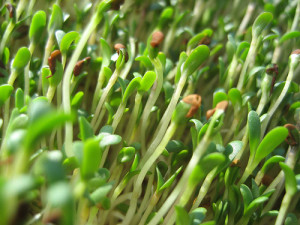
Evergreen Fresh Sprouts, LLC of Moyie Springs, Idaho has recalled its broccoli sprouts because of Salmonella, and as of September 11, 2026 the recall notice is posted on FDA’s website. Twenty-two people in Washington, Montana, Idaho and Utah are sick with Salmonella Bovismorbificans, two have been hospitalized, and no one has died. Here is which sprouts are recalled, where they were sold, and what to do if you ate them.
Which broccoli sprouts are recalled.
The company’s notice covers 215 cases of broccoli sprouts, six four-ounce clear plastic zip-lock bags to a case, which is 1,290 bags. The UPC on the bag is 8 38796 00105 1. The use-by dates are September 7, 9, 11, 14 and 16, 2026. CDC says the recalled sprouts were sold in plastic bags or clamshell containers with those same dates, so check clamshells too. The company says it stopped producing and shipping broccoli sprouts on September 4.
| Recall detail | What the notice says |
| Product | Evergreen Fresh Sprouts broccoli sprouts, 4-oz clear plastic zip-lock bags (CDC: bags or clamshells) |
| UPC | 8 38796 00105 1 |
| Use-by dates | September 7, 9, 11, 14 and 16, 2026 |
| Quantity | 215 cases × 6 bags = 1,290 bags |
| Shipped | August 24 to September 2, 2026, to three distributors in Washington |
| Sold in | Washington, Idaho and Montana; FDA says possibly further |
| Company contact | 1-208-267-4258, Monday–Friday, 7 a.m.–2 p.m. (the notice says “GMT”) |
Source: FDA recall notice, Evergreen Fresh Sprouts LLC, posted September 10, 2026; CDC outbreak notice, current as of September 9, 2026. Check: 215 × 6 = 1,290.
Where the sprouts were sold.
The sprouts went to three distributors in Washington and from there, CDC says, to “food co-ops, restaurants, food service customers, and grocery stores” in Idaho, Montana and Washington. Neither the company nor FDA has published a list of stores or restaurants. FDA adds that the product “could have been distributed further.” One of the sick people lives in Utah. If you bought broccoli sprouts anywhere in the Northwest since late August and are not sure of the brand, ask the store.
Twenty-two people are sick in four states, and the strain was found in a bag.
People got sick between July 7 and August 26. Of 19 people interviewed, all 19 said they ate sprouts and 17 said broccoli sprouts. Washington has 16 of the 22 cases, in Island, King, Skagit, Snohomish, Spokane, Walla Walla, Whatcom and Yakima counties. Washington’s health department says leftover broccoli sprouts collected from a person who became ill tested positive for the outbreak strain, and FDA says whole genome sequencing confirmed the Salmonella in that sample is the same strain making people sick. That is as direct as the evidence in a sprout outbreak gets. Bill Marler has written about the outbreak and about the company’s two earlier outbreaks in 2011 and 2014 on Marler Blog; this blog covered the Washington counts on September 9.
Salmonella symptoms, and when to see a doctor.
Salmonella symptoms usually begin six hours to six days after eating contaminated food: diarrhea, fever and stomach cramps, sometimes with nausea and vomiting. Most people are sick for four to seven days and recover without antibiotics. See a doctor if you have a fever over 102°F, bloody diarrhea, diarrhea for more than three days that is not improving, vomiting that keeps you from holding down liquids, or signs of dehydration such as dizziness and very little urine. Children under five, adults over 65, pregnant women and anyone with a weakened immune system are more likely to end up in the hospital. Tell the doctor you ate sprouts and ask for a stool test; a positive culture is how a case gets counted in this outbreak, and it is how the outbreak strain is matched.
What to do if you have the sprouts.
Throw them away or return them to the store. Do not eat them even if they look and smell fine, and do not try to wash the Salmonella off; it grows inside the sprout as the seed germinates. Wash containers, cutting boards, counters and hands with hot soapy water or run items through the dishwasher. Restaurants and stores should not sell or serve the recalled sprouts and should sanitize anything the sprouts touched. If you already ate them and feel well, watch for symptoms for the next six days.
Why sprouts keep doing this.
Sprouts are grown by soaking seed in warm water for days, which is exactly what Salmonella and E. coli need to multiply. If the seed carries a few bacteria, the finished sprout carries a lot, and there is no cooking step before it goes on a sandwich or a salad. FDA has long advised that children, older adults, pregnant women and people with weakened immune systems avoid raw sprouts of any kind. This is Evergreen’s third outbreak: 25 people were sickened by its alfalfa and spicy sprouts in 2011 and 19 by its clover sprouts in 2014. A second, unrelated sprout outbreak, E. coli and Salmonella from Everything Sprouts alfalfa sprouts, is running at the same time with 55 people sick in 15 states.
Are Evergreen broccoli sprouts safe to eat now? No. Every bag or clamshell with a use-by date of September 7 through 16, 2026 is recalled, and the company has stopped shipping. Throw them out.
I ate broccoli sprouts in August and got sick. Am I part of this outbreak? Possibly. Illnesses began July 7 and the most recent began August 26. If you were sick with diarrhea and fever after eating sprouts, tell your doctor and your local health department; a stool test can confirm the strain.
How do I know if my sprouts are Evergreen’s? Look for Evergreen Fresh Sprouts on the label and the UPC 8 38796 00105 1 on the bag. If the sprouts came from a restaurant, deli or co-op salad bar, the store can tell you who supplied them.
Salmonella
Salmonella sickens more than a million Americans every year and is the leading cause of hospitalizations and deaths among foodborne bacteria. Its reach is remarkable—it turns up in produce, poultry, pantry staples, and pet food alike. Marler Clark, The Food Safety Law Firm, is the nation’s leading firm representing victims of Salmonella outbreaks. Our Salmonella lawyers have represented thousands of victims in the only U.S. law practice devoted exclusively to foodborne illness, which has recovered more than $850 million for victims and families nationwide. We have tied Salmonella outbreaks to cantaloupe, tomatoes, ground turkey, salami, sprouts, cereal, peanut butter, and restaurant meals, and we have brought cases against Cargill, ConAgra, Peanut Corporation of America, Sheetz, Taco Bell, Subway, and Wal-Mart. The Peanut Corporation of America outbreak ended in federal criminal convictions, with the company’s owner sentenced to twenty-eight years in prison. We are also pressing the federal government to treat Salmonella as an adulterant on raw chicken, so that contaminated poultry can be kept off store shelves the way dangerous E. coli already is.
If you or a family member became ill with a Salmonella infection—including lasting complications such as reactive arthritis or irritable bowel syndrome (IBS)—after eating contaminated food, contact the Marler Clark Salmonellaattorneys for a free case evaluation.
FAQ
*What is Salmonella?*
Salmonella is a group of bacteria behind one of the most common—and most deadly—foodborne infections in the United States, sickening more than a million people a year. Symptoms usually begin between 6 hours and 6 days after eating contaminated food and include diarrhea, fever, and stomach cramps that last four to seven days.
*What foods cause Salmonella outbreaks?*
Poultry, eggs, ground beef, produce, peanut butter, flour, and even pet food have all caused outbreaks. Salmonella can survive for months in dry, low-moisture foods.
*Can a Salmonella infection cause long-term problems?*
Yes. Some victims develop reactive arthritis—joint pain and swelling that can persist for months—or irritable bowel syndrome after the initial illness resolves.
Who is most at risk?
Young children, adults over 65, and people with weakened immune systems are the most likely to be hospitalized or to suffer severe, invasive infection.
*Can I sue for a Salmonella infection?*
If your illness is linked to a contaminated product or a recognized outbreak, you may have a claim against those in the chain of distribution. A stool culture matching the outbreak strain is powerful evidence.
Additional Resources:
About Salmonella — a complete resource for victims of Salmonella outbreaks
Marler Clark Salmonella Lawsuits and LitigationDownloadable Salmonella Fact Sheet