


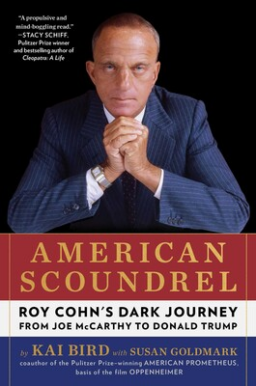
Woodrow “Mac” Melvin, Jr. was on the winning side of In re Rosenstiel’s Will, 44 Fla. Supp. 92 (Fla. 11th Cir. Ct. June 24, 1976), a nationally significant probate case I wrote about here. Roy Cohn was a central figure in the Rosenstiel case, which is discussed at length in the new Cohn biography entitled American Scoundrel.
After winning the Rosenstiel case, Mac went on to a long and storied carrier litigating multiple blockbuster probate cases. I’ve long admired Mac and have had the good fortune to work with him over the years. Which is why I was delighted the authors of American Scoundrel interviewed Mac at length for this critical chapter in Cohn’s ultimate undoing. I invited Mac to share some of the insights he drew from the Rosenstiel case with the rest of us and he graciously agreed.
Link to What strategic decisions did you make that were particularly outcome determinative to your win at trial? What strategic decisions did you make that were particularly outcome determinative to your win at trial?
It was strange that [Roy Cohn] was not engaging in any pretrial discovery, which to us meant that [Cohn] had something he wanted to hide. So did we. A lot. Our assessment was that our evidence from the hospital staff was overwhelming. It was decided to “play it by ear”. I took only two depositions. I deposed Cohn and the lawyer who prepared the Codicil. Then I waited to see what Cohn would do. He did nothing. No depositions, no document discovery, no interrogatories. Nothing. At the end of the day [Cohn] didn’t know until the trial that Mr. Rosenstiel had been declared incompetent by the medical staff, and that an order had been placed in his medical record that that he should not make any decisions or sign anything. Nor did [Cohn] know that we had an expert ready to testify that the scribbles on the Codicil were totally unrecognizable as a signature. Although there are circumstances where even a scribble might be regarded as legal, strong supporting circumstantial evidence is required. We decided to let Cohn continue to hide what, if anything, was under his “hat” in order to avoid the likelihood of having to disclose what was under ours. It worked.
Also we did not file the Memorandum of Law we prepared showing that [Cohn’s] side had the initial burden of proof, not us. [Cohn] remained unaware of that until the first day of trial, meaning that he had to ask for a continuance and scramble to go forward first with his case without being able to complete his witness presentations.
Link to If you had to do it all over again, would you have done anything different in terms of framing the issues for your trial-court judge? If you had to do it all over again, would you have done anything different in terms of framing the issues for your trial-court judge?
No. Our pleadings were reviewed and approved by probably the most prestigious Estate and Trusts law firm in the nation. The firm was 100 years old and was in its second generation of its leadership. It had an unmatched reputation, including public knowledge that its “connections” with the C.I.A. dated back to WW II. They had handled Mr. Rosenstiel’s estate and trust business for many years. One of its senior partners was the trustee of Mr. Rosenstiel’s great fortune. Their guidance and oversight was of incalculable value.
Link to Do you think there’s anything that could have been done in terms of better estate planning to avoid this litigation or at least mitigate its financial impact on the family? Do you think there’s anything that could have been done in terms of better estate planning to avoid this litigation or at least mitigate its financial impact on the family?
Again, No. Their documentation was thorough. It anticipated the possibility of Mr. Rosenstiel’s incapacity, and provided for the continuation of his trusts and the protection and support for his wife and daughter, Elizabeth.
Link to Any final words of wisdom for estate planners and probate lawyers of the world based on what you learned in this case? Any final words of wisdom for estate planners and probate lawyers of the world based on what you learned in this case?
The client may not be looking as far ahead as they should. It’s your job to do that for them.