

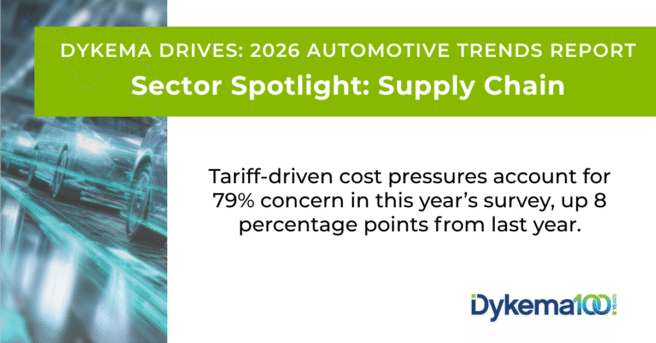
Geopolitical tensions emerged as one of the fastest-growing supply-chain concerns in this year’s report, jumping 23 percentage points from last year to 52% among respondents. Combined with ongoing concerns surrounding semiconductor and critical mineral availability (30%), the findings reflect how trade policy, resource access, and supply continuity have become increasingly interconnected across the automotive industry.
These pressures continue to coincide with EV production cutbacks (44%), which remain a significant concern despite a slight decline from last year. Together, these conditions have contributed to ongoing disputes involving purchase obligations, pricing pressures, and tooling cost recovery in EV programs.
At the same time, rising concern over bankruptcy risks (26%) points to growing financial strain across the automotive supply chain. Tariffs, raw-material cost volatility, and other cost pressures continue to challenge suppliers, particularly where existing contractual frameworks offer limited flexibility to absorb sudden increases.
Respondents also identified legal challenges involving supply agreements as a persistent area of risk, while concerns related to forced-labor and human-rights compliance declined compared to last year, potentially reflecting a shift toward more immediate operational and financial pressures.
Click here for a closer look at the trends shaping automotive supply chain: Report Link.
View the full 2026 Automotive Trends Report: Report Link.