

ST. LOUIS — The Flint water crisis exposing children to dangerous lead levels is not just a local impact story about mistakenly changing from one water source to another. Changing the water also changed the ecosystem inside the pipes and the linkages of Flint’s entire water distribution system. Exposing that ecosystem to new water is what spiked the lead levels in Flint, creating a crisis that engulfed homes, schools, and businesses. 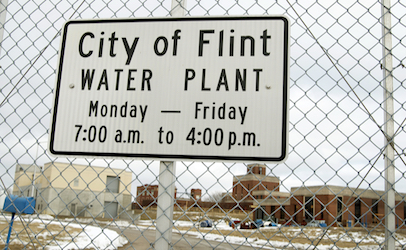 And the Flint water crisis is coming soon to a city near you, as America’s aging water infrastructure is crumbling faster than it can be safely rebuilt. “The Flint Water Crisis — What Happened and Lessons Learned” was the subject of a morning seminar on the last day of the International Association for Food Protection’s (IAFP’s) annual conference in St. Louis. Kevin Besey, who heads food and water safety for the Michigan Department of Agriculture, said the Flint water crisis was also a food safety crisis that required shifting 38 staff members from his division into Flint to assist the two who were already assigned there. They worked intensively for three months last year with schools, restaurants, and food processing businesses to reduce or eliminate lead levels. “I work for the agency that had been off to the side on this,” he said. But when the lead issue was recognized after Flint switched to local river water from Lake Huron water treated by Detroit, Besey had to bring all his division’s resources to Flint to keep an environmental crisis from turning into an economic disaster should food businesses in the hard-strapped city be forced to shut down. About 600 of Michigan’s 63,000 licensed food establishments are located in Flint, and Besey said his division used an “Incident Command” structure to work through the emergency. Two-person teams, designed in part for security, did the site visits since many Flint residents, scared and upset about the water, blamed state officials. Besey said businesses were given a variety of options to clear their systems of lead. Filters and flushing were frequently successful, as were making alterations. When cleared by testing, the business’ name went on a daily compliance list made available online. “With CNN sitting on everyone’s doorstep, I had a lot of bosses,” Besey quipped. He said his food and water group began using Survey Monkey to generate feedback on their progress, which was effective and helped calm things down. One positive outcome of the Flint water crisis might be changing the political will in the United States to finally confront its water supply crisis, said Stan Hazan with NSF International in Ann Arbor. He said that fixing failing water systems are going to cost $1 trillion over the next 25 years and, at $30 billion a year, water utilities are only spending about half of what they should to address the problems. And, there is a real problem right before water is delivered to the home — pipes that are owned by the homeowner, not the utility. In Flint, replacing that part of the system can cost $5,000 per residence, and some of the houses are not worth that much. According to Hazan, the good news for Flint is that lead levels are going down and appear to have stabilized since the city switched back to Lake Huron water treated by Detroit. That water source apparently does not activate lead particulates in the piping the way Flint River water did. Lead was commonly used in piping and fittings when many of the older water systems were built, some of them prior to 1900. Hazan said these aging systems need to be replaced since main breaks and leaks result in the loss of 20 percent of the water each year. Not only is the water resource lost, but so is utility revenue because that water doesn’t reach any customer meters. He also called many federal laws unfunded mandates that require utilities to pay for them and therefore that money cannot be spent on system reinvestment.
(To sign up for a free subscription to Food Safety News, click here.)