

This week, professional sports crossed a threshold it had never crossed before. CME Group, the world’s largest derivatives exchange, began listing futures contracts on all 32 National Hockey League (NHL) teams.[1] These are not bets on who wins a
Latest from Columbia Law School - Page 3
Latham Discusses SEC Proposal to Rescind Political Contribution Rule for Investment Advisers
On September 3, 2026, the Securities and Exchange Commission (SEC) issued a proposal (the Proposal) to rescind Rule 206(4)-5, commonly referred to as the Pay-to-Play Rule (the Rule), in its entirety, eliminating the two-year time-out on compensated advisory services to
Scrutinizing the Achievement of Climate Targets, Part I: The Widening Reach of Implementation Litigation
As temperatures continue to rise at alarming rates, it is undeniable that current climate policies are not enough to meet the 1.5°C temperature limit of the Paris Agreement. According to the United Nations Environment Programme, global warming is currently
Does Loss of Natural Assets Raise Public Borrowing Costs?
Forests, fisheries, freshwater, and biodiversity are not only environmental resources. They also support economic activity and growth. When these natural assets deteriorate, the consequences can ripple through the economy and potentially affect the cost of government financing.
Governments are central
Sullivan & Cromwell Discusses California Bill on Lawyers’ Use of Generative AI
On August 31, 2026, the California Legislature unanimously passed Senate Bill 574, a “first-in-the-nation” law that would establish statutory requirements governing the use of generative artificial intelligence by attorneys, arbitrators, judicial officers, and alternative dispute resolution providers.[1] The bill
Wachtell Lipton Discusses SEC Enforcement Division’s Signal of Faster Investigations
Gladstone Place Discusses Where AI Is Adding Value in Investor Relations
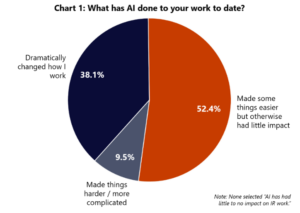
AI is having a clear impact on investor relations as corporate issuers tap AI for stress-testing messaging and benchmarking shareholder proposals, while taking a gradual approach before handing over IR to HAL.
This is according to a new survey by
Guilt and Shame, from Homer to Corporate America
In the Iliad and the Odyssey, heroes are only what society says they are. What constrains the likes of Achilles and Odysseus, then, is not fear of the gods or some codified prohibitions, but models of honor and the gaze
Weil Discusses How New SEC Staff Guidance May Ease Constraints on Shareholder Engagement for Schedule 13G Filers
On September 2, 2026, the staff of the SEC’s Division of Corporation Finance issued three new interpretations addressing when a shareholder reporting beneficial ownership on Schedule 13G may engage with an issuer or with participants in a proxy contest without
Does Board Gender Diversity Temper Regulatory Enforcement?
In a new paper, we examine whether the gender composition of companies’ boards affects the Securities and Exchange Commission’s (SEC’s) decision to investigate those companies and, ultimately, to pursue regulatory enforcement.
We consider three related reasons why firms with more