

Forests, fisheries, freshwater, and biodiversity are not only environmental resources. They also support economic activity and growth. When these natural assets deteriorate, the consequences can ripple through the economy and potentially affect the cost of government financing.
Governments are central
Latest from Columbia Law School - Page 4
Sullivan & Cromwell Discusses California Bill on Lawyers’ Use of Generative AI
On August 31, 2026, the California Legislature unanimously passed Senate Bill 574, a “first-in-the-nation” law that would establish statutory requirements governing the use of generative artificial intelligence by attorneys, arbitrators, judicial officers, and alternative dispute resolution providers.[1] The bill
Wachtell Lipton Discusses SEC Enforcement Division’s Signal of Faster Investigations
Gladstone Place Discusses Where AI Is Adding Value in Investor Relations
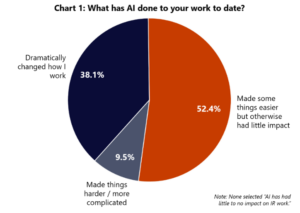
AI is having a clear impact on investor relations as corporate issuers tap AI for stress-testing messaging and benchmarking shareholder proposals, while taking a gradual approach before handing over IR to HAL.
This is according to a new survey by
Guilt and Shame, from Homer to Corporate America
In the Iliad and the Odyssey, heroes are only what society says they are. What constrains the likes of Achilles and Odysseus, then, is not fear of the gods or some codified prohibitions, but models of honor and the gaze
Weil Discusses How New SEC Staff Guidance May Ease Constraints on Shareholder Engagement for Schedule 13G Filers
On September 2, 2026, the staff of the SEC’s Division of Corporation Finance issued three new interpretations addressing when a shareholder reporting beneficial ownership on Schedule 13G may engage with an issuer or with participants in a proxy contest without
Does Board Gender Diversity Temper Regulatory Enforcement?
In a new paper, we examine whether the gender composition of companies’ boards affects the Securities and Exchange Commission’s (SEC’s) decision to investigate those companies and, ultimately, to pursue regulatory enforcement.
We consider three related reasons why firms with more
Wachtell Lipton Discusses Ten Shareholder Activism Trends for 2027
Last year, we identified ten trends that we expected to shape shareholder activism in 2026. Those trends included: increasing M&A-focused activism, emboldened occasional activists, less visibility into shareholder views, the normalization of serving as a dissident nominee, and more “withhold”
When Are Insider Purchases Credible Signals of Private Information?
Empirical evidence shows that investors respond to corporate insiders’ open market purchases by increasing the company’s stock price, reflecting that insiders possess private information indicating that the firm is undervalued. Consistent with that evidence, in a new paper we find
Sidley Discusses Delaware Chancery Ruling on Public Benefit Corp. Directors’ Price-Maximization Duty
In Drakes Landing Associates, L.P. v. Tilden Park Capital Management, L.P. (Del. Ch. July 29, 2026), the Delaware Court of Chancery confronted an issue of first impression: how, if at all, the Revlon enhanced-scrutiny framework applies when the board of