

Nothing inherent in children’s development explains why their right to education should be more or less accessible depending on whether they are 4, 8, or 16. Yet international law treats financial barriers to education as more or less problematic depending
Latest from European Journal of International Law - Page 4
From Specificity to Institutional Reliability: J.B. v. Greece and Diplomatic Assurances
On 26 May 2026, the European Court of Human Rights (the Court) delivered its judgment in J.B. v. Greece (no. 54796/16). The case concerns the potential removal of a Syrian national from Greece to Türkiye under the EU-Türkiye Statement of
Beyond Forcible Relocation: Article 49(6) and State-Facilitated Settlement in Occupied Territory
Russia does not forcibly relocate its civilians into the occupied territories of Ukraine. Instead, it relies on an array of incentives, including preferential mortgages, employment programmes and tax benefits to increase the attractiveness of relocation. This gives rise to a
Rethinking the Hormuz Toll Debate: Can Coastal States Monetize Maritime Security?
“Some reconcilement of remotest mind,
Leaves [H]ormuz rubyless, and Ophir chill.”
Hart Crane (1899–1932)
With the United States waging an illegal war against Iran to reshape the architecture of the Middle East, the architecture of the Hormuz Strait may now
Apportioning Historical Responsibility After the ICJ’s Climate Advisory Opinion: From Principle to Practice
When the International Court of Justice (ICJ) delivered its Advisory Opinion on Obligations of States in Respect of Climate Change on 23 July 2025, commentators rightly called it a watershed for international environmental law. The Court unanimously confirmed that the
Two Weeks in Review: 10—21 August 2026
As we swelter through late summer, a hardy few have retained a cool hold over their critical faculties. In the last two weeks, attention has turned chiefly to the ICC: from the in absentia convictions of members of the Rapid
Announcements: DigitalRights in the Contemporary World Webinar; CfP WCS 2026 – Rights in the AI Race; CfP Central Asia Yearbook on International Law
1. DigitalRights in the Contemporary World Webinar. NUS Centre for International Law is pleased to invite to attend the webinar “DigitalRights in the Contemporary World” (27 August 2026, 4pm – 6pm, Singapore time). The webinar brings together distinguished experts from
Can “Safety Zones” provide Safety to Critical Submarine Cables?
Following the submarine cable cuts in the Baltic Sea, the Australian Federal Police was urged to commence an investigation at the behest of Subco, a private submarine cable operator, concerning the damage to two submarine cables. On the second
Institutional Discretion, Due Process and the Common Heritage of Humankind: The First Provisional Measures Orders in NORI and TOML v. the Authority
The first contentious proceedings ever brought before the Seabed Disputes Chamber of the International Tribunal for the Law of the Sea (the Chamber) concern far more than a procedural dispute between two contractors and the International Seabed Authority (the Authority).
The ICJ’s Unwritten Rulebook: Regional Succession and Institutional Equilibrium
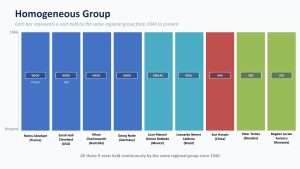
For almost eighty years, United Nations Member States have behaved as if a mandate required them to maintain regional continuity in elections to the International Court of Justice. Yet, the Court’s Statute contains no such rule. Article 9 requires only